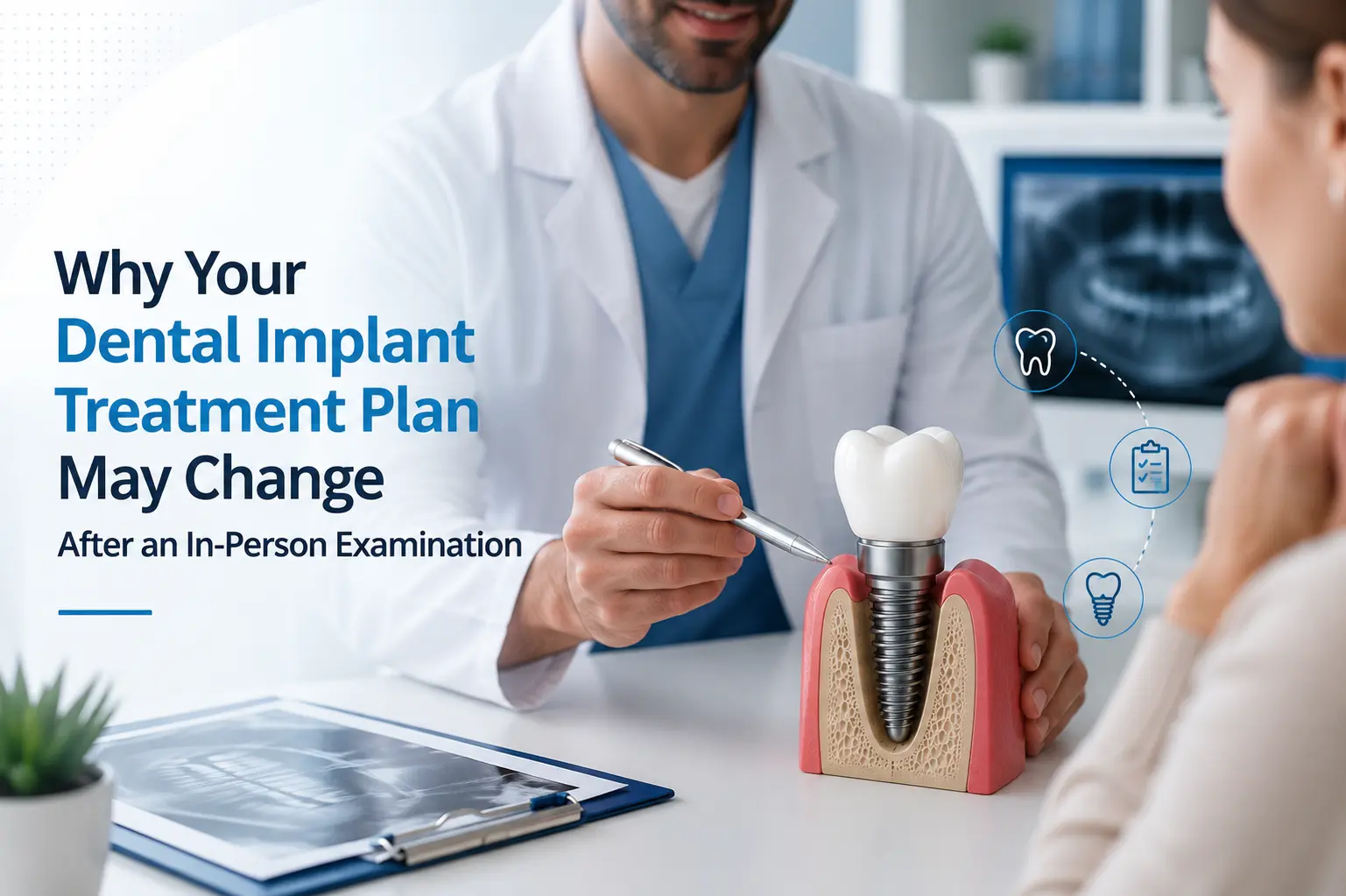
Why Your Dental Implant Treatment Plan May Change After an In-Person Examination
Why Your Dental Implant Treatment Plan May Change After an In-Person Examination
Learn why a dental implant treatment plan may change after an in-person examination, CBCT scan, bone assessment, and evaluation of your teeth and gums.
Table of Contents
- Why Is an Initial Dental Implant Treatment Plan Only an Estimate?
- What Does the Dentist Check During an In-Person Examination?
- How CBCT Scans Can Change an Implant Treatment Plan
- Bone Quality and Bone Volume: Why They Matter
- How Gum Health and Existing Teeth Affect the Final Plan
- Why the Number or Position of Dental Implants May Change
- When Bone Grafting or Sinus Lifting Becomes Necessary
- Why Your Final Prosthesis May Be Different From the Initial Plan
- Can the Dental Implant Price Change After Examination?
- How Autora Clinic in Istanbul Finalizes Your Implant Treatment Plan
- Frequently Asked Questions
Why Is an Initial Dental Implant Treatment Plan Only an Estimate?
If you are considering dental implants abroad, you may receive an initial treatment plan before traveling. This plan can be based on dental X-rays, photographs, medical information, previous treatment records, and a remote consultation with the dental team.
This preliminary assessment is extremely useful. It allows the dentist to understand your main dental needs, estimate how many implants may be required, discuss possible restorative options, and provide an approximate treatment timeline and cost.
However, a remote dental implant treatment plan should not be confused with a final clinical diagnosis.
Certain details can only be confirmed when the dentist examines your mouth directly. The condition of your gums, tooth mobility, bite, available restorative space, bone anatomy, and the condition of existing dental work may all influence the final decision.
For this reason, a treatment plan changing after an in-person examination does not necessarily mean that the original assessment was incorrect. In many cases, it simply means the dentist now has more complete clinical information.
What Does the Dentist Check During an In-Person Examination?
A comprehensive dental implant examination involves much more than identifying where teeth are absent.
The dentist evaluates the entire mouth to determine whether implants can be placed safely and how the final restoration should function.
During the examination, the clinical team may assess:
-
The health of your gums
-
The condition of your remaining teeth
-
Tooth mobility
-
Your bite and jaw relationship
-
Available space for crowns or bridges
-
Signs of infection or periodontal disease
-
Existing crowns, bridges, or implants
-
Soft tissue around potential implant sites
-
Aesthetic factors such as smile line and gum position
These findings can sometimes reveal issues that were difficult or impossible to identify from photographs or a panoramic X-ray alone.
The purpose of this assessment is not simply to place implants. It is to develop a treatment plan that considers the health, function, and aesthetics of the entire mouth.
How CBCT Scans Can Change an Implant Treatment Plan
One of the most important steps in modern implant planning is three-dimensional imaging.
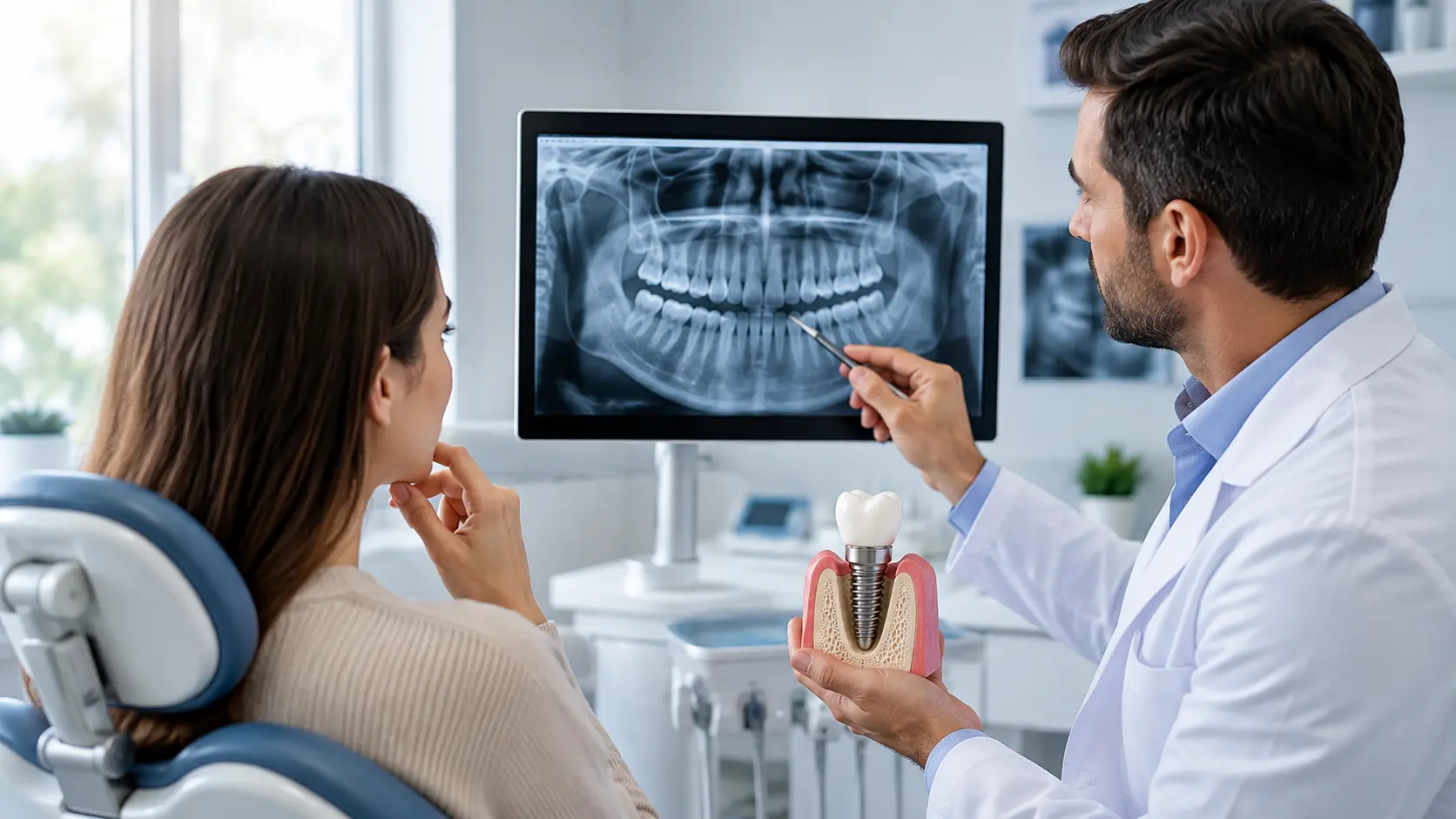
A CBCT scan for dental implants provides detailed information about the jaw that conventional two-dimensional X-rays may not fully show. It allows the dental team to evaluate bone dimensions and important anatomical structures from multiple angles.
For example, a panoramic X-ray may suggest that sufficient bone is available for an implant. After examining the same area three-dimensionally, however, the dentist may discover that the ridge is too narrow for the originally planned implant.
CBCT imaging can also help evaluate the relationship between the proposed implant site and structures such as the maxillary sinus or the mandibular nerve canal.
These findings may influence the implant's length, diameter, position, angle, or whether an additional procedure should be considered.
In other words, CBCT does not simply confirm the initial plan. It provides additional information that can help the dentist refine it.
PMMA Dental Restorations: Benefits, Uses, Crowns, Bridges, and Temporary Prostheses Explained
Bone Quality and Bone Volume: Why They Matter
Dental implants depend on the surrounding jawbone for stability. For this reason, evaluating bone is one of the most important parts of treatment planning.
After tooth loss, the jawbone can gradually decrease in volume. The amount of this change varies considerably between patients and even between different areas of the same mouth.
If there is insufficient bone at the planned implant site, the dentist may recommend modifying the implant position or considering a bone graft before dental implant placement.
Bone anatomy can also affect whether immediate implant placement or immediate loading is appropriate.
This is one reason two patients who appear to have similar cases may ultimately receive very different treatment plans.
A personalized approach is more important than following a fixed number of implants or a standard treatment package.
How Gum Health and Existing Teeth Affect the Final Plan
The final treatment plan is not determined by bone alone.
Gum health is particularly important because active periodontal disease or infection may need to be treated before or alongside implant therapy.
Existing teeth also require careful evaluation. A tooth that appears questionable on an X-ray may prove stable and worth preserving after clinical examination. In another situation, a tooth initially expected to remain may have a fracture, significant mobility, extensive decay, or inadequate periodontal support.
The treatment plan may therefore change in either direction.
Sometimes additional treatment becomes necessary. In other cases, a careful examination may allow the dentist to preserve more natural teeth than initially expected.
The objective should always be to recommend treatment according to the patient's actual clinical condition rather than simply following the preliminary estimate.
Why the Number or Position of Dental Implants May Change
Patients are sometimes surprised when the number of recommended implants changes after arriving at the clinic.
Several clinical factors can explain this.
The dentist must consider available bone, implant distribution, bite forces, the type of final prosthesis, existing teeth, and the amount of space available for the restoration.
For example, a preliminary plan may suggest six implants for a full-arch restoration. Following examination and 3D imaging, the clinician may determine that a different implant distribution is more appropriate.
In another case, additional support may be recommended because of the patient's anatomy or prosthetic requirements.
More implants do not automatically mean a better treatment, and fewer implants do not automatically mean a simpler treatment. The correct number depends on the individual case and the restorative plan.
When Bone Grafting or Sinus Lifting Becomes Necessary
Patients who have experienced long-term tooth loss may also have reduced jawbone volume.
In the upper back jaw, another important consideration is the maxillary sinus. If there is insufficient bone height beneath the sinus for the planned implant, the dentist may consider a sinus augmentation procedure depending on the clinical situation.
Similarly, bone grafting may be considered when the jaw is too narrow or when an extraction has left a significant bone defect.
Not every patient requires these procedures.
This is precisely why an in-person assessment and appropriate imaging are important. Additional surgery should be recommended because the anatomy requires it—not simply because it is routinely included in an implant package.
Why Your Final Prosthesis May Be Different From the Initial Plan
Changes are not limited to implant surgery. The restorative plan may also evolve after the dentist evaluates your mouth.
Before treatment, you may have discussed individual crowns, an implant-supported bridge, or a full-arch fixed prosthesis. After assessing your bite, remaining teeth, smile, and available restorative space, another option may provide a more predictable result.
Modern digital dentistry also allows the team to evaluate factors such as tooth dimensions, smile line, bite relationship, and prosthetic space before manufacturing the final restoration.
For extensive rehabilitation, temporary restorations can provide another opportunity to evaluate comfort, speech, aesthetics, and bite before proceeding to the definitive prosthesis.
The goal is not simply to reproduce the initial plan. It is to use the information collected during treatment to achieve the most appropriate final result.
Can the Dental Implant Price Change After Examination?
Yes. In some cases, the dental implant treatment cost may change after the clinical examination.
If the final diagnosis identifies the need for additional procedures—such as extractions, bone augmentation, treatment of infection, or a different prosthetic solution—the overall cost may differ from the preliminary quotation.
The opposite can also happen. If a tooth can be preserved or a procedure initially considered necessary is no longer required, the treatment may become less extensive.
For international patients, this distinction should be clearly understood before traveling: an initial quotation is based on the information available remotely, while the final quotation should reflect the confirmed clinical treatment plan.
A reputable clinic should explain any significant change, why it is being recommended, what alternatives are available, and how it affects the total price before proceeding with treatment.
How Autora Clinic in Istanbul Finalizes Your Implant Treatment Plan
For international patients considering implant treatment at Autora Clinic in Istanbul, remote assessment can be an important first step in planning the journey.
Available X-rays, dental photographs, treatment history, and relevant information can help the clinical team prepare an initial assessment before the patient travels to Turkey.
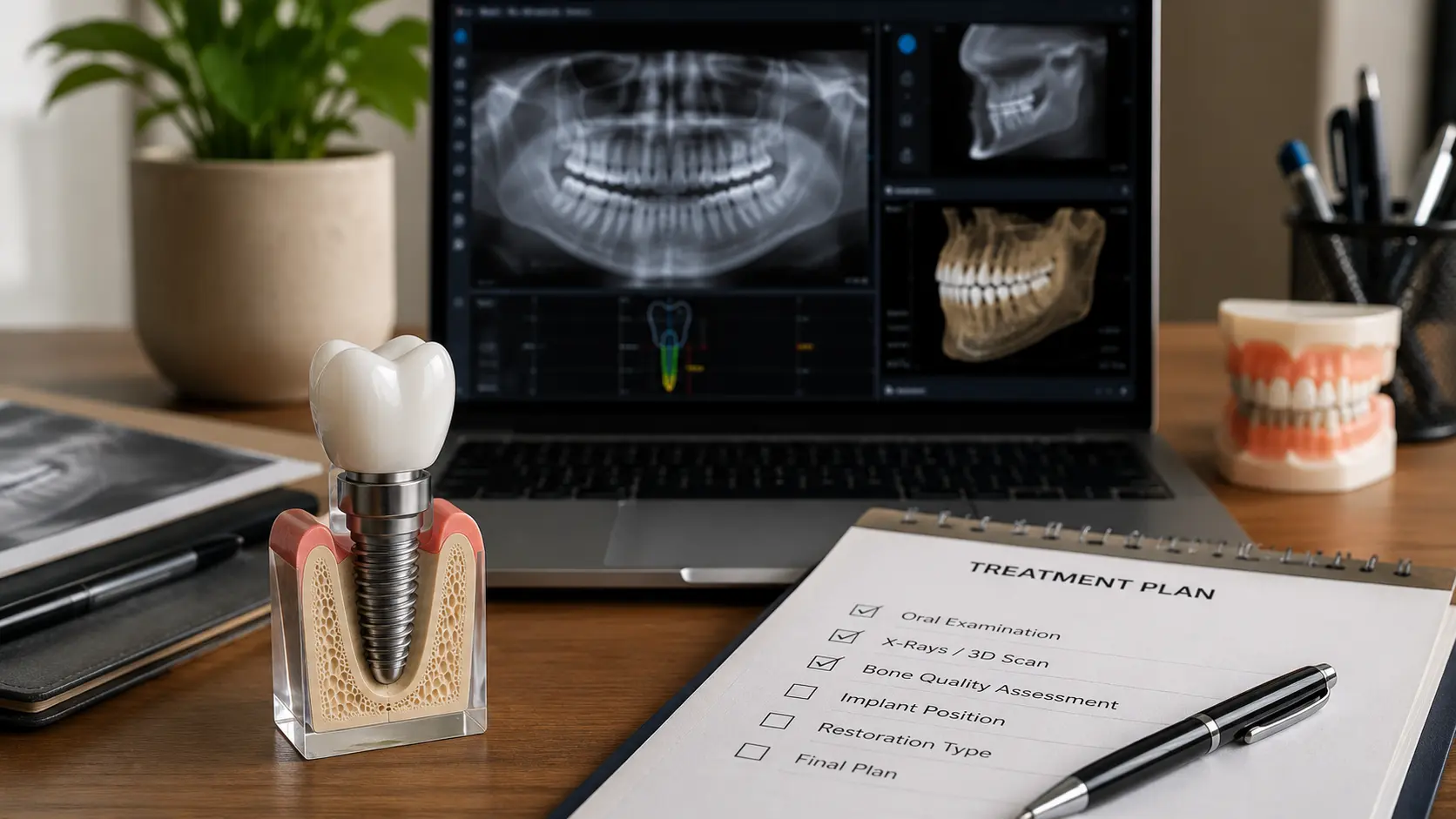
The definitive plan, however, is established after the necessary clinical evaluation and diagnostic imaging.
This allows the dental team to assess the teeth, gums, bite, bone anatomy, and restorative requirements together rather than basing treatment on a single image.
If the findings differ from the information available during the remote consultation, the proposed treatment may need to be adjusted. Any meaningful changes should be discussed with the patient so they understand the clinical reason behind the recommendation and its implications for treatment.
This approach makes the dental implant treatment plan at Autora Clinic individualized to the patient's actual condition rather than treating the preliminary quotation as a fixed protocol.
Metallic Taste After Dental Implant: Causes, Duration, and When to Worry
Frequently Asked Questions
Why did my dental implant treatment plan change after I arrived at the clinic?
Remote planning is based on the information available before your visit. An in-person examination and additional imaging may reveal differences in bone anatomy, gum health, existing teeth, bite, or restorative requirements that justify modifying the original plan.
Can a dentist plan implants from an X-ray alone?
X-rays provide valuable information, but implant planning may require clinical examination and, depending on the case, three-dimensional imaging such as CBCT. The appropriate diagnostic process depends on the individual patient's needs.
Can the number of implants change after a CBCT scan?
Yes. Three-dimensional imaging may provide additional information about bone dimensions and anatomical structures, which can influence the number, dimensions, or positions of implants considered appropriate.
Does changing the treatment plan mean the first consultation was wrong?
Not necessarily. A remote consultation is preliminary because the dentist has limited information. The in-person examination provides additional clinical findings that may confirm, refine, simplify, or change the original proposal.
Can my dental implant treatment become cheaper after examination?
Yes. Changes do not always increase treatment. If the clinical examination shows that a natural tooth can be preserved or that an initially anticipated procedure is unnecessary, the final treatment may be less extensive.
Should I agree immediately if my treatment plan changes?
You should understand what has changed and why before proceeding. Ask the dentist to explain the clinical findings, proposed treatment, alternatives, additional procedures, and any effect on the price or treatment timeline.
A change in your dental implant treatment plan after an in-person examination is not automatically a cause for concern. In many cases, it reflects the fact that the dentist now has more detailed information than was available during the initial remote consultation.
Clinical examination, 3D imaging, bone assessment, gum health, existing teeth, bite, and prosthetic requirements can all influence the final approach.
For patients traveling abroad for dental implants, the most useful way to view the initial treatment plan is as a carefully prepared preliminary estimate. The definitive plan should be based on your actual clinical findings once the dental team has completed the necessary examination.
What matters most is transparency. If the plan changes, your dentist should explain what changed, why it changed, what your alternatives are, and whether the change affects the cost or treatment timeline before treatment moves forward.
Fill it out to get your free consultation
Innovation & Precision In Every Implant
We use only reputable, high-quality implants designed for long-term durability
BioTec Dental Implants


Hiossen Dental Implants


Straumann Dental Implants


Nobel Biocare Dental Implants


MegaGen Dental Implants