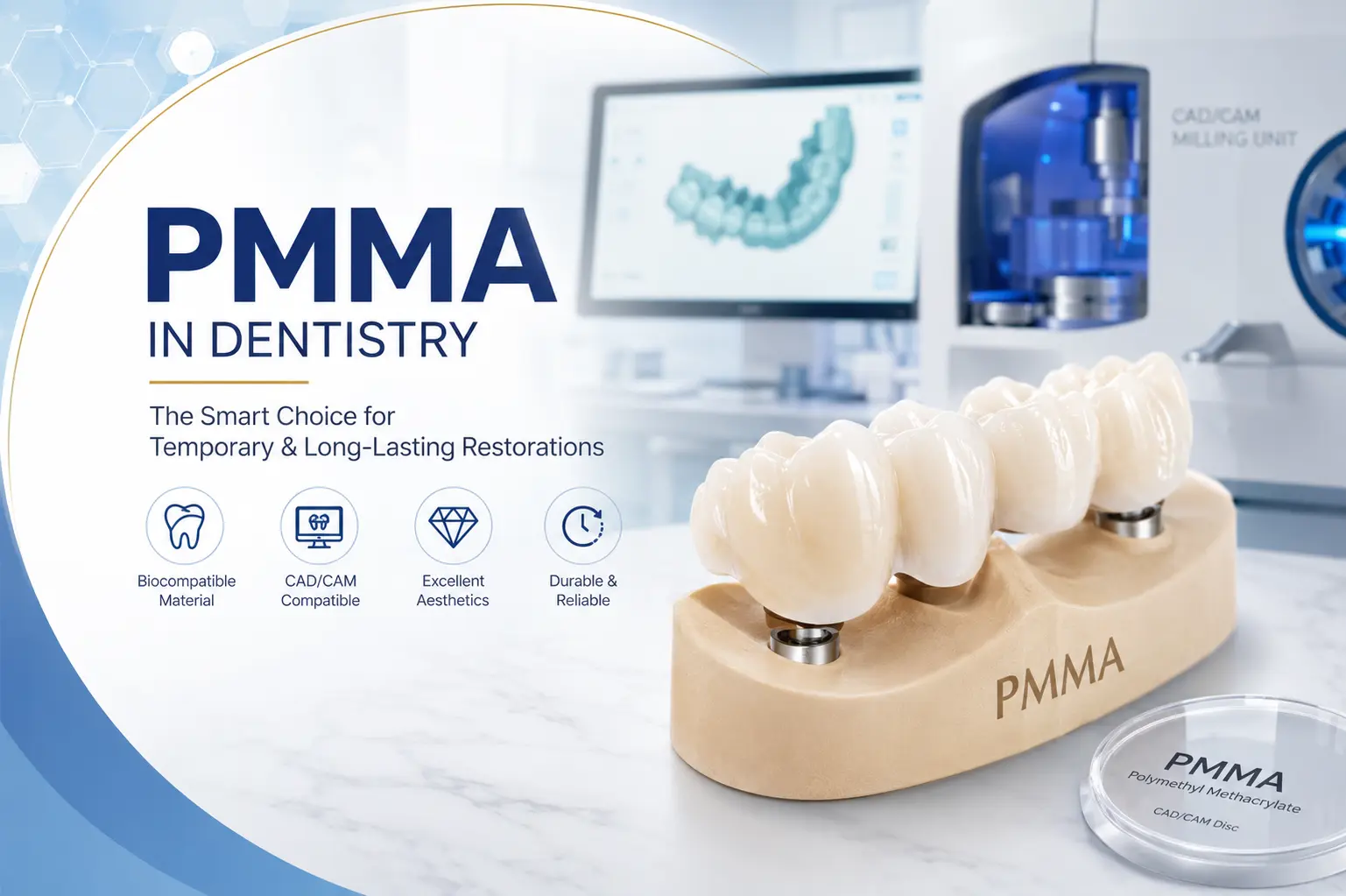
PMMA Dental Restorations: Benefits, Uses, Crowns, Bridges, and Temporary Prostheses Explained
PMMA Dental Restorations: Benefits, Uses, Crowns, Bridges, and Temporary Prostheses Explained
Learn what PMMA is in dentistry, its uses in temporary crowns, bridges, and implant prostheses, how much PMMA restorations cost, and why dentists choose this versatile material for modern digital dentistry.
Table of Contents
- What Is PMMA in Dentistry?
- What Is PMMA Made Of?
- Why PMMA Is Widely Used in Modern Dentistry
- PMMA Temporary Crowns
- PMMA Dental Bridges and Implant Prostheses
- PMMA for Full-Arch Implant Restorations
- Benefits of PMMA Dental Restorations
- Limitations of PMMA Restorations
- PMMA vs Zirconia vs Acrylic
- PMMA Crown Cementation
- PMMA Crown Price and Cost Factors
- Why Patients Choose Autora Clinic in Istanbul for Digital PMMA Restorations
- Frequently Asked Questions
What Is PMMA in Dentistry?
As digital dentistry continues to evolve, dentists have access to a growing range of advanced materials designed to improve treatment quality, patient comfort, and long-term outcomes. Among these materials, Polymethyl methacrylate (PMMA) has become one of the most widely used options for temporary dental restorations and implant-supported prostheses.
So, what is PMMA in dentistry?
PMMA is a high-performance acrylic resin commonly used to fabricate temporary crowns, bridges, dentures, and full-arch implant restorations. Thanks to its excellent mechanical properties, aesthetic appearance, and compatibility with CAD/CAM technology, PMMA has become an essential material in modern prosthetic dentistry.
Although PMMA restorations are generally considered temporary, they often provide patients with months—or even years—of comfortable function while permanent restorations are being planned or fabricated.
Today, digital workflows allow PMMA restorations to be milled with remarkable precision, giving patients highly aesthetic provisional teeth that closely resemble their final prosthesis.
All-on-4 Dental Implants Turkey: Everything You Need to Know About the Life-Changing Smile Solution
What Is PMMA Made Of?
PMMA stands for Polymethyl Methacrylate, a transparent synthetic polymer first introduced in medicine decades ago because of its excellent biocompatibility and stability.
In dentistry, the material is manufactured as industrially polymerized blocks specifically designed for CAD/CAM milling. Compared with conventionally mixed acrylics, these pre-polymerized blocks have:
-
Greater strength
-
Better dimensional stability
-
Lower porosity
-
Improved color consistency
-
Reduced bacterial adhesion
These characteristics make dental PMMA material an excellent option for temporary restorations that need both durability and natural aesthetics.
Because PMMA is lightweight and easy to modify, dentists can also make adjustments quickly if changes are needed during treatment.
Why PMMA Is Widely Used in Modern Dentistry
Modern implant dentistry increasingly relies on fully digital workflows, and PMMA fits perfectly into this approach.
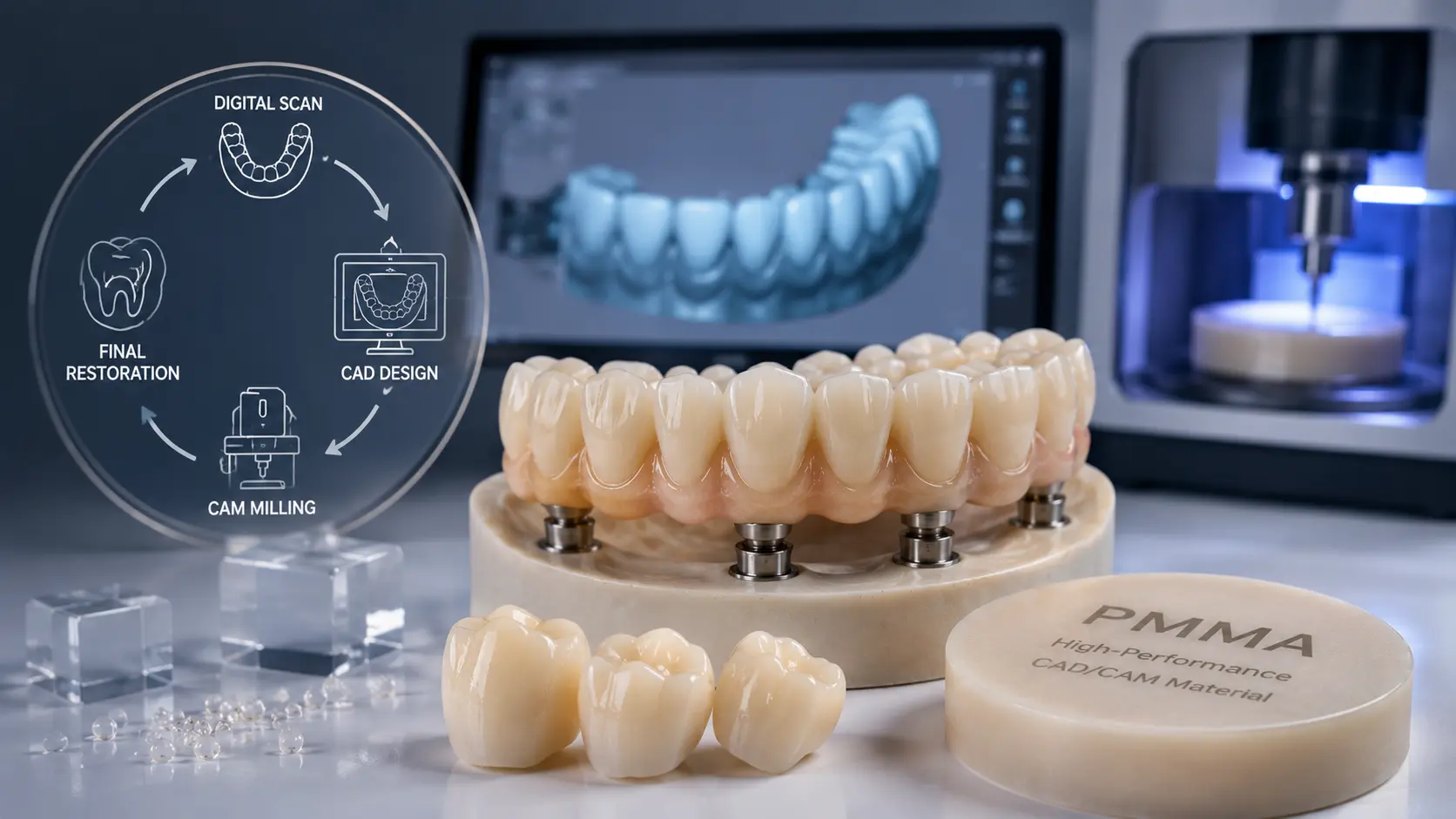
After digital impressions are captured using intraoral scanners, restorative components can be designed with CAD software and milled directly from PMMA blocks using high-precision milling machines.
This digital manufacturing process offers several advantages:
-
Excellent fit
-
Faster production
-
Consistent quality
-
Reduced laboratory errors
-
High aesthetic standards
As a result, PMMA in dentistry has become particularly popular for immediate implant loading protocols, including All-on-4 and All-on-6 treatments.
Patients no longer need to wait weeks without functional teeth. Instead, they can often receive a fixed temporary restoration on the same day as implant surgery.
PMMA Temporary Crowns
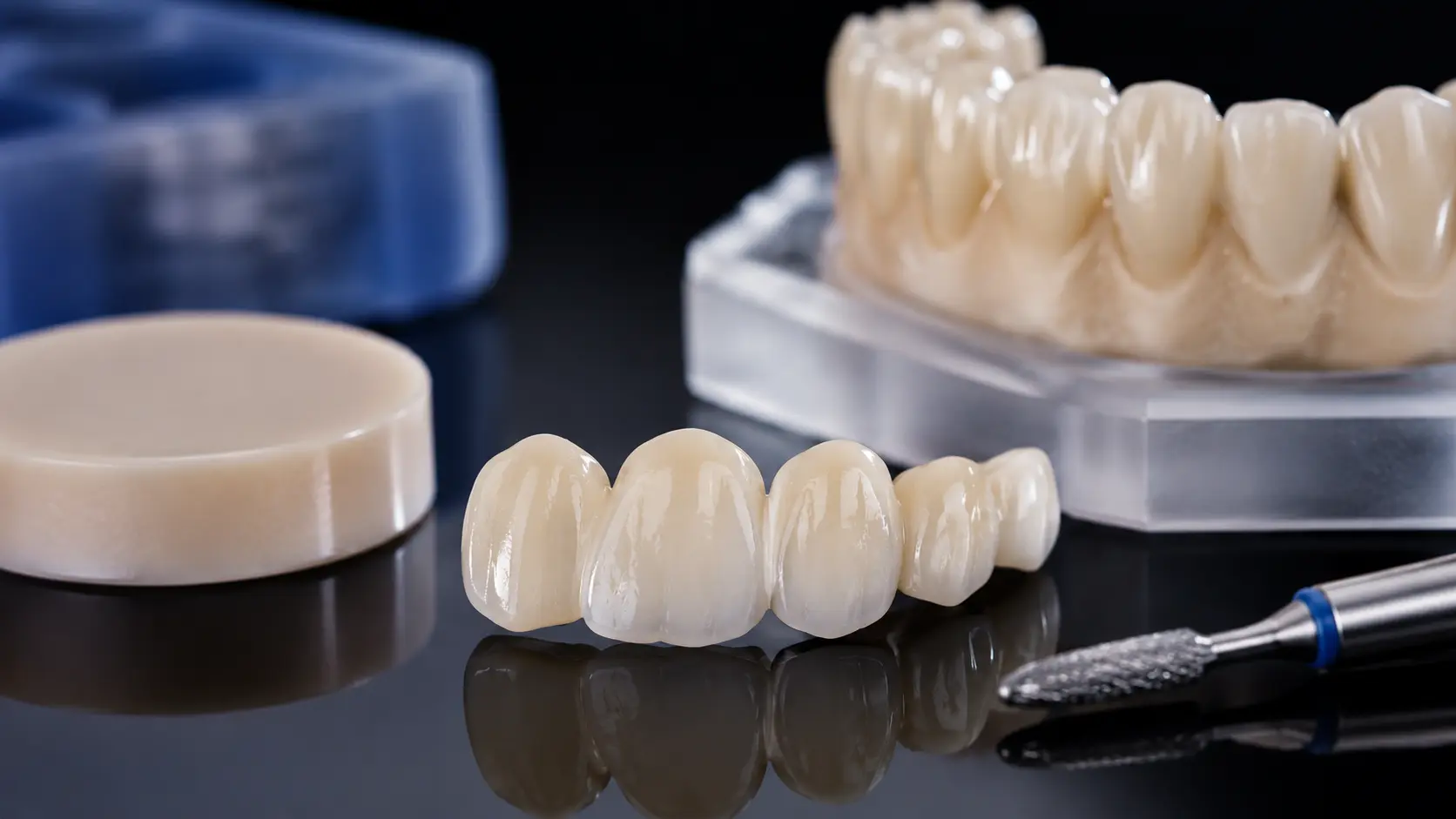
One of the most common applications of PMMA is the fabrication of temporary dental crowns.
A PMMA dental temporary crown protects the prepared tooth while the permanent crown is being manufactured. During this period, the temporary crown preserves chewing function, protects sensitive tooth structures, and maintains the patient's smile.
Unlike traditional chairside temporary materials, digitally milled PMMA crowns provide:
-
Better marginal adaptation
-
Improved strength
-
Superior aesthetics
-
Greater wear resistance
-
More comfortable function
For patients undergoing extensive smile makeovers or implant rehabilitation, PMMA temporary crowns also allow the dentist to evaluate the shape, bite, and appearance before producing the final ceramic restoration.
This trial period often results in a more predictable and satisfying final outcome.
PMMA Dental Bridges and Implant Prostheses
Beyond single crowns, PMMA is widely used to fabricate temporary implant-supported bridges.
A PMMA dental bridge can replace one or several missing teeth while the implants heal and integrate with the jawbone.
In full-mouth rehabilitation, dentists frequently deliver a PMMA dental prosthesis immediately after implant placement.
These restorations allow patients to:
-
Eat soft foods comfortably
-
Speak normally
-
Maintain facial support
-
Smile confidently during healing
Although considered provisional, modern PMMA implant prostheses are remarkably durable and can function successfully for extended periods when properly maintained.
For many patients, they provide an excellent transition between surgery and the definitive zirconia or ceramic restoration.
PMMA for Full-Arch Implant Restorations
One of the most important uses of PMMA today is in full-arch implant dentistry.
Patients receiving All-on-4 or All-on-6 treatments usually leave the clinic with a fixed PMMA restoration attached to their implants.
This temporary bridge plays several critical roles.
First, it protects the implants during osseointegration by distributing chewing forces more evenly.
Second, it allows dentists to evaluate the patient's bite, speech, smile line, and facial support before manufacturing the definitive prosthesis.
Finally, it gives patients immediate functional teeth, dramatically improving comfort and confidence throughout the healing period.
Thanks to modern CAD/CAM manufacturing, today's PMMA full-arch restorations are stronger, more aesthetic, and more precise than ever before.
Benefits of PMMA Dental Restorations
The growing popularity of PMMA restorations is no coincidence. Both clinicians and patients benefit from the material's unique combination of performance, affordability, and digital compatibility.
Some of the main advantages include:
-
Excellent aesthetics with natural-looking tooth color
-
Lightweight construction for improved comfort
-
High compatibility with CAD/CAM digital workflows
-
Fast manufacturing and delivery
-
Easy chairside adjustments and repairs
-
Good fracture resistance for provisional restorations
-
Cost-effective compared with definitive ceramic restorations
-
Ideal for implant-supported provisional prostheses
These benefits explain why PMMA has become the material of choice for many temporary restorative procedures, particularly in advanced implant dentistry.
All on 6 dental implants in Turkey : Benefits, recovery and cost
Limitations of PMMA Restorations
Despite its many advantages, PMMA is not intended to replace permanent restorative materials in every situation. Understanding its limitations helps patients and dentists determine when it is the most appropriate choice.
One of the main considerations is durability. Although modern CAD/CAM PMMA is significantly stronger than conventional acrylic materials, it is still less resistant to long-term wear than zirconia or high-strength ceramics. For this reason, PMMA is generally used as a temporary restoration while the implants heal or until the final prosthesis is ready.
PMMA can also become scratched or lose some of its surface polish over time, especially in patients with heavy biting forces or habits such as teeth grinding (bruxism). Regular dental check-ups and proper oral hygiene can help maintain its appearance and function throughout the treatment period.
It's important to remember that PMMA is designed to provide a predictable and comfortable transition toward a definitive restoration—not necessarily to serve as a lifelong solution.
PMMA vs Zirconia vs Acrylic
Patients often ask how PMMA compares with other restorative materials. While each material has its own advantages, the best choice depends on the stage of treatment and the patient's individual needs.
|
Feature |
PMMA |
Zirconia |
Conventional Acrylic |
|
Purpose |
Temporary restorations |
Permanent restorations |
Temporary dentures |
|
Strength |
High |
Very High |
Moderate |
|
Aesthetics |
Excellent |
Excellent |
Good |
|
CAD/CAM Compatible |
Yes |
Yes |
Limited |
|
Longevity |
Months to several years |
10–20+ years |
Short-term |
|
Cost |
Moderate |
Higher |
Lower |
In implant dentistry, the treatment often begins with a PMMA prosthesis and progresses to a zirconia restoration once healing is complete. This staged approach allows the implants to integrate properly while giving the dentist an opportunity to refine the bite, aesthetics, and overall function before delivering the final prosthesis.
PMMA Crown Cementation
The success of a temporary PMMA crown depends not only on the material itself but also on proper cementation.
In most cases, PMMA crown cementation is performed using temporary dental cement. This allows the crown to remain stable during daily function while making it easy for the dentist to remove it when it's time to place the permanent restoration.
For implant-supported restorations, PMMA prostheses are commonly secured with screws rather than cement. Screw-retained restorations simplify maintenance, facilitate future adjustments, and allow easy removal if necessary.
Choosing the appropriate retention method depends on factors such as the type of restoration, implant position, and the overall treatment plan.
PMMA Crown Price and Cost Factors
One of the reasons PMMA remains so popular is its affordability compared with permanent restorative materials.
The PMMA crown price varies depending on several factors, including:
-
The country where treatment is performed.
-
The clinic's technology and digital workflow.
-
Whether the restoration is fabricated chairside or in a dental laboratory.
-
The complexity of the case.
-
The number of teeth being restored.
For full-arch implant treatments, PMMA restorations are usually included as part of the overall treatment package rather than being priced separately.
Although zirconia restorations involve a higher initial investment, PMMA provides an economical solution during the healing phase without compromising comfort or aesthetics.
Why Patients Choose Autora Clinic in Istanbul for Digital PMMA Restorations
Successful implant rehabilitation depends on much more than selecting the right material. It also requires precise planning, digital technology, and an experienced multidisciplinary team.
At Autora Clinic in Istanbul, digital dentistry is integrated into every stage of implant treatment. Using advanced CAD/CAM workflows, high-quality dental PMMA materials, and modern implant planning protocols, the clinic provides temporary restorations designed to achieve excellent function, comfort, and aesthetics.
Patients receiving full-arch implant rehabilitation at Autora Clinic in Turkey benefit from personalized treatment planning, digitally designed provisional restorations, and close collaboration between implant surgeons and prosthetic specialists.
By combining modern technology with clinical expertise, Autora Clinic aims to deliver restorations that not only look natural but also provide a predictable transition toward the final prosthesis.
Whether a patient requires a single implant restoration or a complete smile reconstruction, digital PMMA restorations help ensure a smoother treatment experience and more predictable long-term outcomes.
Autora Clinic Wins the Golden Award for Best Dental Clinic in Turkey – 2025
Frequently Asked Questions
What does PMMA mean in dentistry?
PMMA stands for Polymethyl Methacrylate, a biocompatible acrylic resin widely used for temporary crowns, bridges, dentures, and implant-supported provisional restorations.
Is PMMA used for permanent crowns?
Generally, no. PMMA is primarily intended for temporary restorations. Permanent crowns are more commonly fabricated from zirconia, porcelain, or lithium disilicate ceramics.
How long can a PMMA restoration last?
Although designed as a provisional material, CAD/CAM PMMA restorations can remain functional for several months and, in some cases, several years when properly maintained and used under appropriate conditions.
Is PMMA safe for dental restorations?
Yes. PMMA has been used safely in dentistry for decades. Modern industrially polymerized PMMA blocks offer excellent biocompatibility, strength, and dimensional stability.
Why do dentists use PMMA before zirconia?
PMMA allows dentists to evaluate aesthetics, speech, bite, and chewing function before fabricating the definitive zirconia restoration. This step helps reduce adjustments and improve the final treatment outcome.
Is PMMA suitable for All-on-4 and All-on-6 treatments?
Yes. PMMA is one of the most commonly used materials for immediate temporary prostheses in All-on-4 and All-on-6 implant treatments because it provides excellent aesthetics, comfort, and functionality during healing.
PMMA has become one of the most important materials in modern digital dentistry, particularly in implant rehabilitation and full-mouth restoration. Its combination of strength, aesthetics, affordability, and compatibility with CAD/CAM technology makes it an ideal choice for temporary crowns, bridges, and full-arch implant prostheses.
While PMMA is not intended to replace definitive materials such as zirconia, it plays a crucial role in achieving predictable treatment outcomes. It allows patients to maintain function, comfort, and confidence throughout the healing process while giving clinicians the opportunity to refine every aspect of the final restoration.
As digital dentistry continues to evolve, PMMA will remain an essential component of efficient, patient-centered implant workflows, helping bridge the gap between surgery and a durable, long-lasting smile.
Fill it out to get your free consultation
Innovation & Precision In Every Implant
We use only reputable, high-quality implants designed for long-term durability
BioTec Dental Implants


Hiossen Dental Implants


Straumann Dental Implants


Nobel Biocare Dental Implants


MegaGen Dental Implants