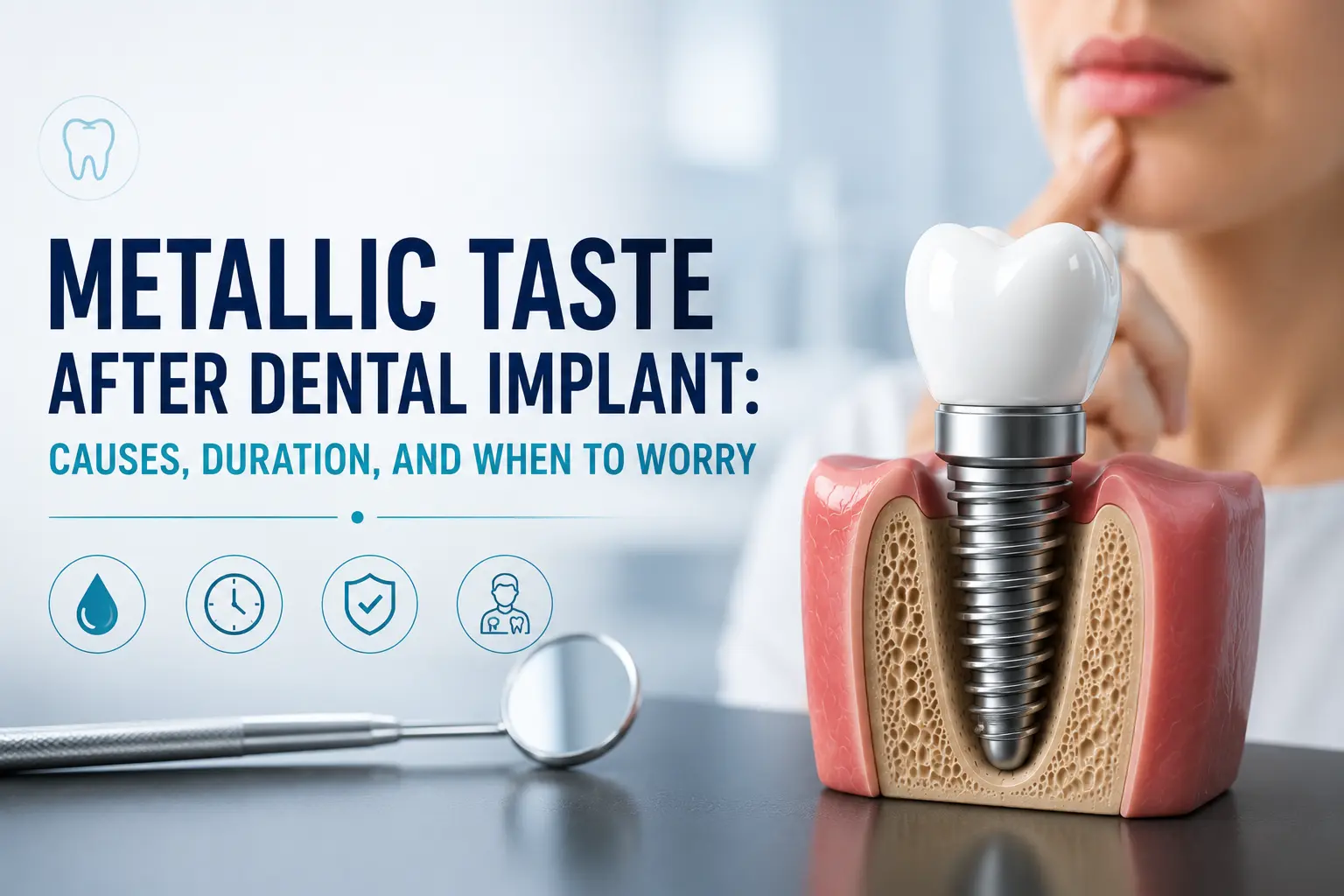
Metallic Taste After Dental Implant: Causes, Duration, and When to Worry
Metallic Taste After Dental Implant: Causes, Duration, and When to Worry
Experiencing a metallic or bitter taste after a dental implant? Learn why it happens, how long it lasts, when it's normal, and when you should contact your dentist.
Table of Contents
- Is a Metallic Taste After a Dental Implant Normal?
- What Causes a Metallic or Bitter Taste After Dental Work?
- Common Reasons for a Metallic Taste After Dental Implant Surgery
- Bitter, Sour, or Metallic Taste: What's the Difference?
- How Long Does a Metallic Taste Last After Surgery?
- Can Dental Implants Affect Your Sense of Taste?
- When Is a Metallic or Bitter Taste a Sign of a Problem?
- How to Get Rid of a Metallic or Bitter Taste After an Implant
- Why Patients Choose Autora Clinic in Istanbul for Dental Implant Care
- Frequently Asked Questions
Is a Metallic Taste After a Dental Implant Normal?
A metallic taste after a dental implant is one of the most common concerns patients experience during the first few days after surgery. Fortunately, in most cases, it is a temporary and harmless part of the normal healing process.
Immediately after implant placement, your mouth undergoes several changes. Minor bleeding, saliva mixing with blood, healing tissues, medications, and antiseptic mouth rinses can all temporarily alter your sense of taste. Many patients describe this sensation as metallic, bitter, sour, or unusual.
The important thing to remember is that a temporary change in taste does not usually mean the implant has failed.
However, if the unpleasant taste becomes stronger instead of improving, lasts for several weeks, or is accompanied by swelling, pus, fever, or severe pain, it may indicate an infection or another complication that requires professional evaluation.
What Causes a Metallic or Bitter Taste After Dental Work?
A metallic or bitter taste after dental treatment can result from several completely normal healing processes.
1. Small Amounts of Blood
Blood naturally contains iron. Even tiny amounts mixing with saliva can produce a noticeable metallic taste for the first 24–72 hours after surgery.
This is considered one of the most common reasons patients notice a metallic taste after dental implant surgery.
2. Healing Tissues
As the surgical site heals, inflammatory cells and healing fluids are released into the area. These natural biological processes may temporarily affect how food and saliva taste.
3. Medications
Certain medications prescribed after implant surgery—including antibiotics, pain relievers, and anti-inflammatory drugs—are known to cause temporary taste disturbances.
The taste usually disappears once the medication is completed.
4. Chlorhexidine Mouthwash
Many dentists prescribe chlorhexidine mouthwash after implant surgery to reduce bacteria during healing.
While highly effective, chlorhexidine may temporarily cause:
-
Metallic taste
-
Bitter taste
-
Altered taste sensation
-
Temporary reduction in taste perception
These effects usually resolve after discontinuing the rinse.
5. Dry Mouth
After surgery, patients often breathe through their mouth, drink less water, or take medications that reduce saliva production.
A dry mouth can intensify unpleasant tastes because saliva plays an important role in cleansing the mouth and maintaining normal taste perception.
Read More: PMMA Dental Restorations: Benefits, Uses, Crowns, Bridges, and Temporary Prostheses Explained
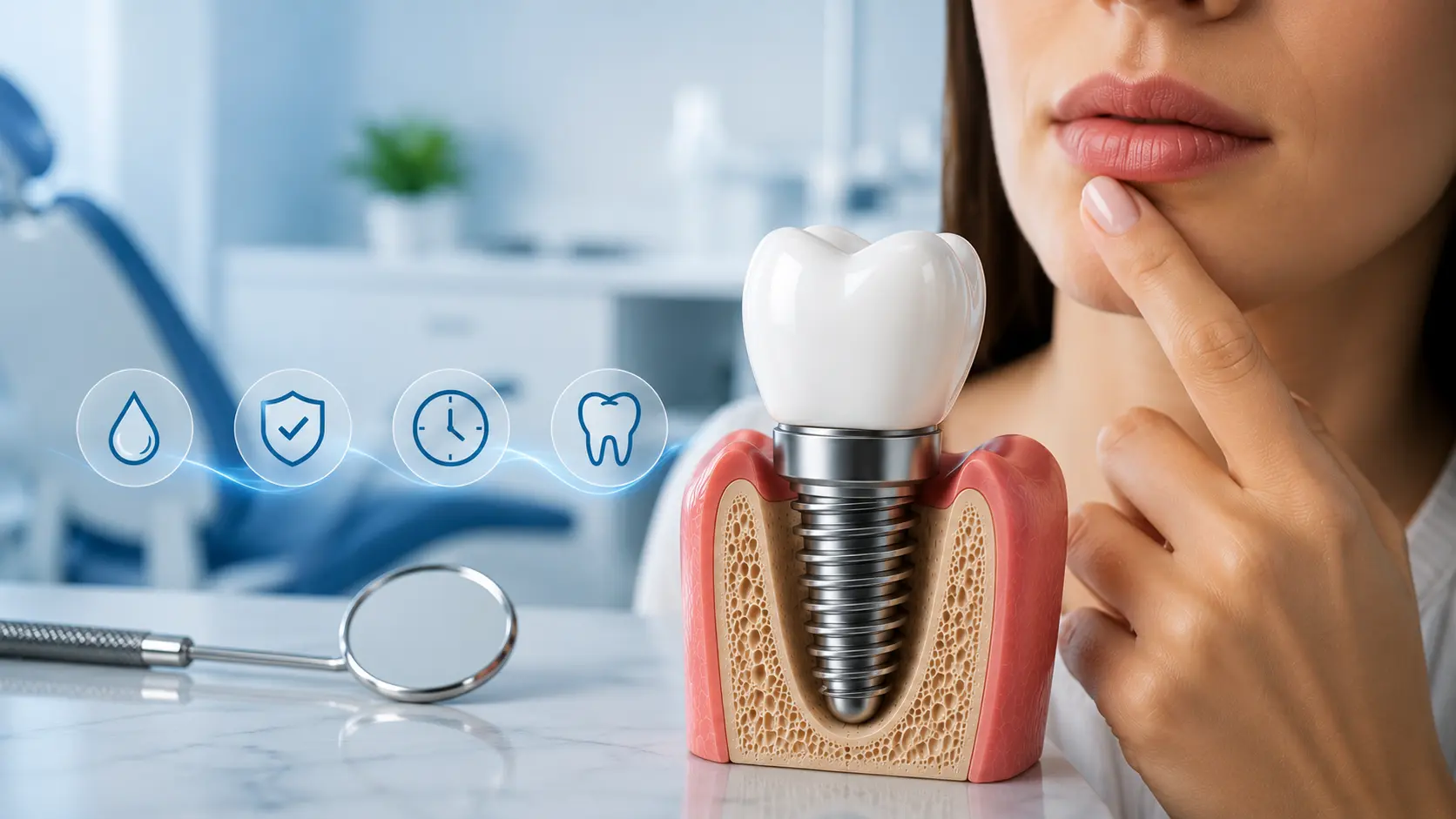
Common Reasons for a Metallic Taste After Dental Implant Surgery
While temporary taste changes are usually harmless, understanding their possible causes helps patients know what is normal and when to seek help.
Common causes include:
-
Minor bleeding after surgery
-
Blood clot formation
-
Healing gums
-
Chlorhexidine mouthwash
-
Antibiotics
-
Pain medications
-
Dry mouth
-
Food debris trapped around the surgical site
-
Temporary inflammation
Most of these resolve naturally as healing progresses.
Bitter, Sour, or Metallic Taste: What's the Difference?
Patients often describe different types of unpleasant tastes after implant surgery.
Metallic Taste
Usually caused by small amounts of blood, medications, or antiseptic rinses.
Bitter Taste
Often associated with certain antibiotics, chlorhexidine mouthwash, or medications prescribed after surgery.
Sour Taste
May occur because of:
-
Acid reflux
-
Dry mouth
-
Food debris around the implant
-
Early bacterial accumulation if oral hygiene is inadequate
Although these tastes may feel different, they often share similar temporary causes during healing.
How Long Does a Metallic Taste Last After Surgery?
The duration varies from one patient to another, but most temporary taste changes improve quickly.
Typical timeline:
-
First 24–48 hours: Most noticeable
-
3–7 days: Usually begins improving
-
1–2 weeks: Often completely resolved
If the taste persists beyond two weeks or becomes progressively worse instead of better, you should schedule a follow-up appointment with your dentist.
Patients who continue taking certain medications may experience altered taste for a slightly longer period.
Can Dental Implants Affect Your Sense of Taste?
A common question patients ask is:
"Do dental implants change your taste buds?"
The short answer is no.
A dental implant does not directly affect your taste buds because taste receptors are primarily located on the tongue—not in the jawbone or gums where the implant is placed.
However, you may temporarily notice changes in taste after surgery due to:
-
Minor bleeding
-
Post-operative swelling
-
Prescription medications
-
Chlorhexidine mouthwash
-
Dry mouth
-
Temporary inflammation around the surgical site
In rare situations, taste disturbances may occur if surgery involves areas close to sensory nerves, particularly in complex lower jaw procedures. Even then, these changes are usually temporary and improve as healing progresses.
Permanent changes in taste after routine dental implant surgery are extremely uncommon.
When Is a Metallic or Bitter Taste a Sign of a Problem?
Although a metallic or bitter taste is usually harmless, there are situations where it may indicate a complication that requires professional attention.
Contact your dentist if the unpleasant taste is accompanied by:
-
Persistent or worsening pain
-
Increasing swelling after several days
-
Pus or discharge around the implant
-
Persistent bad breath that does not improve
-
Fever or feeling generally unwell
-
A loose implant
-
Bleeding that continues beyond the first day
-
A bad taste that persists for more than two weeks without improvement
These symptoms could suggest an infection around the implant site or another condition that should be evaluated promptly.
Early treatment is often simple and helps protect the long-term success of the implant.
How to Get Rid of a Metallic or Bitter Taste After an Implant
In most cases, the unpleasant taste fades naturally as healing progresses. Meanwhile, there are several simple steps that can help reduce the sensation and keep your mouth comfortable.
Stay Well Hydrated
Drinking plenty of water helps wash away blood residue, bacteria, and medication remnants while reducing dry mouth.
Maintain Good Oral Hygiene
Continue brushing the teeth that are not involved in the surgery, and clean around the implant exactly as instructed by your dentist.
Keeping the area clean reduces bacterial buildup that may contribute to unpleasant tastes.
Use Mouthwash Correctly
If chlorhexidine has been prescribed, use it only for the recommended duration.
Do not continue using it longer than advised unless instructed by your dentist, as prolonged use may increase temporary taste disturbances.
Avoid Smoking
Smoking delays healing, increases the risk of infection, and can worsen unpleasant tastes following implant surgery.
Eat Soft, Nutritious Foods
Choose soft foods during the first few days and avoid very spicy, acidic, or extremely hot foods that may irritate the healing tissues.
Never Ignore Persistent Symptoms
If the taste becomes stronger instead of improving, or is accompanied by pain, swelling, or discharge, arrange a dental examination rather than trying home remedies alone.
Read More: Dental Implant Success Rate: 10, 20 & 30-Year Results, Failure Risks, and How Long Implants Last
Why Patients Choose Autora Clinic in Istanbul for Dental Implant Care
Successful implant treatment depends on much more than placing the implant itself. Careful planning, advanced technology, and comprehensive follow-up all contribute to a smooth recovery and long-lasting results.
At Autora Clinic in Istanbul, every implant treatment is planned using modern digital technology to maximize precision while minimizing surgical trauma whenever possible.
Patients receive detailed post-operative instructions, regular follow-up appointments, and continuous support throughout the healing process to ensure recovery progresses normally.
If any symptoms such as unusual pain, swelling, or persistent taste changes occur, the clinical team evaluates the implant promptly and provides appropriate treatment whenever necessary.
This commitment to precision and patient care helps ensure both successful implant integration and a comfortable recovery experience.
Frequently Asked Questions
Why do I taste metal in my mouth after dental work?
The most common reason is a small amount of blood mixing with saliva after treatment. Certain medications and chlorhexidine mouthwash may also contribute to a temporary metallic taste.
How long does a metallic taste last after surgery?
For most patients, it improves within a few days and disappears completely within one to two weeks.
Do dental implants change your taste buds?
No. Dental implants do not affect your taste buds. Any temporary change in taste is usually related to healing, medications, or reduced saliva rather than the implant itself.
Why do I have a bitter taste in my mouth after surgery?
A bitter taste is commonly caused by antibiotics, antiseptic mouthwash, healing fluids, or temporary dry mouth following surgery.
Why do I have a sour taste in my mouth after implantation?
A sour taste may result from dry mouth, trapped food particles, inadequate oral hygiene, acid reflux, or early bacterial accumulation around the healing tissues. If it persists or is accompanied by swelling or discharge, you should contact your dentist.
Is a metallic taste a sign that my implant is failing?
Not usually. A temporary metallic taste during the first days after surgery is considered normal. Implant failure is generally associated with symptoms such as increasing pain, swelling, implant mobility, pus, or continuous bleeding rather than taste changes alone.
Experiencing a metallic taste after a dental implant can be unsettling, but in most cases, it is a normal part of the healing process. Minor bleeding, prescribed medications, antiseptic mouthwash, and natural tissue healing are among the most common reasons patients notice a metallic, bitter, or sour taste after dental surgery.
These symptoms usually improve within a few days and disappear completely as the surgical site heals. However, if the unpleasant taste persists for more than two weeks, worsens over time, or is accompanied by pain, swelling, pus, fever, or a loose implant, you should seek professional dental care without delay.
Understanding what is normal during recovery—and recognizing the warning signs that require attention—can help ensure a smooth healing process and protect the long-term success of your dental implant.
Fill it out to get your free consultation
Innovation & Precision In Every Implant
We use only reputable, high-quality implants designed for long-term durability
BioTec Dental Implants


Hiossen Dental Implants


Straumann Dental Implants


Nobel Biocare Dental Implants


MegaGen Dental Implants