Dental Photogrammetry at Autora Clinic in Turkey : The Future of Accurate Full-Arch Implant Dentistry
Dental Photogrammetry at Autora Clinic in Turkey : The Future of Accurate Full-Arch Implant Dentistry
Learn what dental photogrammetry in Turkey is, how it improves implant accuracy, how it compares with intraoral scanning, and what affects dental photogrammetry price.
Table of Contents
- What Is Dental Photogrammetry?
- How Dental Photogrammetry Works
- Why Accuracy Matters in Full-Arch Implant Cases
- Dental Photogrammetry vs Intraoral Scanning
- The Role of Photogrammetry in Modern Implant Dentistry
- Digital Workflows for Full-Arch Implant-Supported Prostheses
- Dental Photogrammetry Scanners and Technology
- Benefits and Limitations of Dental Photogrammetry
- Cost of Dental Photogrammetry Systems
- Is Dental Photogrammetry Worth It?
- Why Patients Choose Autora Clinic in Turkey for Digital Implant Dentistry
- Frequently Asked Questions
What Is Dental Photogrammetry?
Dental photogrammetry is one of the most advanced technologies in modern digital implant dentistry. In simple terms, it is a technique that uses a specialized camera system to capture the exact position and angulation of dental implants inside the mouth.
Instead of relying only on traditional impressions or standard digital scans, dental photogrammetry records implant positions with a high level of precision. This is especially important in full-arch implant cases, where even a tiny mismatch between the implants and the prosthesis can affect comfort, fit, and long-term success.
So, what is photogrammetry in dentistry? It is the use of calibrated images, reference markers, and advanced software to calculate the three-dimensional relationship between implants. The goal is to create a highly accurate digital record that helps the dental lab design a prosthesis that fits passively and predictably.
How Dental Photogrammetry Works
The process begins after implants or multi-unit abutments are placed. Small scan bodies or reference markers are attached to the implants. Then, a dental photogrammetry camera captures multiple images from different angles.
These images are processed by photogrammetry software dental systems to determine the exact position of each implant. The data is then combined with an intraoral scan of the gums, soft tissues, and bite to create a complete digital workflow.
This is why the technology is often used alongside intraoral scanning rather than replacing it completely. Photogrammetry dental systems capture implant position, while intraoral scanners capture the surrounding anatomy.
Together, they create a more complete and reliable digital impression.
Read More: Dental implant in Turke
Why Accuracy Matters in Full-Arch Implant Cases
Accuracy is important in every dental treatment, but it becomes critical in full-arch implant-supported prostheses.
When a patient receives a full-arch restoration, such as an All-on-4 or All-on-6 prosthesis, the final bridge must connect to multiple implants at the same time. If the digital impression is slightly inaccurate, the prosthesis may not seat passively.
This can lead to complications such as screw loosening, prosthetic fracture, discomfort, bone stress, or long-term implant problems.
That is why photogrammetry dental accuracy is one of the main reasons clinicians use this technology. It helps capture implant positions more reliably in complex cases where traditional impressions or standard digital scans may be more technique-sensitive.
Dental Photogrammetry vs Intraoral Scanning
One of the most common questions is: What is the difference between intraoral scanning and photogrammetry?
An intraoral scanner captures the visible surfaces inside the mouth, including teeth, gums, scan bodies, and soft tissue. It creates a 3D model by stitching together many images.
Dental photogrammetry, on the other hand, focuses mainly on the exact 3D position of implants. It does not replace the full-mouth scan; instead, it strengthens the implant-position data.
Intraoral scanning is excellent for crowns, veneers, short-span bridges, and soft tissue records. But in full-arch implant cases, accuracy can become more challenging because the scanner must stitch together a long, edentulous arch with fewer landmarks.
Photogrammetry helps solve this problem by using coded markers and a calibrated camera system to calculate implant positions directly.
Is Photogrammetry Better Than 3D Scanning?
Another common question is: Is photogrammetry better than 3D scanning?
The answer depends on the case.
For single crowns, small bridges, and general restorative dentistry, 3D intraoral scanning is usually enough. It is fast, comfortable, and highly effective.
For full-arch implant dentistry, however, photogrammetry may offer an advantage because it is designed specifically to capture implant positions with high precision. This makes it especially useful when several implants must support one large fixed prosthesis.
So, photogrammetry is not necessarily “better” than 3D scanning in every situation. It is better suited for certain complex implant workflows, while intraoral scanning remains essential for capturing soft tissue, bite, and overall oral anatomy.
The Role of Photogrammetry in Implant Dentistry
Photogrammetry in implant dentistry is mainly used to improve the accuracy of digital impressions for implant-supported restorations.
It is especially valuable in:
-
Full-arch implant-supported prostheses
-
Immediate-load implant cases
-
All-on-4 and All-on-6 treatments
-
Complex multi-implant restorations
-
Digital smile and prosthetic planning
-
Passive-fit verification
In modern implant clinics, the goal is not only to place implants successfully but also to deliver a prosthesis that fits accurately, functions comfortably, and looks natural.
This is where photogrammetry in dentistry adds real value. It supports a smoother workflow between the surgeon, restorative dentist, and dental laboratory.
Read More: Full mouth dental implant procedure in Turkey
Digital Workflows for Full-Arch Implant-Supported Prostheses
A common advanced workflow combines intraoral scanning and dental photogrammetry for full arch implant supported prosthesis cases.
In this technique, the dentist first uses dental photogrammetry to capture the exact implant positions. Then, an intraoral scanner records the gingiva, opposing arch, and bite relationship.
The dental lab receives both sets of data and merges them in design software. This allows the technician to design a temporary or final prosthesis with a more reliable fit.
This workflow can reduce chair time, improve communication with the lab, and help produce more predictable prosthetic outcomes.
For patients, this often means fewer appointments, fewer adjustments, and a more comfortable final restoration.
Dental Photogrammetry Scanners and Technology
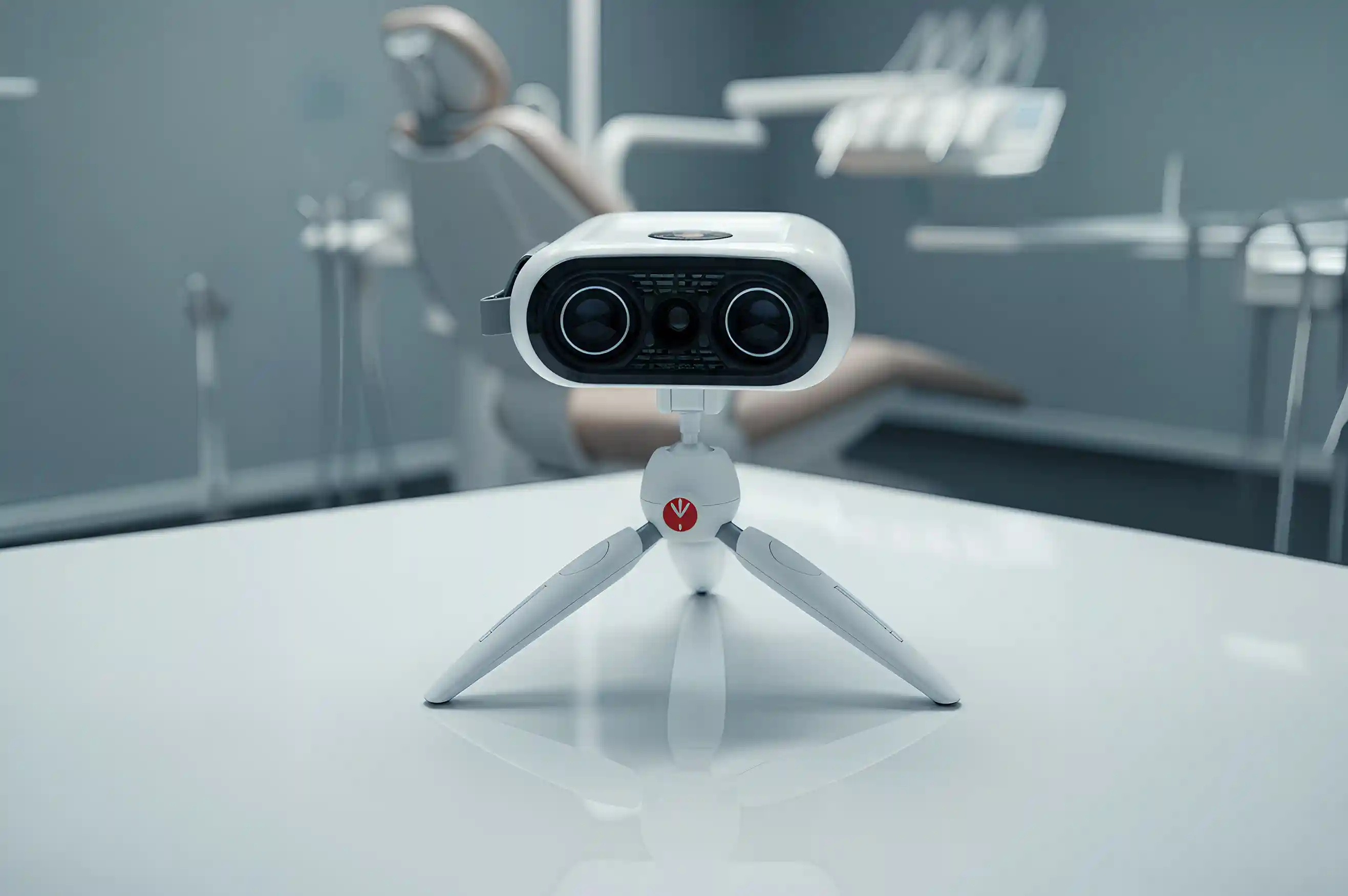
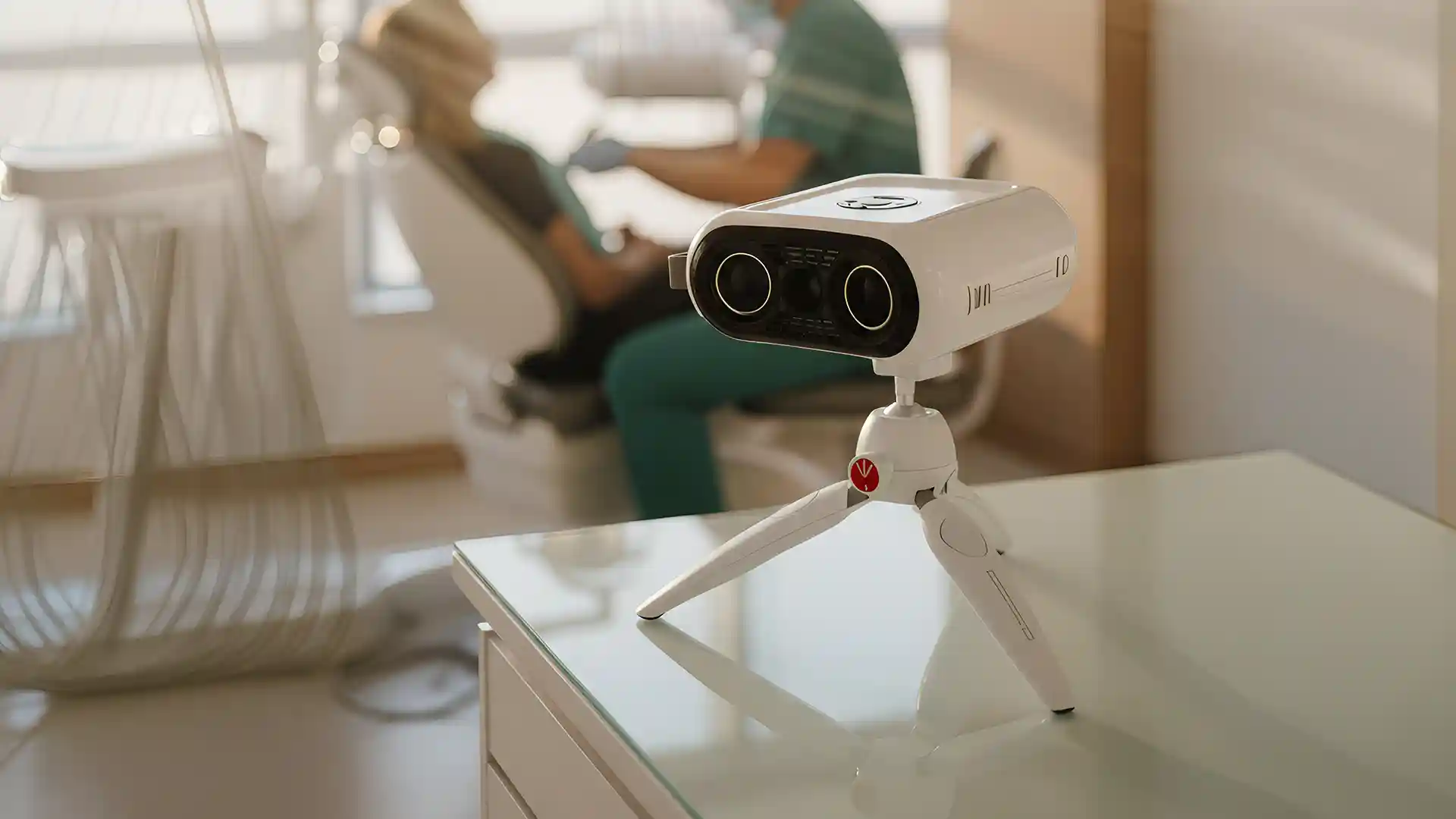
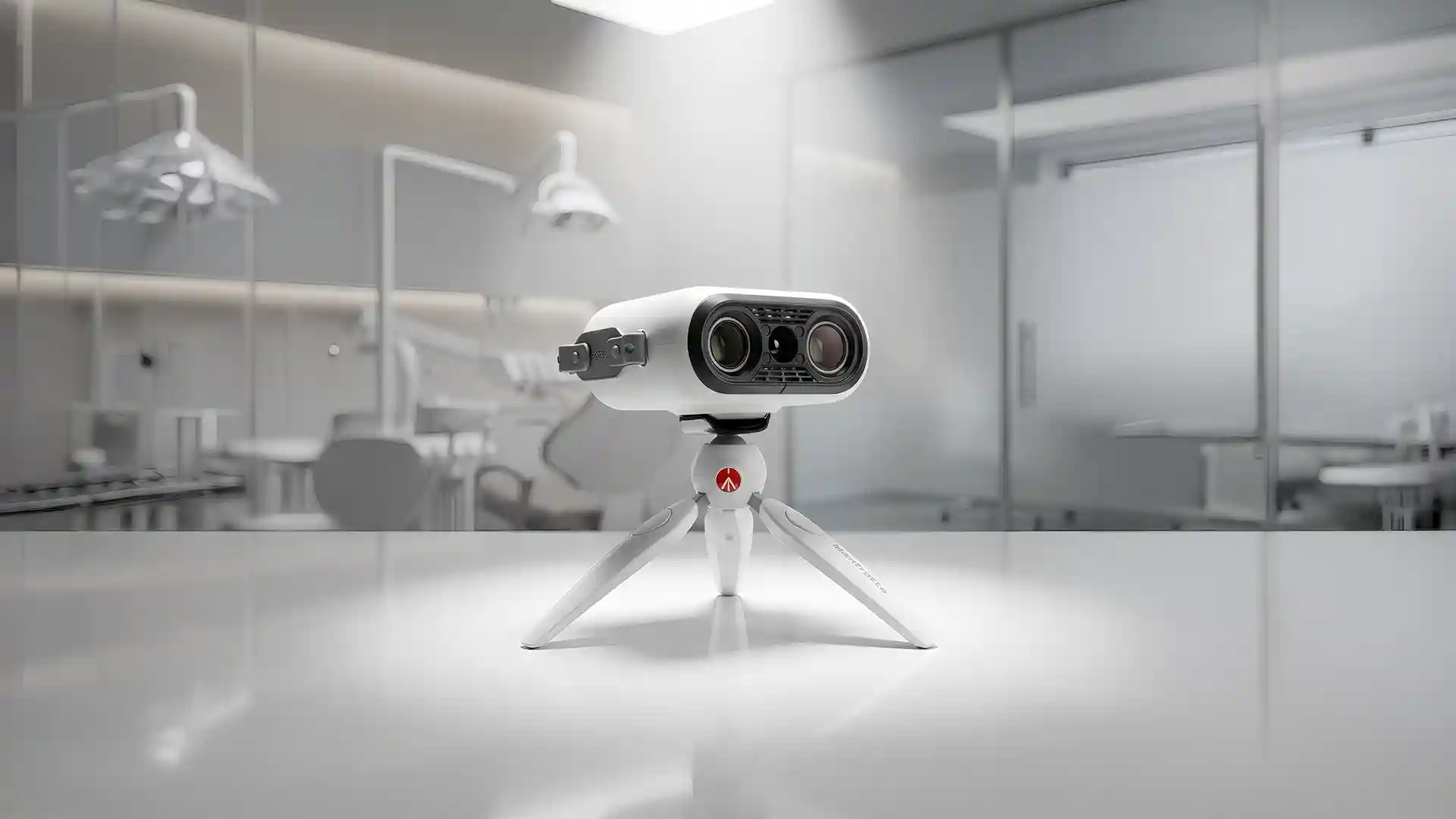
Dental photogrammetry scanners are different from traditional intraoral scanners. They are designed specifically to record implant positions using optical measurement principles.
A photogrammetry dental scanner usually includes a specialized camera, reference scan bodies, calibration tools, and dedicated software. The system reads the spatial position of each implant and converts it into digital data.
Some of the most recognized systems in this field include iCam Dental and other full-arch implant photogrammetry solutions.
The iCam dental scanner, for example, is often used in advanced implant clinics for full-arch cases. It uses a dedicated iCam dental workflow with coded scan bodies to help determine implant position and orientation.
Dental Photogrammetry Camera Technology
The dental photogrammetry camera is the heart of the system. Unlike a regular camera, it is calibrated to capture highly specific measurements.
It records multiple images of the scan bodies from different angles and uses those images to calculate the 3D coordinates of the implants.
This is why the quality of the camera, calibration system, and software all matter. A high-quality dental photogrammetry camera can help improve consistency and reduce the risk of human error in complex implant impressions.
Benefits of Dental Photogrammetry
Dental photogrammetry offers several important advantages for clinicians and patients.
First, it improves accuracy in full-arch implant workflows. This helps the prosthesis fit more passively and reduces the risk of mechanical complications.
Second, it can make the process faster. In many cases, photogrammetry captures implant positions in seconds, reducing the need for conventional impression materials.
Third, it supports a fully digital workflow. This can improve communication between the clinic and the dental laboratory.
Finally, it may improve patient comfort because it avoids some of the discomfort associated with traditional full-arch implant impressions.
Limitations of Dental Photogrammetry
Despite its benefits, dental photogrammetry is not needed for every case.
For single implants or small implant bridges, a standard intraoral scanner may be sufficient. Photogrammetry is most valuable in full-arch or complex multi-implant restorations.
Another limitation is cost. Dental photogrammetry scanners require a significant investment, including hardware, software, training, scan bodies, and maintenance.
There is also a learning curve. While the technology is designed to improve predictability, the clinical team must still understand how to use it correctly and how to integrate it into the full digital workflow.
Dental Photogrammetry Price
Dental photogrammetry price varies depending on the system, region, package, software, accessories, and distributor.
In general, a professional dental photogrammetry scanner is a high-end digital dentistry investment. Prices can range from tens of thousands of dollars depending on the brand and included components.
When people search for iCam photogrammetry price, they are usually looking for the cost of the iCam Dental or iCam dental scanner system. Public distributor listings may show different prices depending on generation, package, accessories, and support.
Because prices can change, clinics should request a direct quote from the manufacturer or authorized distributor. The final cost may include the camera, scan bodies, calibration tools, software license, installation, training, and technical support.
Is Dental Photogrammetry Worth It?
For clinics that frequently perform full-arch implant treatments, dental photogrammetry can be a very valuable investment.
It can improve efficiency, reduce remakes, support passive fit, and create a more predictable workflow for implant-supported prostheses.
For smaller clinics that place only occasional single implants, the investment may not be necessary. In those cases, an intraoral scanner may be enough.
The real value of photogrammetry appears in complex implant dentistry, especially when accuracy, speed, and full-arch prosthetic fit are essential.
Why Patients Choose Autora Clinic in Istanbul for Digital Implant Dentistry
As digital dentistry continues to evolve, more patients are seeking clinics that combine advanced technology with experienced implant teams. Autora Clinic in Istanbul has embraced modern digital workflows, including the latest innovations in implant treatment planning and restorative dentistry.
For patients considering full-arch implant rehabilitation, technologies such as dental photogrammetry can play an important role in improving accuracy and treatment predictability. By integrating digital scanning, advanced implant planning, and precise prosthetic workflows, Autora Clinic in Turkey aims to provide efficient and patient-centered implant solutions.
One of the key advantages of a fully digital approach is the ability to capture implant positions more accurately, helping dental laboratories fabricate restorations with a precise passive fit. This can reduce adjustments, improve comfort, and support long-term implant success.
Patients traveling to Autora Clinic in Istanbul for implant treatment often appreciate the combination of modern technology, experienced clinicians, and comprehensive care under one roof. As digital techniques continue to advance, the use of systems related to dental photogrammetry at Autora Clinic reflects a commitment to precision-driven implant dentistry and improved patient outcomes.
Whether a patient requires a single implant restoration or a full-arch implant-supported prosthesis, digital workflows help create a more predictable treatment experience from diagnosis to final restoration.
Read More: All on 6 dental implants in Turkey : Benefits, recovery and cost
Frequently Asked Questions
What is photogrammetry used for?
In dentistry, photogrammetry is mainly used to capture the precise position and angle of dental implants, especially in full-arch implant-supported restorations.
What is photogrammetry in dentistry?
Photogrammetry in dentistry is a digital technique that uses calibrated images and specialized software to measure implant positions in three dimensions.
What is the difference between intraoral scanning and photogrammetry?
Intraoral scanning captures the surfaces of the mouth, while photogrammetry captures the exact position of dental implants. In full-arch implant cases, both technologies are often used together.
Is photogrammetry better than 3D scanning?
Photogrammetry can be better for full-arch implant position accuracy, while 3D intraoral scanning is better for capturing teeth, gums, bite, and soft tissue details.
What is iCam Dental?
iCam Dental is a dental photogrammetry system used to capture implant positions in full-arch implant workflows.
What affects dental photogrammetry price?
The price depends on the scanner brand, camera system, software, scan bodies, training, support, and whether the package includes accessories or updates.
Conclusion
Dental photogrammetry is changing the way clinicians approach full-arch implant dentistry. By capturing implant positions with high precision, it helps improve prosthetic fit, reduce workflow errors, and support more predictable digital implant treatments.
It does not completely replace intraoral scanning. Instead, the best results often come from combining both technologies: photogrammetry for implant position and intraoral scanning for soft tissue and bite details.
For advanced implant clinics, especially those performing full-arch restorations, dental photogrammetry represents one of the most important tools in modern digital dentistry.
Fill it out to get your free consultation
Innovation & Precision In Every Implant
We use only reputable, high-quality implants designed for long-term durability
BioTec Dental Implants


Hiossen Dental Implants


Straumann Dental Implants


Nobel Biocare Dental Implants


MegaGen Dental Implants