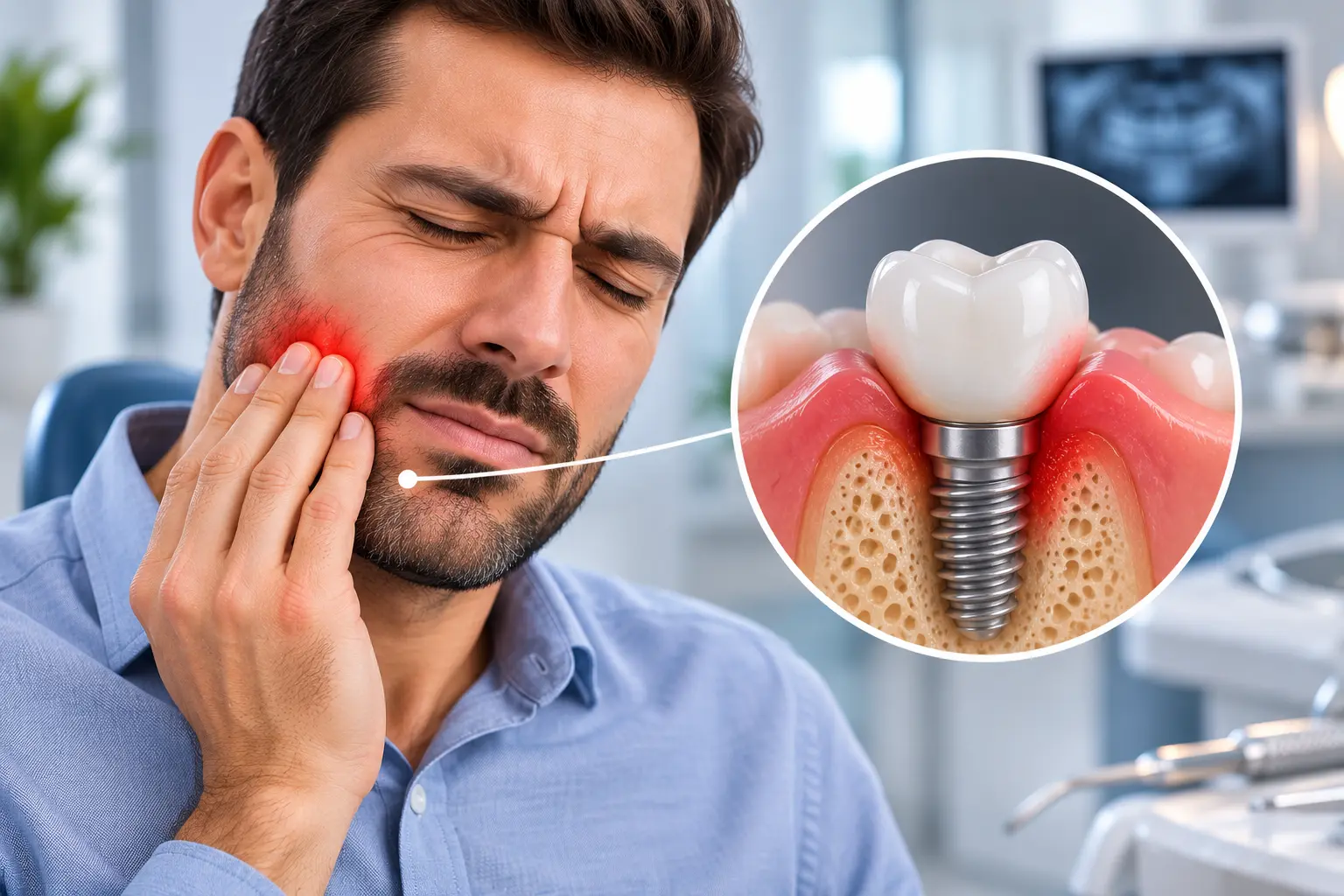
Why Does My Dental Implant Hurt Months or Years Later?
Dental Implant Pain Years Later: Causes and Treatment
Why does a dental implant hurt months or years after surgery? Learn about peri-implantitis, pain when chewing, loose implant crowns, and when to see a dentist.
Table of Contents
- Can a Dental Implant Start Hurting Years After Surgery?
- Why Does My Dental Implant Hurt Months or Years Later?
- Can an Old Dental Implant Become Infected?
- Why Does My Dental Implant Hurt When I Chew?
- Can a Dental Implant Hurt Even Though It Has No Nerve?
- Why Does My Dental Implant Throb or Ache?
- Does Pain Mean My Dental Implant Is Failing?
- How Do Dentists Diagnose Pain Around an Implant?
- Can a Painful Dental Implant Be Saved?
- When Does a Dental Implant Need to Be Removed?
- What Should You Do If Your Dental Implant Starts Hurting?
- What If Your Implant Hurts After Dental Treatment in Turkey?
- Frequently Asked Questions
Can a Dental Implant Start Hurting Years After Surgery?
Yes. A dental implant can become uncomfortable long after the initial healing period.
During the first days after implant surgery, some pain and swelling are expected as the tissues recover. These symptoms should generally improve as healing progresses.
Pain that begins months or years later is different.
By that time, the implant should normally be stable within the jawbone, and the surrounding tissues should be healthy.
New pain may indicate that something has changed around the implant or its restoration.
However, it is important to distinguish between pain originating from the implant area and pain caused by the implant itself.
For example, inflammation of the gums, a problem with the implant crown, or a neighboring natural tooth can produce discomfort that feels as though it is coming directly from the implant.
That is why the location of the pain alone cannot establish the diagnosis.
Read More: Dental implant in Turkey
Why Does My Dental Implant Hurt Months or Years Later?
There are several possible explanations for delayed dental implant pain.
1. Inflammation Around the Implant
One of the important conditions dentists investigate is inflammation of the tissues surrounding the implant.
Peri-implant mucositis affects the soft tissues around an implant without the progressive supporting bone loss that characterizes peri-implantitis.
Patients may notice redness, swelling, or bleeding when brushing.
If inflammation progresses and the supporting bone becomes affected, peri-implantitis may develop.
However, not every case of gum inflammation progresses to peri-implantitis, and not every painful implant has this condition.
2. Peri-Implantitis
Peri-implantitis is an inflammatory condition affecting the tissues around a dental implant, associated with progressive loss of supporting bone.
It is commonly linked to dental plaque and may be influenced by factors such as a history of periodontal disease, smoking, and difficulties maintaining adequate cleaning around the implant.
Possible signs include bleeding, swelling, pus, deepening pockets around the implant, or changes in the supporting bone.
Importantly, peri-implantitis does not always cause noticeable pain.
Some patients may have significant inflammation or bone loss without experiencing severe discomfort.
This is why routine implant examinations remain important even when everything feels normal.
3. Problems With the Implant Crown or Abutment
A dental implant usually supports a restoration through connecting components.
Over time, a crown or abutment screw may become loose, or the restoration may develop a problem with its fit or function.
Patients may experience discomfort when chewing, notice movement in the crown, or feel that their bite has changed.
A loose crown is not necessarily the same as a loose implant.
The implant itself may remain firmly integrated with the bone while the restoration above it requires repair.
4. Excessive Biting Forces
Grinding or clenching the teeth can place considerable stress on implant-supported restorations.
Changes in the bite or a poorly adjusted restoration may also concentrate forces on a particular area.
These mechanical problems can cause discomfort or contribute to complications involving the crown, screws, or surrounding structures.
However, pain during chewing should not automatically be attributed to excessive pressure without ruling out inflammation, infection, or other causes.
5. Problems With Nearby Teeth
Sometimes the implant is not the source of the pain at all.
A neighboring tooth may have decay, pulp inflammation, a crack, or a periodontal problem.
Because pain in the mouth can be difficult to localize, patients may mistakenly associate the discomfort with the implant.
A careful examination of the adjacent teeth is therefore an important part of diagnosis.
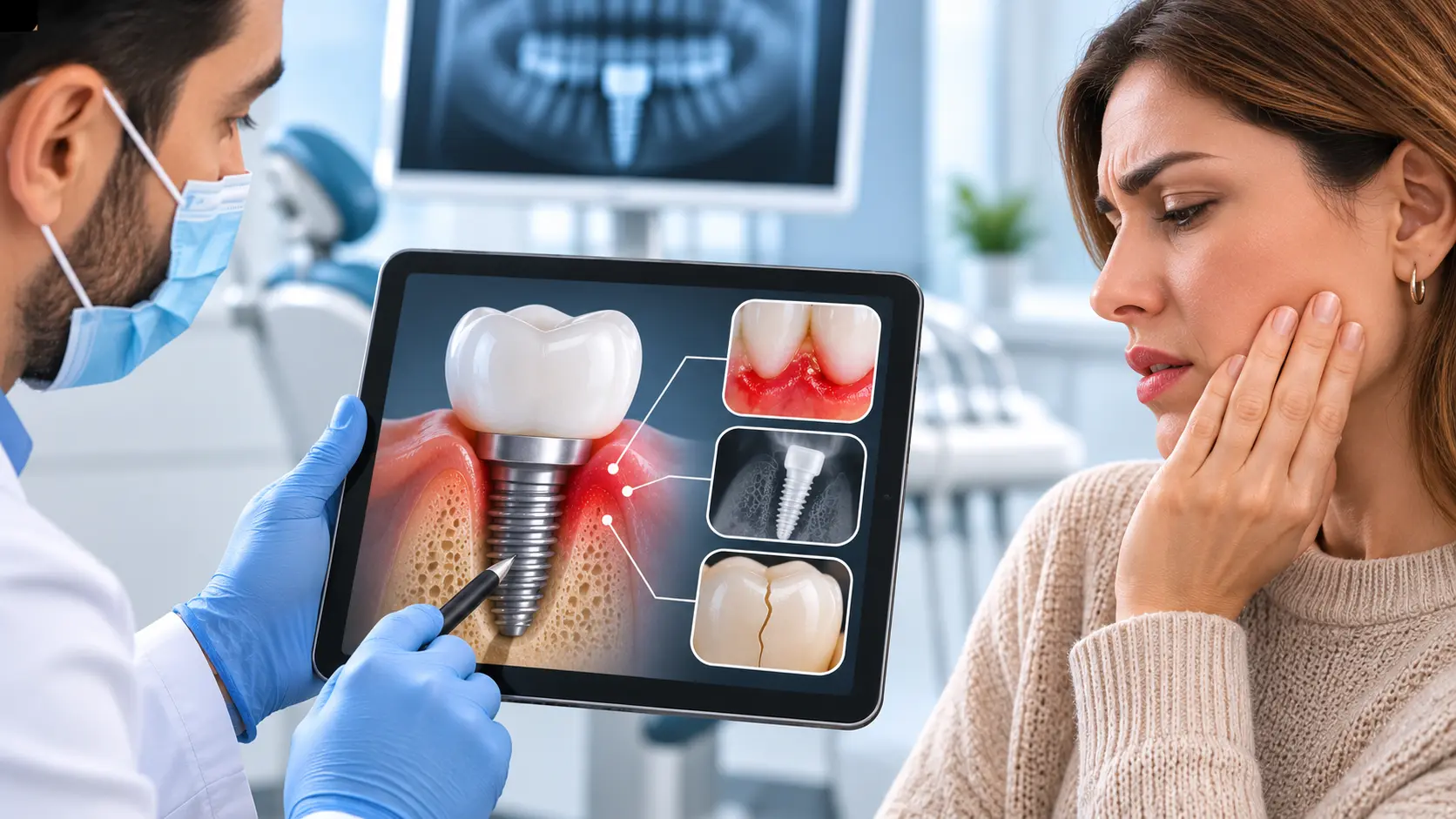
Can an Old Dental Implant Become Infected?
Yes. Infection or inflammatory disease can develop around an implant long after it was placed.
Unlike a natural tooth, a dental implant does not develop cavities. However, the surrounding gums and bone remain vulnerable to disease.
Bacteria accumulating around the implant can contribute to inflammation, particularly when plaque control is difficult.
Possible warning signs include:
-
Redness or swelling around the implant.
-
Bleeding when brushing or cleaning between teeth.
-
Pus or discharge near the implant.
-
Persistent bad taste or unpleasant odor.
-
Tenderness or discomfort when chewing.
-
Changes in the gum line around the restoration.
These symptoms should be assessed by a dentist.
However, the absence of pain does not rule out peri-implant disease, and the presence of pain does not automatically confirm infection.
A diagnosis requires examination of the surrounding tissues and, when appropriate, dental imaging.
Why Does My Dental Implant Hurt When I Chew?
Pain during chewing may suggest a mechanical problem, inflammation around the implant, or discomfort arising from another nearby structure.
One possibility is that the implant crown is receiving excessive biting pressure.
Another is that the crown or one of its connecting components has become loose.
Inflammation in the surrounding tissues may also make chewing uncomfortable.
In some cases, a cracked neighboring tooth can produce pain that feels as though it comes from the implant.
The dentist may check how the teeth meet, examine the stability of the restoration, assess the gums, and take X-rays when indicated.
A painful implant crown does not automatically mean the implant fixture inside the bone has failed.
Identifying which component is involved can make a substantial difference to the treatment required.
Can a Dental Implant Hurt Even Though It Has No Nerve?
Yes. A dental implant is made from biocompatible materials, commonly titanium, and does not contain a dental pulp or nerve like a natural tooth.
However, the tissues surrounding the implant contain sensory nerves.
The gums, bone, and other nearby structures can become inflamed or injured and generate pain.
This explains why patients may feel discomfort around an implant even though the implant itself has no nerve.
It also explains why pain can arise from conditions involving the surrounding tissues rather than from the implant material.
Read More:Dental Implants in Turkey: Why We Don’t Recommend Them to Every Patient
Why Does My Dental Implant Throb or Ache?
A throbbing or persistent ache around an implant can have several causes.
Inflammation or infection may be responsible, but other dental conditions can produce similar sensations.
For example, a neighboring tooth with pulp inflammation may cause pain that seems to spread toward the implant.
Pain may also be associated with problems affecting the surrounding tissues or implant restoration.
The character of the pain can provide useful information, but it is not sufficient for diagnosis.
Persistent throbbing pain, especially when accompanied by swelling, discharge, or fever, requires prompt dental assessment.
Does Pain Mean My Dental Implant Is Failing?
Not necessarily. Dental implant failure generally refers to a situation in which the implant does not achieve or maintain the stability and function required for successful treatment.
However, several problems can cause pain without the implant itself becoming unstable.
For example, an implant crown may be loose while the implant remains firmly integrated with the bone.
Inflammation may also be present around an implant that is still stable.
On the other hand, progressive bone loss, implant mobility, or certain structural complications may threaten the long-term survival of the implant.
It is also important to understand that a failing implant may not always be painful.
Pain is a reason to investigate, not proof that an implant must be removed.
How Do Dentists Diagnose Pain Around an Implant?
Diagnosing pain around an implant requires evaluating both the restoration and the surrounding tissues.
Your dentist may begin by asking when the pain started, whether it occurs during chewing, and whether you have noticed bleeding, swelling, or movement.
The examination may include:
-
Checking the gums for redness, swelling, or bleeding.
-
Measuring the depth of the tissues around the implant when appropriate.
-
Assessing the stability of the implant crown and connecting components.
-
Checking the bite and possible excessive contacts.
-
Examining nearby natural teeth.
-
Reviewing previous dental records and X-rays.
-
Taking new radiographs to evaluate the surrounding bone.
In selected cases, three-dimensional imaging such as CBCT may help investigate complications that cannot be adequately assessed with conventional imaging.
However, CBCT is not necessary for every painful implant.
A proper diagnosis should distinguish between a biological complication, a mechanical problem, and pain originating from another source.
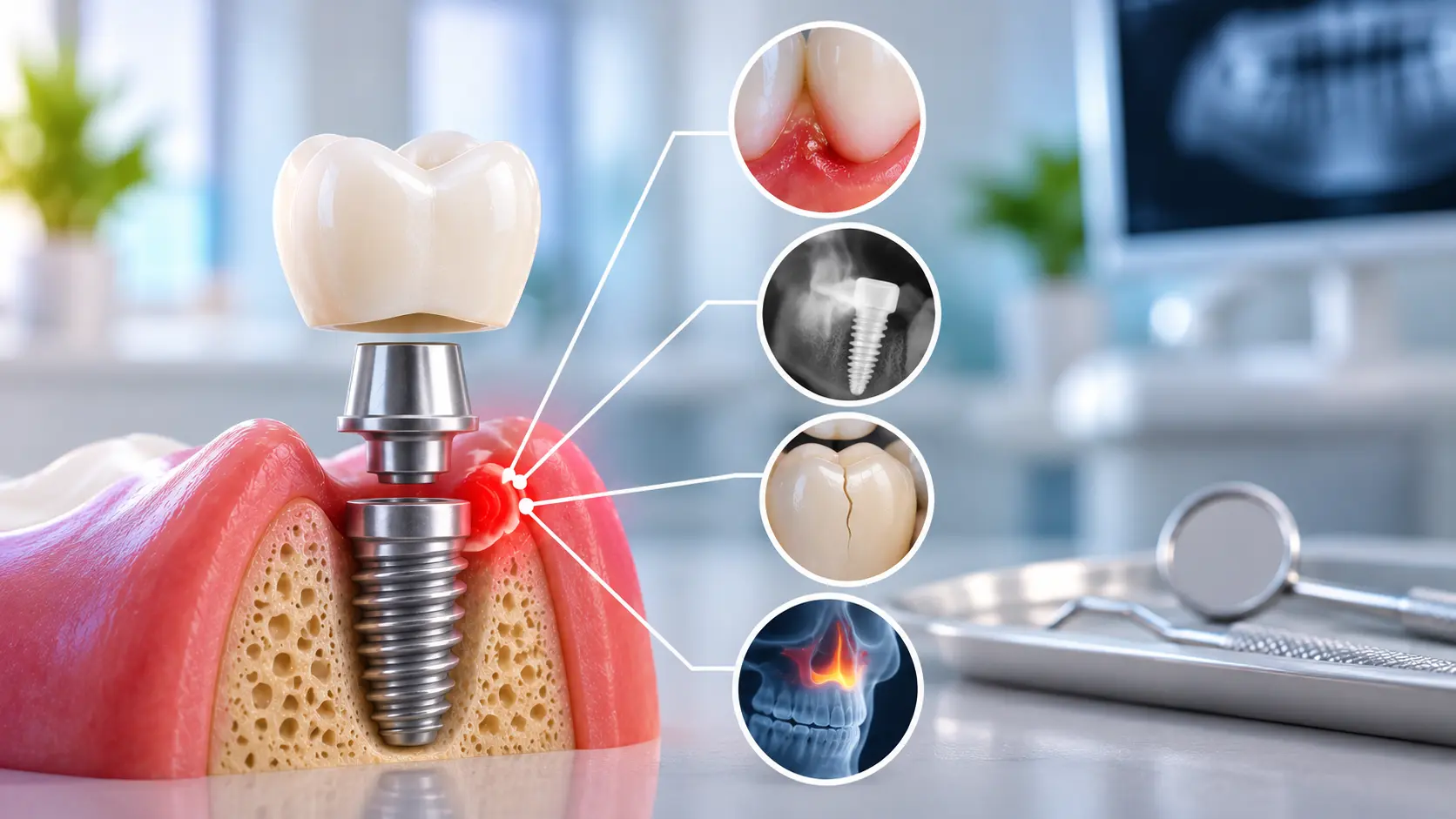
Can a Painful Dental Implant Be Saved?
In many cases, treatment may be possible without removing the implant.
The appropriate approach depends on the cause and severity of the problem.
If the discomfort comes from a loose crown or screw, the dentist may be able to repair or replace the affected component.
If the bite is contributing to the problem, an adjustment may be necessary.
When inflammation affects the tissues around the implant, treatment may involve professional cleaning, improved plaque control, and management of contributing risk factors.
More advanced peri-implantitis may require additional nonsurgical or surgical treatment, depending on the extent and characteristics of the disease.
However, not every implant affected by significant bone loss can be predictably preserved.
The goal is to control the underlying problem and determine whether the implant can remain healthy and functional over time.
Read More: Why Your Dental Implant Treatment Plan May Change After an In-Person Examination
When Does a Dental Implant Need to Be Removed?
Removing an implant is not usually the first step simply because a patient reports pain.
The decision depends on the diagnosis, the stability of the implant, the extent of any supporting bone loss, and whether the problem can be treated predictably.
Removal may be considered when the implant has lost integration with the bone, is fractured, or has severe complications that cannot be managed successfully.
In certain cases, advanced peri-implantitis may leave insufficient support for long-term function.
However, an implant with a damaged crown or loose screw may require restoration repair rather than removal of the implant itself.
This distinction is particularly important for patients who fear that any discomfort means they will need another implant surgery.
What Should You Do If Your Dental Implant Starts Hurting?
If an implant that has been comfortable for months or years begins to hurt, arrange a dental examination rather than waiting for the pain to become severe.
Until your appointment:
-
Avoid chewing hard foods on the painful side.
-
Continue gentle brushing and cleaning around the implant.
-
Do not attempt to tighten or remove the crown yourself.
-
Avoid taking leftover antibiotics without professional advice.
-
Tell your dentist if you notice bleeding, swelling, discharge, or movement.
Seek urgent dental care if pain is severe, swelling is increasing, or you develop pus or fever.
If you experience rapidly spreading facial swelling or difficulty breathing or swallowing, seek emergency medical care immediately.
Early assessment may help identify a manageable problem before it becomes more complicated.
What If Your Implant Hurts After Dental Treatment in Turkey?
Many international patients choose dental implants in Turkey and return home after their treatment.
If pain develops months or years later, it is understandable to wonder whether you need to travel back to the original clinic.
The first priority should be obtaining an appropriate dental assessment, especially if the symptoms are significant.
Contacting the original clinic can be helpful because it may have records of the implant system, surgical procedure, restoration, and previous X-rays.
However, patients with persistent pain, swelling, or signs of infection should not delay necessary care while arranging international travel.
A local dentist may be able to perform the initial examination and determine whether the problem involves the implant crown, surrounding tissues, or the implant itself.
For patients considering dental implants in Istanbul, it is also worth asking how follow-up care, implant records, and potential long-term complications will be managed after returning home.
Dental implant treatment should be planned with long-term maintenance in mind, not only the initial surgery.
Frequently Asked Questions
Is it normal for a dental implant to hurt after one year?
No. New pain a year after implant placement is not an expected part of normal surgical healing. It may have several causes and should be evaluated by a dentist.
Why does my dental implant hurt after five years?
Possible causes include peri-implant inflammation, problems with the crown or connecting components, changes in biting forces, or disease affecting nearby teeth. Examination is needed to identify the source.
Can a dental implant get infected years later?
Yes. Peri-implant disease can develop long after the original surgery, even when the implant initially healed successfully.
Can a dental implant hurt without being infected?
Yes. Loose restorative components, biting problems, or pain from nearby teeth can cause discomfort without infection around the implant.
Why does my implant hurt when I press on it?
Tenderness when pressure is applied may be associated with inflammation, mechanical complications, or problems involving nearby tissues. Avoid repeatedly pressing on the area and arrange an examination.
Does a painful implant always need to be removed?
No. Many causes of discomfort can be treated without removing the implant. Removal is generally considered when the implant cannot be maintained successfully.
Can peri-implantitis develop without pain?
Yes. Peri-implantitis may progress with bleeding, inflammation, or bone loss while causing little or no noticeable pain.
Can antibiotics fix a painful dental implant?
Antibiotics are not a universal solution for implant pain. Treatment depends on the diagnosis, and peri-implant disease often requires local professional treatment and management of contributing factors. Antibiotics should only be used when clinically indicated.
A Painful Implant Does Not Always Mean a Failed Implant
Dental implants can function successfully for many years, but they still require ongoing care and monitoring.
When pain develops long after treatment, the cause may involve inflammation, a mechanical complication, or another dental problem entirely.
The important distinction is between a problem affecting the implant restoration and a condition threatening the implant itself.
Not every painful implant needs to be removed, just as not every implant complication causes pain.
The right treatment begins with identifying the source of the discomfort, not assuming that the implant has failed.
A timely examination can help determine whether the problem can be treated conservatively, whether the surrounding tissues need care, or whether more extensive treatment is necessary.
Fill it out to get your free consultation
Innovation & Precision In Every Implant
We use only reputable, high-quality implants designed for long-term durability
BioTec Dental Implants


Hiossen Dental Implants


Straumann Dental Implants


Nobel Biocare Dental Implants


MegaGen Dental Implants