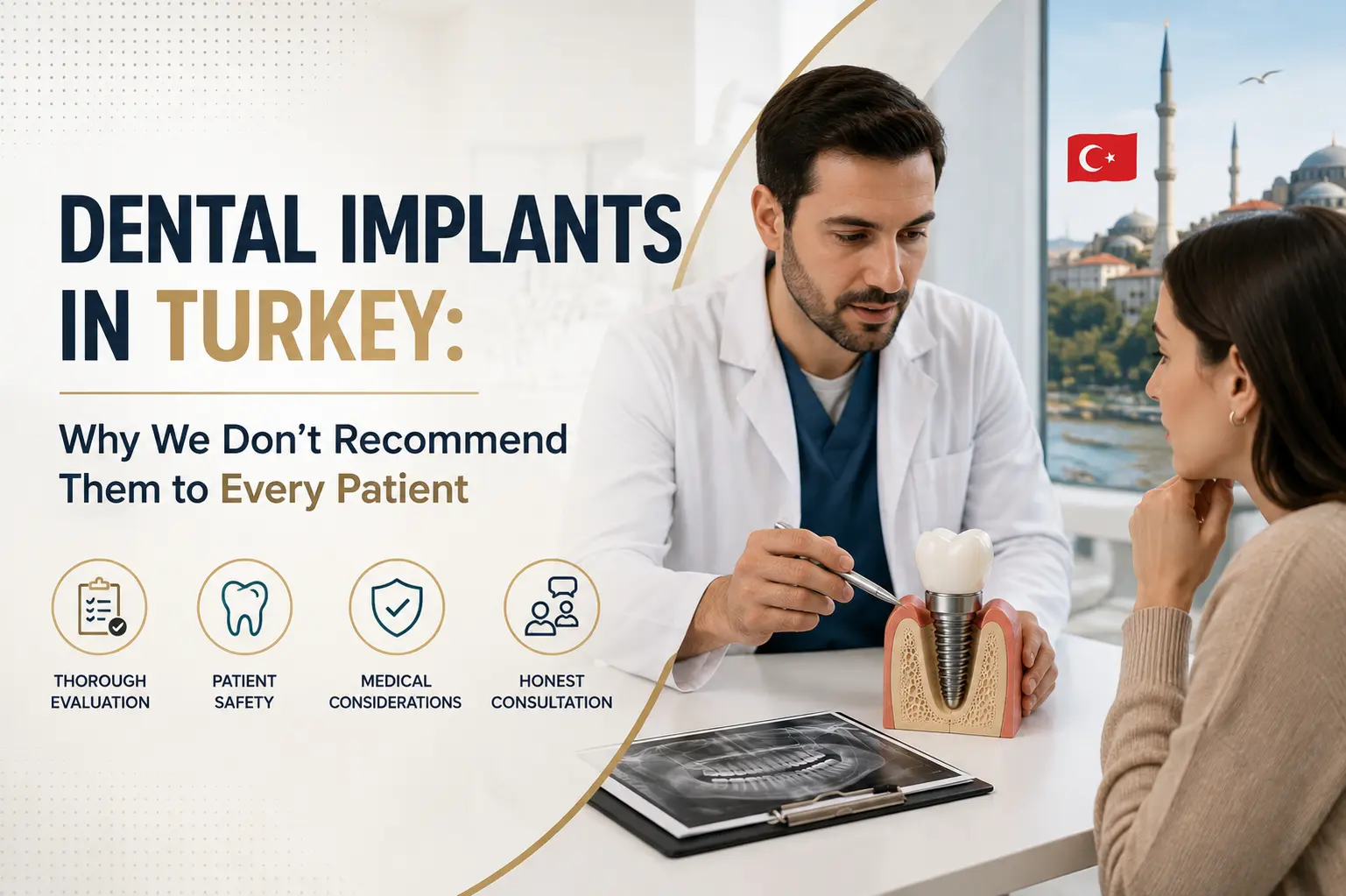
Dental Implants in Turkey: Why We Don’t Recommend Them to Every Patient
Who Should Not Get Dental Implants? | Dental Implants in Turkey
Dental implants are not right for everyone. Learn when implants may be unnecessary, when treatment should be delayed, and what makes someone a suitable candidate for dental implants in Turkey.
Table of Contents
- Do I Really Need a Dental Implant?
- When Is Saving Your Natural Tooth Better Than Getting an Implant?
- Who Should Not Get Dental Implants?
- What If There Is Not Enough Bone for an Implant?
- Why Gum Health Matters Before Dental Implant Surgery
- Can Smoking, Diabetes, or Other Health Conditions Affect Dental Implants?
- Why Might a Dentist Delay Dental Implant Treatment?
- Can an Implant Treatment Plan Change After an Examination or CBCT Scan?
- Dental Implants in Turkey: Should Price Determine Your Treatment?
- Why We May Recommend Fewer Implants Than You Expected
- What Happens If Dental Implants Are Not Right for You?
- Frequently Asked Questions
- The Right Treatment May Sometimes Mean No Implant
When patients contact a dental clinic about dental implants in Turkey, the conversation often begins with practical questions: How many implants do I need? How long will the treatment take? What is the dental implant cost in Turkey?
But there is a more important question that should come first:
Do you actually need a dental implant?
Dental implants can be an excellent way to replace missing teeth, but that does not mean every patient needs one or that every missing or damaged tooth should automatically be replaced with an implant.
Sometimes, the best treatment is to save the natural tooth. In other cases, an implant may be appropriate eventually, but an existing dental or medical condition should be addressed first. And for some patients, another treatment may simply be more suitable.
This is why a responsible implant treatment plan should begin with diagnosis—not with the number of implants to be placed.
Do I Really Need a Dental Implant?
A dental implant is designed primarily to replace a tooth that is missing or a tooth that cannot reasonably be preserved.
That distinction matters.
A severely damaged tooth may look hopeless to a patient, but after clinical examination and appropriate imaging, the dentist may determine that it can still be treated.
Depending on the individual case, treatment might involve:
-
root canal treatment,
-
a dental crown,
-
periodontal treatment,
-
restorative treatment,
-
or another procedure intended to preserve the natural tooth.
Removing a restorable tooth simply to replace it with an implant is not automatically the better option.
When a natural tooth has a reasonable prognosis, preserving it should be carefully considered before extraction and implant placement.
Read More: Why Your Dental Implant Treatment Plan May Change After an In-Person Examination

When Is Saving Your Natural Tooth Better Than Getting an Implant?
Patients sometimes assume that because implants are modern and highly successful, replacing a compromised tooth with an implant must be better than treating the tooth.
It is not that simple.
An implant is an artificial replacement for a missing tooth. It is not an upgrade for a healthy or predictably treatable natural tooth.
The decision depends on factors such as how much healthy tooth structure remains, the condition of the root, periodontal support, fractures, infection, previous treatments, and the expected long-term prognosis.
For example, a tooth that requires root canal treatment and a crown should not necessarily be extracted simply because implant treatment is available.
The real question is:
Can this tooth be predictably saved, or is extraction genuinely the better long-term option?
That decision should be based on clinical findings rather than a preference for performing implant surgery.
Who Should Not Get Dental Implants?
There is no single rule that determines whether someone can or cannot receive dental implants.
Instead, dentists evaluate a combination of oral health, bone condition, medical history, medications, lifestyle factors, and the proposed implant site.
Some conditions may mean implant surgery should be delayed rather than permanently ruled out.
For example, active gum disease or an infection around the planned implant area generally needs to be treated first. Placing an implant into an unhealthy oral environment can unnecessarily increase treatment risks.
Similarly, patients with certain poorly controlled systemic diseases may require medical evaluation and better disease control before elective implant surgery is considered.
Certain medications and medical treatments can also influence bone healing or surgical risk. This is why patients should provide their dentist with an accurate medical history and medication list before implant treatment.
The important point is that being unsuitable for an implant today does not necessarily mean being unsuitable forever.
Sometimes the safest decision is simply to treat the underlying problem first.
What If There Is Not Enough Bone for an Implant?
Bone volume is another major part of implant planning.
After a tooth is lost, the surrounding jawbone can gradually shrink. If significant bone loss has occurred, there may not be enough bone in the ideal position to safely support an implant without additional treatment.
However, insufficient bone does not automatically mean that implants are impossible.
Depending on the situation, options may include bone grafting, sinus augmentation, modification of the implant position or dimensions, or an alternative prosthetic plan.
In other cases, the dentist may conclude that additional surgery would provide limited benefit compared with another treatment option.
This is one reason a proper implant consultation should assess not only whether an implant can technically be placed, but whether it represents the most appropriate treatment for that particular patient.
Why Gum Health Matters Before Dental Implant Surgery
Patients frequently focus on the jawbone when considering implants, but healthy gums and surrounding tissues are equally important.
Active periodontal disease should generally be brought under control before implant placement.
The dentist may evaluate gum inflammation, periodontal pockets, oral hygiene, soft-tissue quality, and the condition of the teeth surrounding the proposed implant.
If these conditions are unfavorable, periodontal or hygiene treatment may be recommended before moving forward.
The objective is not simply to place an implant successfully on the day of surgery. The objective is to create conditions that help the implant remain healthy over the long term.
Can Smoking, Diabetes, or Other Health Conditions Affect Dental Implants?
Yes, but these factors require individual assessment rather than blanket rules.
Smoking can negatively affect healing and is associated with increased implant complications. Patients who smoke may therefore be advised to stop or significantly reduce smoking around the treatment period.
Diabetes does not automatically exclude someone from receiving implants either. The degree of disease control and the patient's overall medical condition are important considerations.
Other medical conditions, previous treatments, and certain medications can also affect treatment planning.
For this reason, patients should never hide medical information because they are worried that a dentist might refuse treatment.
Sometimes that information is exactly what allows the dentist to modify the treatment and perform it more safely.
Read More: All on 6 dental implants in Turkey : Benefits, recovery and cost
Why Might a Dentist Delay Dental Implant Treatment?
Hearing, “We should not place the implant yet,” does not necessarily mean something has gone wrong.
It may actually be the safest treatment decision.
Implant placement may need to be postponed while an infection is treated, gum health improves, bone is reconstructed, a medical condition becomes better controlled, or tissues heal following an extraction.
There are also situations in which the dentist may want to reassess healing before deciding whether additional procedures are necessary.
A longer treatment plan is not necessarily a worse treatment plan.
In implant dentistry, knowing when not to operate can be just as important as knowing how to perform the operation.
Can an Implant Treatment Plan Change After an Examination or CBCT Scan?
Yes. A CBCT scan provides highly valuable three-dimensional information about the jawbone and nearby anatomical structures. It can help evaluate bone dimensions, implant positions, nerves, sinuses, and other important anatomical details.
However, imaging is one part of diagnosis.
The final plan may also depend on the clinical examination, gum condition, tooth mobility, bite, soft tissues, restorability of existing teeth, medical history, and other findings.
Sometimes new information obtained during the examination changes the balance between saving a tooth and extracting it.
Therefore, a preliminary implant plan—particularly one prepared remotely before an international patient arrives—may need to be modified after the dentist performs a complete in-person examination.
The purpose of that change is not to disregard the original plan. It is to make the final treatment reflect the patient's actual clinical condition.
Dental Implants in Turkey: Should Price Determine Your Treatment?
For international patients researching dental implants in Turkey, cost is understandably an important consideration.
Searches such as dental implant price in Turkey, dental implant cost in Istanbul, and how much are dental implants in Turkey? are often among the first steps patients take when comparing treatment options.
But price should come after diagnosis.
The cheapest implant is unnecessary if you do not need an implant in the first place.
Likewise, comparing the dental implant price in Istanbul between clinics is difficult before knowing exactly what treatment is required.
The total cost may vary according to the number of missing teeth, implant system, bone condition, need for grafting or sinus treatment, type of final restoration, and complexity of the individual case.
This is why a responsible quotation should be connected to an actual treatment plan rather than simply offering the maximum number of implants a patient is willing to purchase.
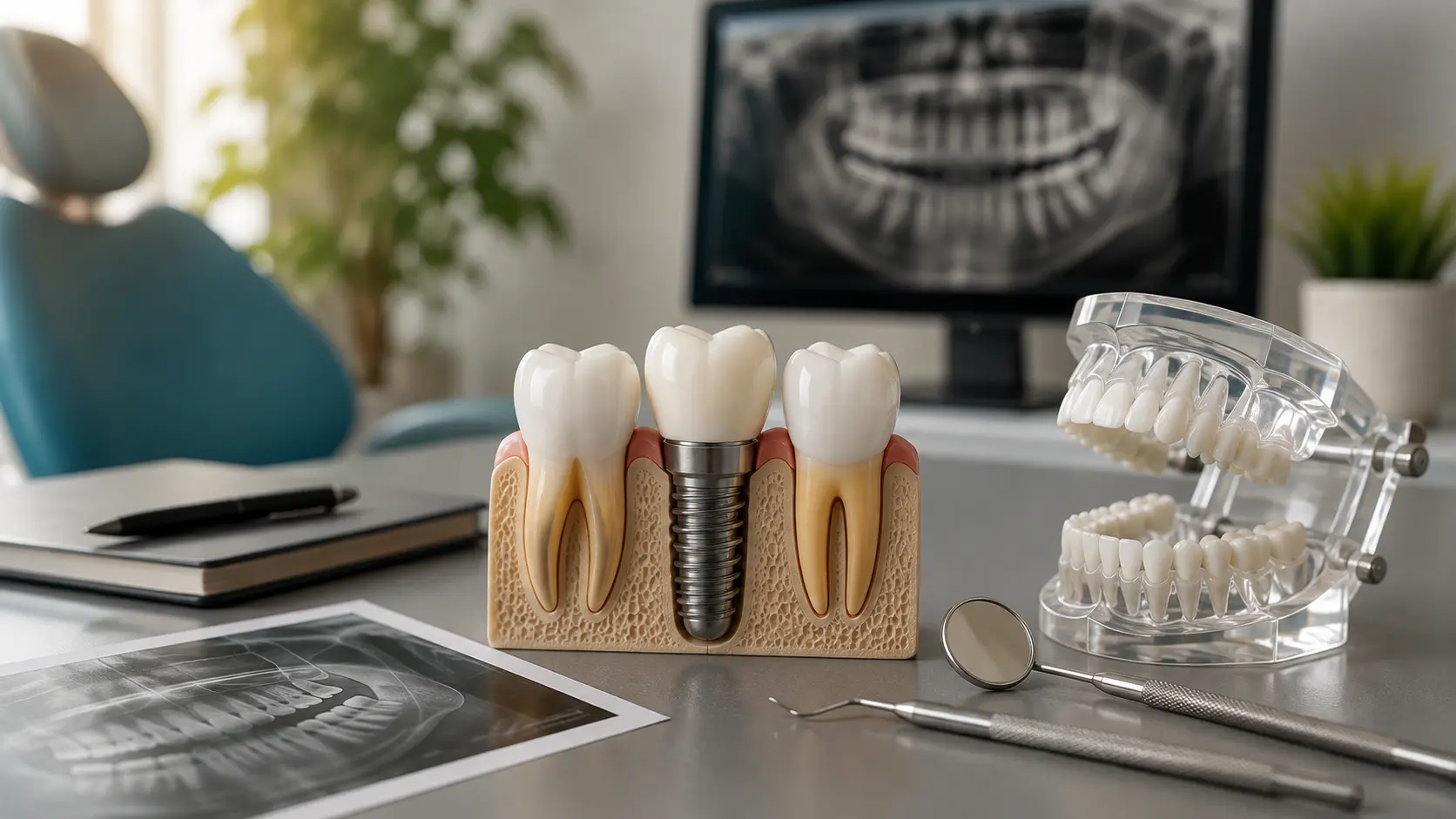
Why We May Recommend Fewer Implants Than You Expected
More treatment does not necessarily mean better treatment.
A patient may arrive expecting several extractions and implants but discover that some natural teeth can be preserved.
Another patient may believe every missing tooth requires an individual implant, while the dentist determines that a different implant-supported restoration can achieve the treatment goal.
In other situations, a patient may request full-mouth implant treatment even though the existing teeth do not justify such an aggressive approach.
Treatment planning should answer one question:
What is medically necessary and appropriate for this patient?
Not:
How many procedures can be performed?
What Happens If Dental Implants Are Not Right for You?
Being told that an implant is not currently recommended does not mean there are no treatment options.
Depending on the problem, alternatives may include preserving and restoring the natural tooth, periodontal treatment, endodontic treatment, a dental bridge, a removable prosthesis, or delaying implant placement until the conditions become more favorable.
Sometimes the alternative is temporary. Sometimes it is a better long-term solution.
The appropriate choice depends on the individual patient.
Read More: Dental implant in Turkey
Frequently Asked Questions
Can everyone get dental implants?
No. Most patients can potentially be considered for implant treatment, but suitability depends on oral health, bone condition, medical history, medications, smoking, and other individual factors. Some patients require additional treatment before implant surgery.
Can a dentist refuse to place a dental implant?
Yes. A dentist may recommend against implant placement when the procedure is unnecessary, when the natural tooth can reasonably be preserved, or when medical or dental conditions make surgery inappropriate at that time.
Should I extract my tooth and get an implant instead of a root canal?
Not automatically. If a natural tooth can be predictably restored, preserving it may be preferable. The decision should be based on the condition and prognosis of the individual tooth.
Can I get dental implants if I have bone loss?
Possibly. The amount and location of bone loss need to be evaluated. Some patients may require bone grafting or another procedure, while others may be suitable for a different implant or prosthetic approach.
Can I get dental implants if I have gum disease?
Active periodontal disease generally needs to be treated and controlled before implant placement. Your dentist will evaluate your gums and overall periodontal condition before recommending surgery.
Can my dental implant plan change after I arrive in Turkey?
Yes. Plans based on photographs, previous X-rays, or remote information are preliminary. An in-person clinical examination and, when appropriate, updated imaging can reveal information that requires the treatment plan to be modified.
How much do dental implants cost in Turkey?
The cost of dental implants in Turkey varies according to the clinical situation, number and type of implants, implant system, bone or soft-tissue procedures, and final restoration. A meaningful price comparison should therefore be based on comparable treatment plans rather than the implant price alone.
The Right Treatment May Sometimes Mean No Implant
Dental implants have transformed the way missing teeth can be treated, but good implant dentistry is not about placing as many implants as possible.
It is about knowing when an implant is necessary, when another treatment is better, and when treatment should wait.
If your natural tooth can be predictably preserved, that option deserves consideration. If an underlying condition makes implant surgery unsafe or less predictable, it may be better to address that condition first.
And if you are researching dental implants in Turkey or dental implants in Istanbul, the most important question should not be simply:
“How much does an implant cost?”
It should be:
“What treatment do I actually need?”
A proper diagnosis should answer that question before any procedure begins.
Fill it out to get your free consultation
Innovation & Precision In Every Implant
We use only reputable, high-quality implants designed for long-term durability
BioTec Dental Implants


Hiossen Dental Implants


Straumann Dental Implants


Nobel Biocare Dental Implants


MegaGen Dental Implants