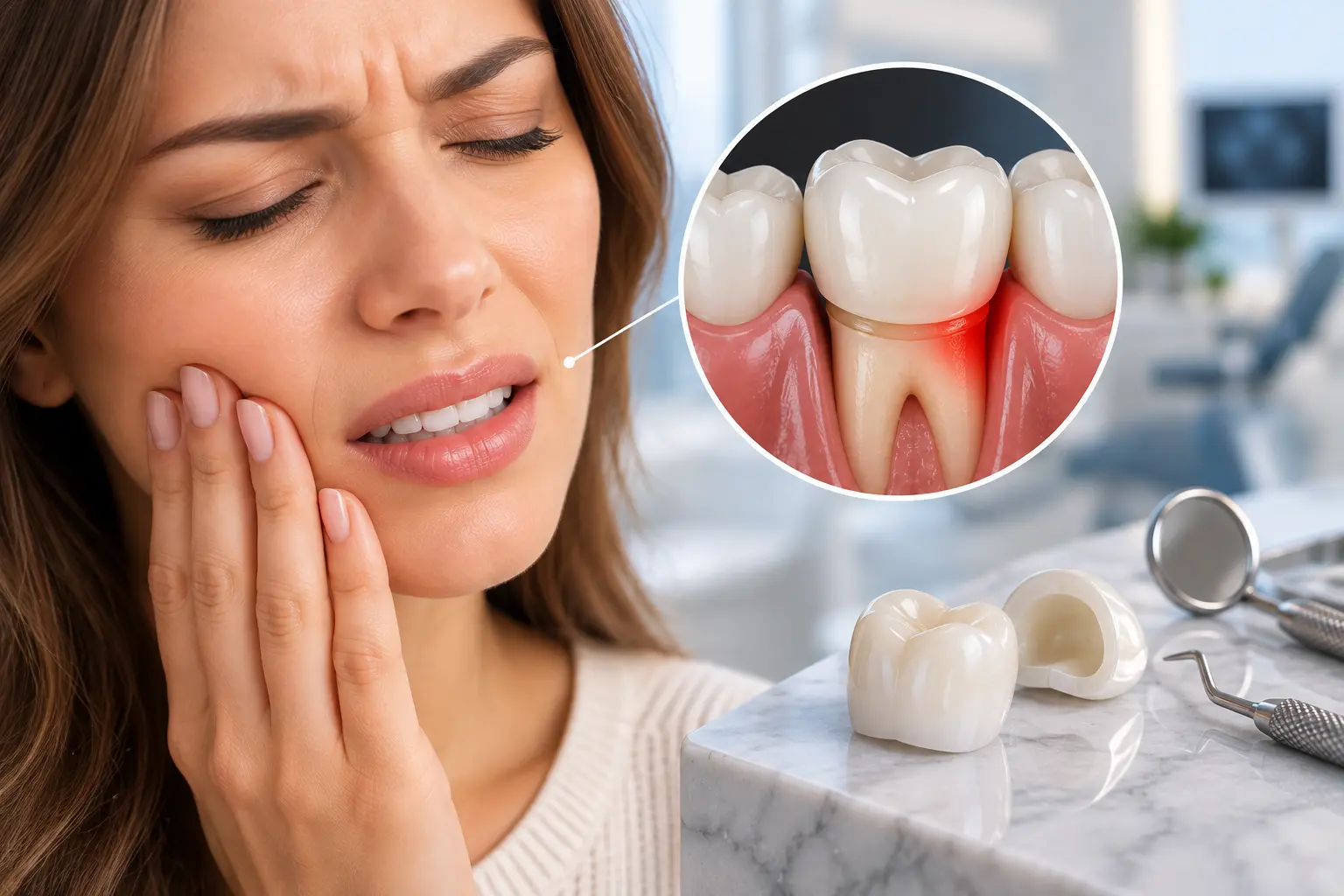
Why Does My Tooth Hurt Under a Dental Crown?
Tooth Pain Under a Crown: Causes and Treatment
Why does your tooth hurt under a dental crown? Learn the causes of pain when biting, sensitivity, infection, and when a crown may need treatment or replacement.
- Can a Tooth Still Hurt Under a Dental Crown?
- Is Tooth Pain Normal After Getting a Crown?
- Why Does My Crown Hurt When I Bite Down?
- Why Is My Tooth Sensitive to Hot or Cold Under a Crown?
- Can a Tooth Become Infected Under a Dental Crown?
- Why Does My Crown Hurt Years After It Was Placed?
- Can a Tooth Hurt Under a Crown After a Root Canal?
- How Do Dentists Find the Cause of Pain Under a Crown?
- Can Tooth Pain Under a Crown Be Treated Without Removing It?
- When Does a Dental Crown Need to Be Replaced?
- When Should You See a Dentist?
- Dental Crown Treatment in Turkey
- Frequently Asked Questions
Can a Tooth Still Hurt Under a Dental Crown?
Yes. A dental crown covers the visible portion of a tooth, but it does not eliminate every possible source of pain.
If the tooth has not undergone root canal treatment, the dental pulp inside it still contains nerves and blood vessels. These tissues may react to temperature changes, inflammation, or damage.
Even if the tooth has already received root canal treatment, pain can still arise from the tissues surrounding its root.
For example, inflammation around the root, a crack, gum disease, or excessive pressure during biting can cause discomfort.
This is why pain does not always mean the crown itself is defective. The problem may involve the underlying tooth, its root, the gums, or the way the upper and lower teeth come together.
Is Tooth Pain Normal After Getting a Crown?
Mild sensitivity or discomfort can occur during the first few days after a crown is prepared or fitted.
The tooth may have been exposed to drilling, temporary restorations, bonding materials, and changes in biting pressure. These factors can temporarily irritate the dental pulp or surrounding tissues.
For many patients, mild sensitivity gradually improves.
However, pain that becomes stronger, persists, interrupts sleep, or makes chewing difficult should not simply be dismissed as a normal part of recovery.
Pain that is improving is different from pain that is getting worse.
If symptoms persist or increase, your dentist should examine the tooth to determine whether the pulp, crown fit, bite, or surrounding tissues need attention.
Read More: Dental Crowns in Turkey
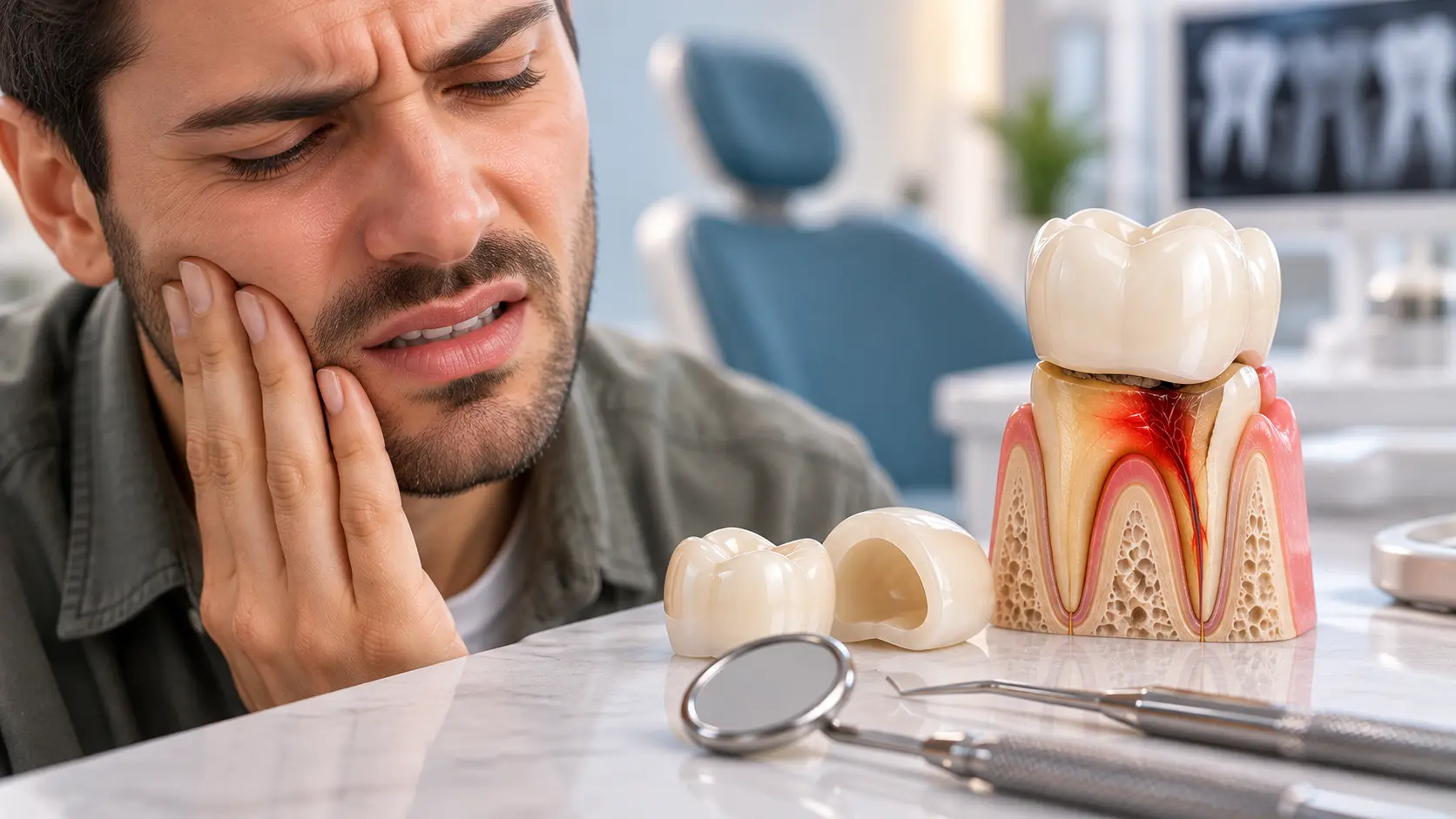
Why Does My Crown Hurt When I Bite Down?
Pain when biting is one of the more specific symptoms patients report after crown treatment.
Several conditions can cause it.
The Crown May Be Too High
A crown that makes contact before the surrounding teeth can place excessive pressure on the treated tooth.
Patients may notice that the crowned tooth touches first when they close their mouth or that chewing on that side feels uncomfortable.
If the problem is caused by an uneven bite, the dentist may be able to correct it by carefully adjusting the crown.
The Tooth May Have a Crack
A cracked tooth can produce sharp pain when biting or releasing pressure.
Sometimes a crack was present before the crown was placed. In other cases, a crack may develop or progress over time.
A crown can protect certain cracked teeth, but it cannot guarantee that an existing crack will never extend.
The Tissues Around the Root May Be Inflamed
Inflammation in the periodontal ligament—the tissue connecting the tooth root to the surrounding bone—can make a tooth painful when pressure is applied.
This may result from excessive biting forces, inflammation around the root, or an underlying dental infection.
Because these conditions can produce similar symptoms, the cause should be established through examination rather than assumed from pain alone.
Why Is My Tooth Sensitive to Hot or Cold Under a Crown?
Sensitivity to temperature may occur when a crowned tooth still has a living nerve.
Short-lived sensitivity after crown preparation can sometimes improve as the tooth settles.
However, the duration and intensity of the pain matter.
A brief response to cold that disappears quickly is different from pain that continues long after the cold stimulus has been removed.
Persistent or lingering temperature sensitivity can indicate inflammation of the dental pulp. In some cases, the pulp may be unable to recover without treatment.
Sensitivity can also be associated with exposed tooth structure near the crown margin, gum recession, or other dental conditions.
A dentist may use cold testing, clinical examination, and dental imaging to identify the cause.
Can a Tooth Become Infected Under a Dental Crown?
Yes. A crown does not make the underlying tooth immune to decay or infection.
If decay develops around a crown margin and progresses deeper into the tooth, bacteria may eventually reach the pulp.
A tooth may also develop an infection related to a previous root canal treatment or another underlying problem.
Possible symptoms include persistent toothache, pain when chewing, gum swelling, tenderness, or a small pimple-like swelling near the affected tooth.
However, some dental infections cause very little pain, particularly in their early stages.
An infection cannot be confirmed or ruled out based on pain alone.
The dentist may need clinical tests and X-rays to determine whether infection is present and what treatment is appropriate.
Read More: Zirconia crown in Turkey : Advantages, Disadvantages and Cost
Why Does My Crown Hurt Years After It Was Placed?
A crown that has functioned comfortably for several years can still develop problems.
Over time, the natural tooth, surrounding gums, and biting conditions may change.
Possible causes of delayed pain include:
-
Decay developing around or beneath a crown margin.
-
Gum recession exposing sensitive tooth structure.
-
A crack in the underlying tooth.
-
Inflammation or infection around the root.
-
Changes in the bite or excessive grinding forces.
-
Problems involving an older root canal treatment.
The age of the crown alone does not establish the cause.
A crown may still look normal from the outside even when the underlying tooth requires treatment.
For this reason, persistent pain beneath an older crown deserves a proper examination.
Can a Tooth Hurt Under a Crown After a Root Canal?
Root canal treatment removes the pulp tissue from inside the tooth, but it does not remove the nerves from the tissues surrounding the root.
A root canal-treated tooth can therefore still become painful when biting or if inflammation develops around its root.
Possible causes include persistent or recurrent infection, a root fracture, excessive biting pressure, or a periodontal problem.
Importantly, pain after a root canal does not automatically mean the original treatment was performed incorrectly.
A dentist or endodontist may need to evaluate the root canal filling, surrounding bone, crown, and overall condition of the tooth before recommending further treatment.
How Do Dentists Find the Cause of Pain Under a Crown?
Diagnosing pain beneath a crown involves more than simply looking at the restoration.
Your dentist may begin by asking when the pain started, whether it is constant or intermittent, and whether it occurs with hot drinks, cold foods, chewing, or pressure.
The examination may include checking:
-
The crown margins and surrounding gums.
-
The way the crowned tooth contacts opposing teeth.
-
Tenderness when tapping or applying pressure.
-
Sensitivity to temperature, when appropriate.
-
Signs of cracks, decay, or periodontal disease.
-
The condition of the tooth roots and surrounding bone on dental X-rays.
In selected cases, additional imaging such as CBCT may help investigate problems that are difficult to identify using conventional radiographs.
Not every painful crown requires a CBCT scan. The choice of imaging depends on the clinical findings.
A reliable diagnosis is essential because different causes of pain require very different treatments.
Can Tooth Pain Under a Crown Be Treated Without Removing It?
Sometimes, yes. The appropriate treatment depends on the underlying cause.
If discomfort results from a crown that is slightly too high, a bite adjustment may be sufficient.
If gum inflammation is responsible, periodontal treatment and improved oral hygiene may help.
In certain cases, root canal treatment can be performed through an existing crown without removing it, provided the crown remains suitable and the dentist can safely access the tooth.
However, removing the crown may be necessary when there is significant decay, a defective restoration, a suspected fracture, or a need to assess the underlying tooth directly.
The goal should be to treat the actual problem while preserving as much healthy tooth structure as possible.
When Does a Dental Crown Need to Be Replaced?
Pain alone does not automatically mean a dental crown needs replacement.
A crown may need to be replaced when it no longer fits properly, has significant damage, allows leakage around its margins, or cannot be retained while treating the underlying tooth.
Replacement may also be required if decay or structural damage changes the shape of the tooth supporting the crown.
On the other hand, a well-fitting crown may sometimes remain in place after the cause of pain has been successfully treated.
The decision should be based on the condition of both the crown and the natural tooth beneath it.
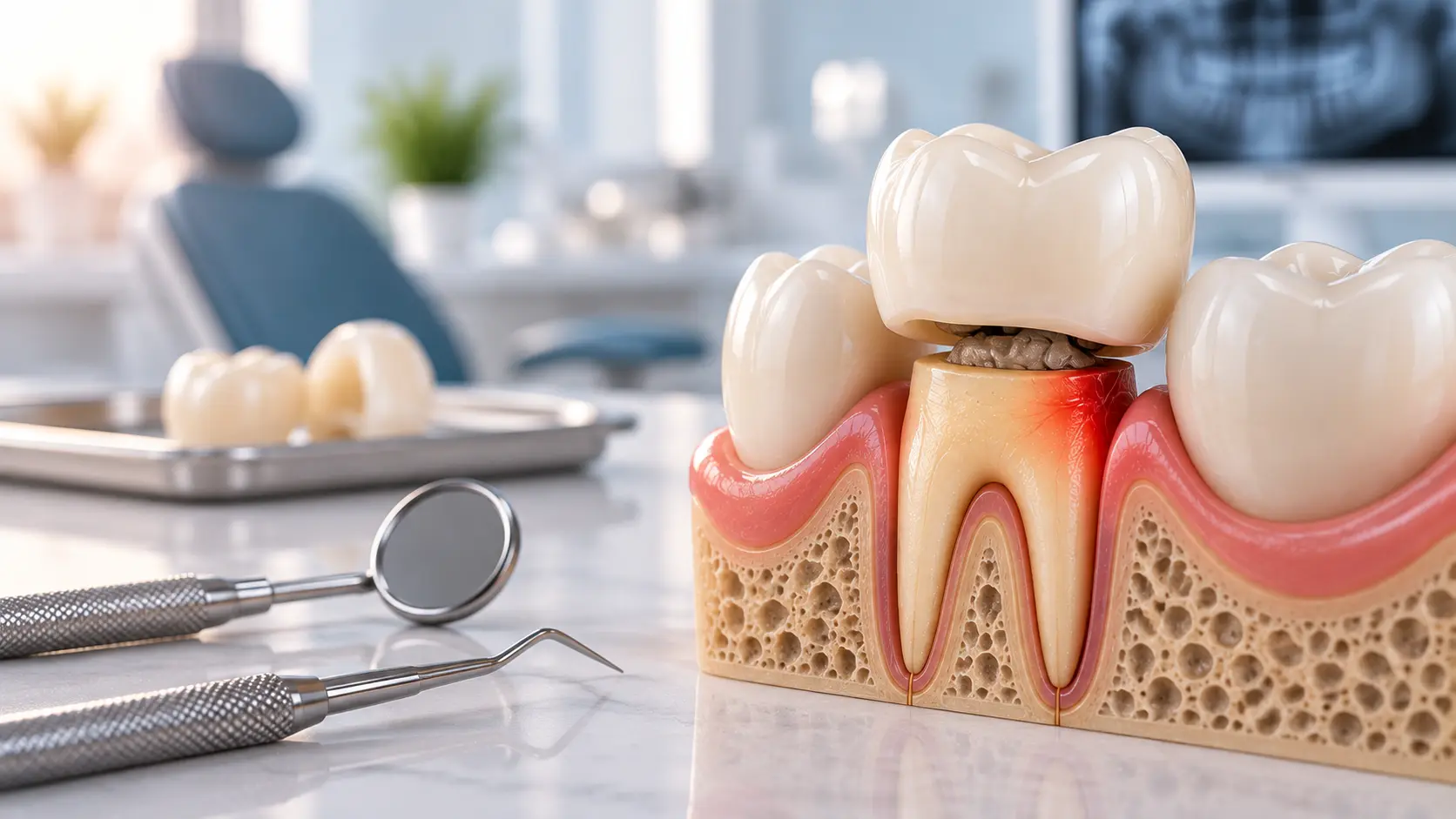
When Should You See a Dentist?
Mild sensitivity shortly after crown placement may settle, but certain symptoms should prompt professional assessment.
Contact your dentist if pain persists, worsens, repeatedly occurs when biting, or is accompanied by lingering hot or cold sensitivity.
Seek prompt dental care if you develop swelling, pus, fever, or severe persistent pain.
If swelling is spreading rapidly, or you have difficulty breathing or swallowing, seek emergency medical care immediately.
While waiting for an appointment, avoid chewing hard foods on the painful side and maintain gentle oral hygiene.
Do not attempt to adjust or remove the crown yourself, and do not take leftover antibiotics without professional advice.
Dental Crown Treatment in Turkey: Why Diagnosis Comes Before Replacement
Patients considering dental crowns in Turkey often focus on the type of restoration, its appearance, and the treatment cost.
But when a tooth is already painful, the priority should be identifying the reason for that pain before deciding whether a new crown is needed.
At Autora Clinic, the approach to a painful crowned tooth should begin with a clinical assessment of the tooth, surrounding tissues, and existing restoration.
Some patients may need a simple adjustment. Others may require root canal treatment, periodontal care, or crown replacement.
The appropriate treatment cannot be determined by the appearance of the crown alone.
For international patients researching dental crowns in Istanbul, a preliminary remote consultation may help clarify the symptoms and previous treatment history. However, a definitive diagnosis generally requires an in-person examination and appropriate diagnostic tests.
Replacing a crown without understanding why the tooth hurts may fail to address the real problem.
Read More: Types of dental crowns and cost in Turkey
Frequently Asked Questions
Why does my tooth hurt under a crown when I bite?
Pain when biting may be caused by a high crown, a cracked tooth, inflammation around the root, or an infection. A dental examination is needed to distinguish between these causes.
Is it normal for a crown to hurt after two weeks?
Some sensitivity can persist after treatment, but pain that remains significant after two weeks, is not improving, or is becoming worse should be assessed by your dentist.
Can a tooth rot under a dental crown?
Yes. Natural tooth structure can develop decay around the crown margins, particularly if plaque accumulates or the restoration no longer provides an adequate seal.
Does tooth pain under a crown mean I need a root canal?
Not necessarily. Some causes can be treated with bite adjustment or periodontal care. Root canal treatment may be required if the dental pulp is irreversibly inflamed or infected.
Can a crowned tooth hurt even if the nerve has been removed?
Yes. The tissues around the tooth root still contain nerves and can become inflamed or painful.
Can a dentist fix a painful crown without replacing it?
In some cases, yes. Treatment may involve adjusting the bite, treating gum disease, or performing root canal treatment through the crown. Other cases require removal or replacement.
Can an old crown suddenly start hurting?
Yes. Decay, cracks, infection, gum recession, or changes in biting forces can develop years after a crown was placed.
A Painful Crown Does Not Always Mean a Failed Crown
A dental crown is meant to restore and protect a tooth, but the natural structures underneath it can still develop problems.
Sometimes the cause of discomfort is relatively simple, such as excessive biting pressure. Other times, pain may indicate inflammation, decay, infection, or a crack that requires more extensive treatment.
The important thing is not to assume that every painful crown needs to be replaced—or that every painful crowned tooth needs a root canal.
The right treatment begins by understanding why the tooth hurts.
A careful diagnosis helps determine whether the existing crown can be preserved, whether the underlying tooth needs treatment, or whether replacing the restoration is genuinely necessary.
Fill it out to get your free consultation
Innovation & Precision In Every Implant
We use only reputable, high-quality implants designed for long-term durability
BioTec Dental Implants


Hiossen Dental Implants


Straumann Dental Implants


Nobel Biocare Dental Implants


MegaGen Dental Implants