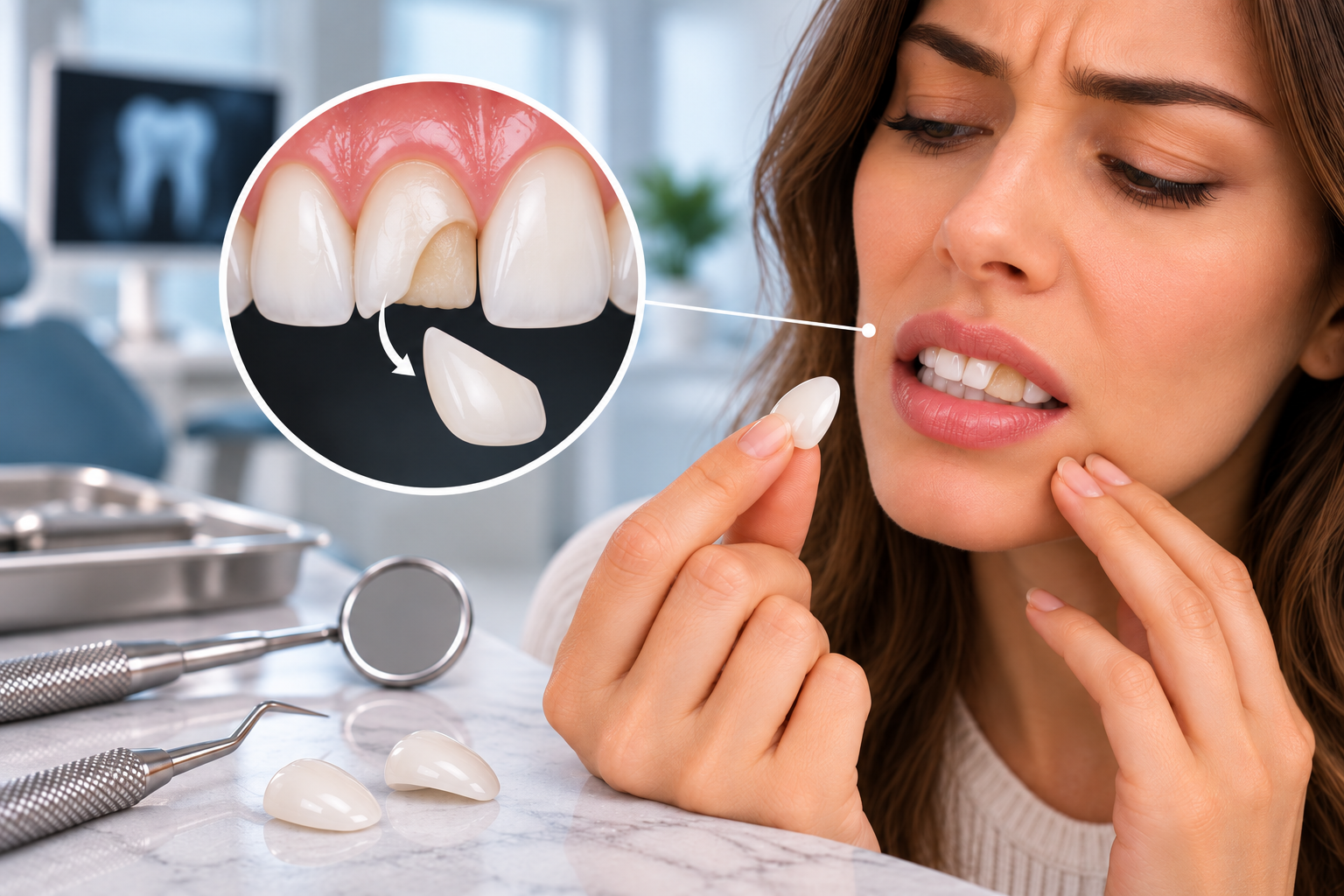
What Happens If a Veneer Falls Off?
Veneer Fell Off? What to Do and Can It Be Reattached?
What should you do if your veneer falls off? Learn why veneers come loose, how to protect your tooth, whether a veneer can be reattached, and when to see a dentist.
Table of Contents
- Can a Dental Veneer Fall Off?
- What Should You Do If Your Veneer Falls Off?
- Why Do Veneers Fall Off?
- What Happens to Your Natural Tooth When a Veneer Falls Off?
- Can a Fallen Veneer Be Reattached?
- Can You Glue a Veneer Back on at Home?
- Is a Fallen Veneer a Dental Emergency?
- Can You Eat Normally If Your Veneer Falls Off?
- What If Your Veneer Falls Off After Several Years?
- How Can You Prevent Veneers from Falling Off?
- What Happens If Your Veneer Falls Off While You Are Abroad?
- Frequently Asked Questions
Can a Dental Veneer Fall Off?
Yes. Although dental veneers are designed to remain securely bonded to your teeth for many years, they can occasionally become loose or detach.
A veneer is a thin restoration, usually made from porcelain or composite resin, that covers the visible front surface of a tooth. It is attached using dental bonding materials designed to create a durable connection between the veneer and the natural tooth.
However, this bond is not indestructible.
A veneer may detach because of excessive biting forces, an impact, problems with bonding, changes in the underlying tooth, or deterioration of the restoration over time.
Sometimes a veneer comes off completely intact. In other cases, it may crack or break into pieces.
A veneer falling off does not automatically mean that the natural tooth underneath has been damaged. However, the tooth and restoration should be examined before deciding how to repair the problem.
What Should You Do If Your Veneer Falls Off?
If your veneer suddenly comes off, the most important thing is to protect the exposed tooth and avoid damaging the detached restoration.
1. Keep the Veneer If You Can Find It
If the veneer has come off in one piece, carefully retrieve it.
Rinse it gently with clean water if necessary, and place it in a small, clean container.
Avoid scrubbing it, using chemicals, or trying to remove any material attached to its inner surface.
Bring the veneer to your dental appointment. Depending on its condition, the dentist may be able to reuse it.
2. Check Your Tooth Without Touching It Excessively
Look at the exposed tooth in a mirror.
You may notice that its surface looks different from the surrounding teeth, particularly if some enamel was removed during the original veneer preparation.
The tooth may also feel rough or become sensitive to cold drinks or air.
Avoid repeatedly touching it with your fingers or tongue, especially if the surface feels sharp.
3. Avoid Chewing on the Affected Tooth
Until the tooth has been examined, avoid biting hard or sticky foods with it.
If possible, chew on the opposite side and choose softer foods.
This can help reduce discomfort and lower the risk of damaging the exposed tooth.
4. Contact Your Dentist
Arrange a dental appointment as soon as reasonably possible, even if you are not experiencing pain.
Your dentist needs to determine why the veneer detached and whether it can be safely reattached.
Simply putting it back without investigating the cause may allow the same problem to happen again.
Read More: Tooth Pain Under a Crown: Causes and Treatment
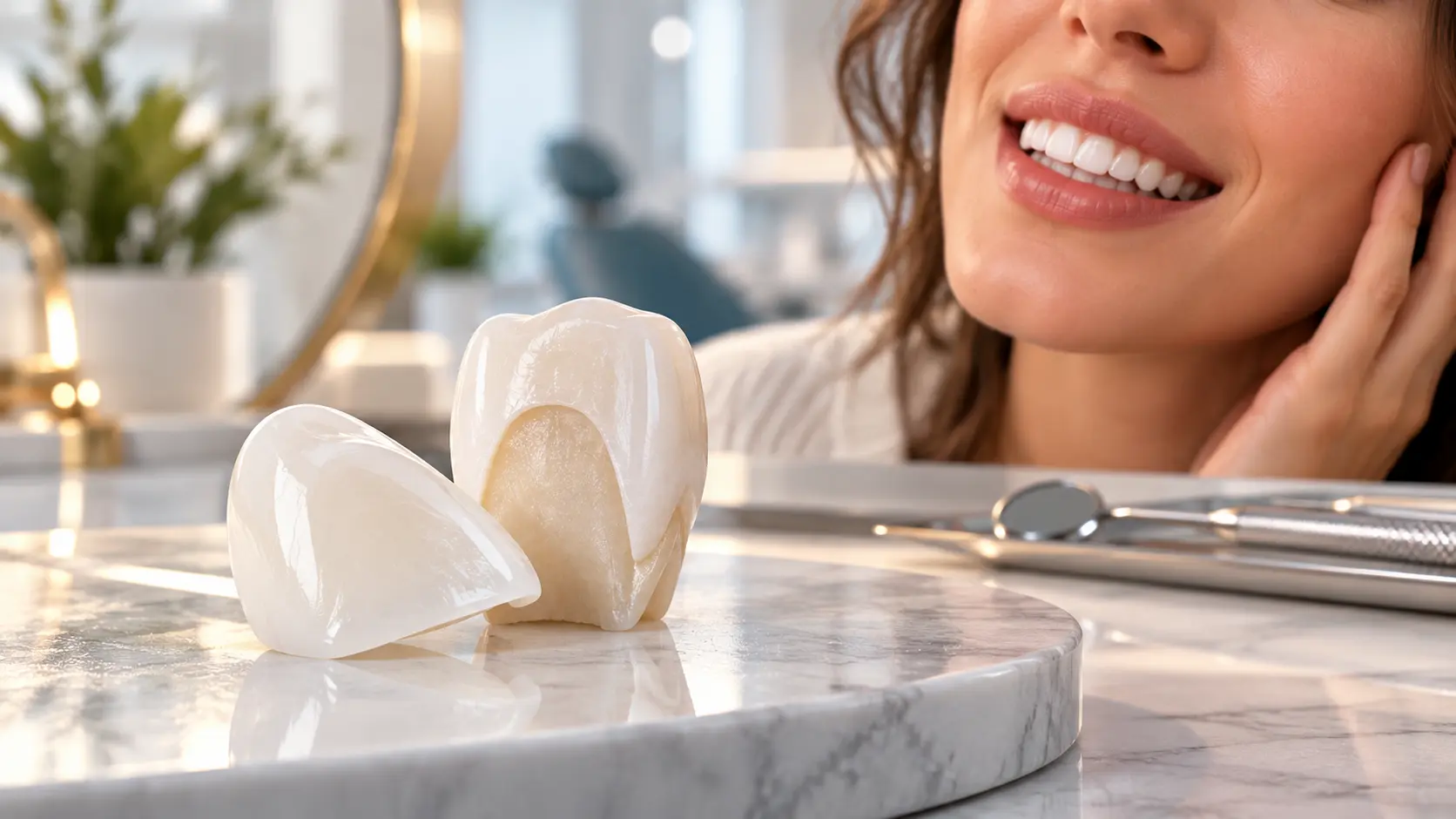
Why Do Veneers Fall Off?
There is rarely one explanation that applies to every patient.
Several factors can affect how securely a veneer remains attached.
Problems With the Bonding Surface
Porcelain veneers generally bond most predictably to healthy tooth enamel.
If a large portion of the bonding surface consists of dentin or existing restorative material, the bonding conditions may be different.
The quality of the preparation, bonding procedure, and materials used also influences the long-term stability of the veneer.
Teeth Grinding or Excessive Biting Pressure
Grinding or clenching the teeth can place repeated stress on veneers.
Biting hard objects, chewing ice, or using teeth to open packaging can also increase the risk of fracture or detachment.
Changes in the Tooth Underneath
Decay developing around the veneer margins, structural damage, or changes in the underlying tooth may affect the restoration's stability.
Trauma or Accidental Injury
A direct impact to the mouth can dislodge a veneer, even if it was previously functioning well.
Problems With the Veneer's Fit
A veneer that does not fit appropriately or is exposed to unfavorable biting forces may be more likely to experience complications.
However, the exact reason for detachment cannot always be determined without examining both the veneer and the tooth.
Read More: What Happens to Your Teeth Under Veneers?
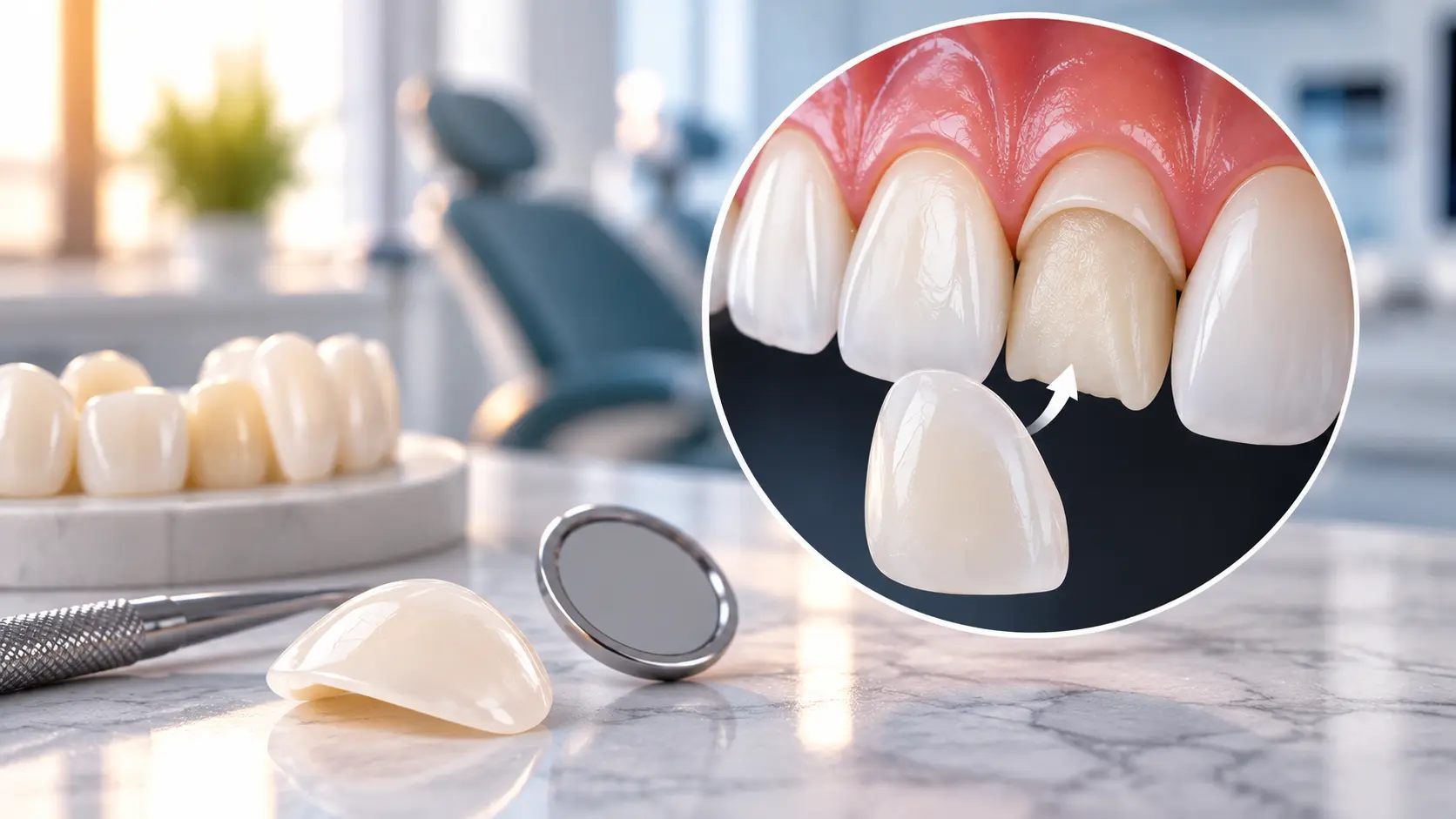
What Happens to Your Natural Tooth When a Veneer Falls Off?
This depends largely on how the tooth was originally prepared.
If the veneer was placed with little or no tooth preparation, the exposed tooth may look relatively similar to its original appearance.
With conventional porcelain veneers, however, some enamel is usually removed to create room for the restoration.
When the veneer falls off, the underlying tooth may therefore appear smaller, uneven, or different in color from the neighboring teeth.
Some patients also experience increased sensitivity to cold, air, or certain foods.
This sensitivity does not necessarily mean the nerve has been damaged. It may result from exposed dentin or other changes in the prepared tooth surface.
The important point is that the exposed tooth should not automatically be considered damaged simply because it looks different.
However, if the tooth is painful, fractured, or has a sharp edge, it should be assessed promptly.
Can a Fallen Veneer Be Reattached?
Sometimes, yes.
If the veneer has detached intact, remains in good condition, and still fits the tooth properly, a dentist may be able to clean and prepare the surfaces and bond it back into place.
However, reattachment is not always possible.
A new veneer may be necessary if:
-
The original veneer is cracked or broken.
-
The restoration no longer fits the tooth accurately.
-
Decay has developed beneath or around it.
-
The underlying tooth has been damaged.
-
The original veneer design or bonding conditions make reliable reattachment unlikely.
The dentist will also need to identify what caused the veneer to fall off.
For example, if excessive biting pressure contributed to the problem, simply rebonding the veneer without addressing that pressure may not provide a lasting solution.
Can You Glue a Veneer Back on at Home?
No. You should not attempt to reattach a veneer using household glue, superglue, or other non-dental adhesives.
These products are not designed for use inside the mouth.
They may irritate oral tissues, interfere with professional bonding, or make it more difficult for the dentist to assess and repair the restoration.
You should also avoid trying to force the veneer back into position.
Even if it appears to fit, it may not sit correctly without proper preparation and bonding.
The safest approach is to store the veneer carefully and have it evaluated by a dentist.
If the exposed tooth has a sharp edge or is causing discomfort, contact your dentist for advice on appropriate temporary protection.
Is a Fallen Veneer a Dental Emergency?
A detached veneer is not always a dental emergency, particularly if the tooth is comfortable and there is no sign of injury.
However, it should not be ignored.
A prepared tooth may be sensitive or vulnerable to further damage, and the reason for detachment needs to be investigated.
Seek urgent dental assessment if the veneer comes off with significant pain, a fractured tooth, bleeding following an injury, or substantial sensitivity.
If the veneer was dislodged during an accident and you also have facial trauma, the injury may require more immediate evaluation.
If you believe you swallowed the veneer and have no symptoms, contact a healthcare professional for guidance. If you are choking or have difficulty breathing, seek emergency medical care immediately.
Can You Eat Normally If Your Veneer Falls Off?
It is usually best to make temporary changes to your eating habits until the tooth has been examined.
Choose softer foods and avoid biting directly with the affected tooth.
Hard foods such as nuts, ice, or crusty bread may place unnecessary pressure on the exposed tooth.
Sticky foods may also cause discomfort or complicate the situation if there is an existing restoration or weakened tooth structure.
If the tooth is sensitive, very cold or hot foods and drinks may trigger discomfort.
Continue brushing gently with a soft toothbrush and maintain normal oral hygiene around the affected area.
Avoid leaving the tooth uncleaned because the veneer is missing.
What If Your Veneer Falls Off After Several Years?
A veneer can become detached even after functioning successfully for many years.
Over time, the tooth, restoration, and biting conditions may change.
The veneer may have experienced repeated mechanical stress, the tooth may have developed decay, or the restoration may no longer function as it originally did.
However, age alone does not explain why a veneer has fallen off.
A dentist should examine the veneer margins, underlying tooth, bite, and condition of the restoration before deciding whether rebonding or replacement is more appropriate.
A veneer that has fallen off after several years does not necessarily mean that all your other veneers need to be replaced.
Each tooth should be assessed individually.
How Can You Prevent Veneers from Falling Off?
Not every case of veneer detachment can be prevented, but several habits may help reduce the risk.
Maintain good oral hygiene and attend regular dental examinations so that problems around veneer margins can be identified early.
Avoid using your teeth to open packages or bite hard objects.
If you grind or clench your teeth, discuss this with your dentist. In selected cases, a professionally fitted night guard may help protect the restorations from excessive forces.
It is also important to have veneers planned according to your bite, tooth condition, and individual treatment needs.
Long-term veneer success depends not only on the material used but also on appropriate case selection, preparation, bonding, and maintenance.
Read More: Veneers in Turkey
What Happens If Your Veneer Falls Off While You Are Abroad?
If your veneer falls off while traveling, try to keep the restoration safe and avoid chewing with the affected tooth.
If possible, contact the clinic that originally performed your treatment and explain what happened.
Photographs of the veneer and exposed tooth may help the dental team understand the situation initially, although they cannot replace a clinical examination.
If you are experiencing significant pain, sensitivity, or damage, arrange an assessment with a local dentist rather than waiting until you return home.
For patients who have received veneers in Turkey, it may be useful to keep their treatment records and clinic contact details available after returning to their home country.
Whether a veneer can be reattached locally or needs replacement will depend on the condition of the restoration and underlying tooth.
The priority should always be protecting the natural tooth, not simply restoring the appearance of the smile as quickly as possible.
Frequently Asked Questions
Can a veneer fall off without breaking?
Yes. A veneer may detach intact if the bond between the restoration and tooth fails. In some cases, the dentist may be able to reattach it.
Is it normal for a veneer to fall off?
Veneers are intended to remain securely attached for years, so detachment is not an expected everyday occurrence. However, it is a recognized complication that can happen for several reasons.
Does it hurt when a veneer falls off?
Not always. Some patients feel no pain, while others experience sensitivity, particularly if the underlying tooth was prepared before veneer placement.
How long can you leave a tooth without its veneer?
There is no universal safe waiting period. Contact your dentist promptly for advice, particularly if the tooth is sensitive, damaged, or painful.
Can a dentist reuse a veneer that has fallen off?
Sometimes. If the veneer is intact, fits properly, and the underlying tooth is healthy, rebonding may be possible. Otherwise, replacement may be recommended.
Will my tooth be damaged if my veneer falls off?
Not necessarily. A veneer can detach without damaging the underlying tooth. However, the tooth should be examined for decay, cracks, or other problems.
Can I temporarily glue my veneer back on?
Do not use household glue or superglue. These products are unsuitable for dental use and can complicate professional repair.
Why does my veneer keep falling off?
Repeated detachment may be related to biting forces, bonding conditions, veneer design, tooth structure, or an unresolved underlying problem. The cause should be investigated rather than repeatedly rebonding the restoration without assessment.
A Fallen Veneer Does Not Always Mean a Damaged Tooth
Losing a veneer can be unsettling, especially when the exposed tooth looks different from the rest of your smile.
But a fallen veneer does not automatically mean that the tooth underneath has been damaged or that the entire treatment has failed.
Sometimes the original veneer can be reattached. In other situations, a replacement or additional dental treatment may be necessary.
What matters most is identifying why the veneer came off and making sure the natural tooth remains healthy.
If your veneer falls off, keep it safe, protect the exposed tooth, and arrange a dental examination.
The best solution is not simply the quickest way to put the veneer back. It is the treatment that restores your smile while protecting the tooth underneath.
Fill it out to get your free consultation
Innovation & Precision In Every Implant
We use only reputable, high-quality implants designed for long-term durability
BioTec Dental Implants


Hiossen Dental Implants


Straumann Dental Implants


Nobel Biocare Dental Implants


MegaGen Dental Implants