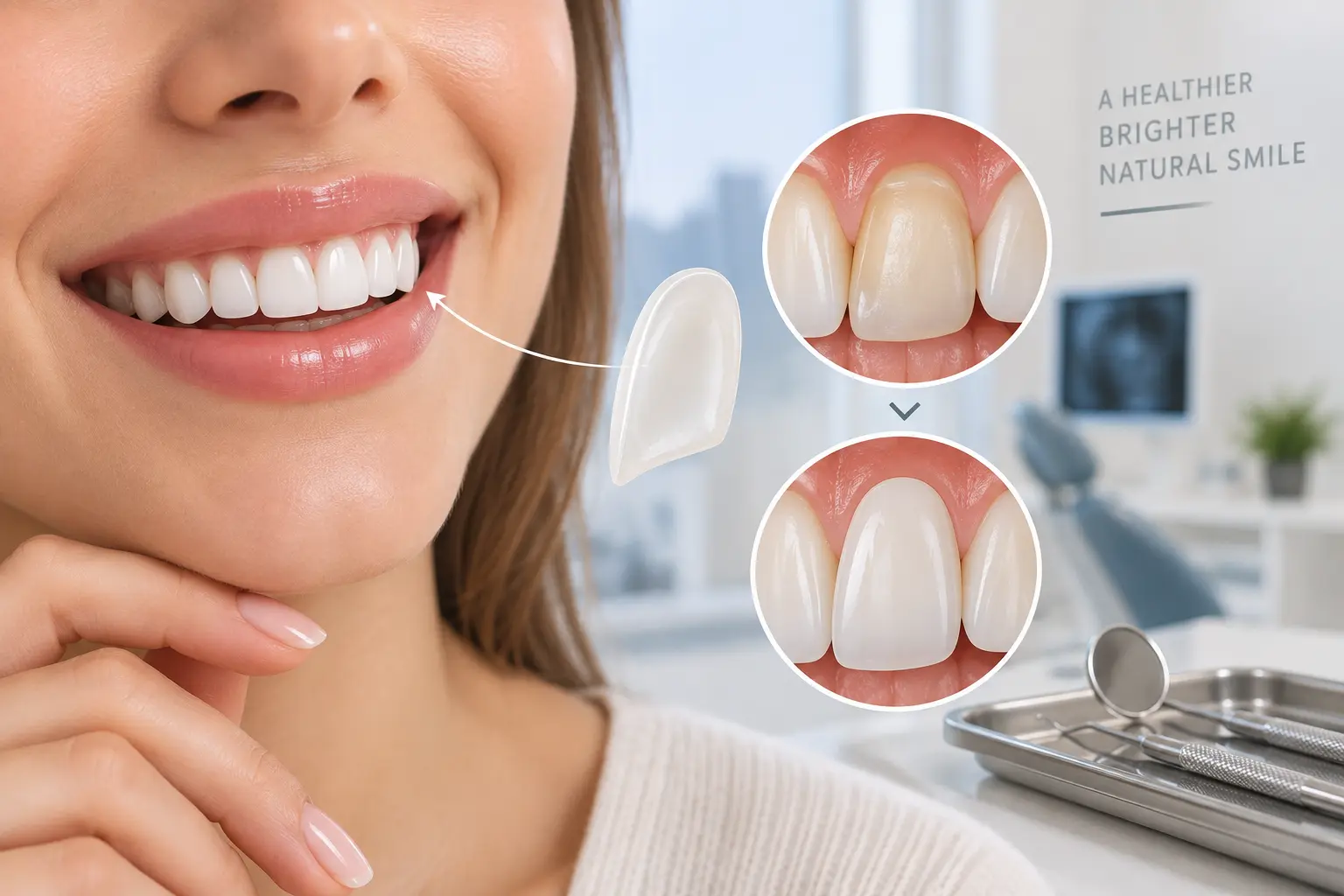
What Happens to Your Teeth Under Veneers?
What Happens to Your Teeth Under Veneers?
What really happens to your natural teeth under veneers? Learn how teeth are prepared, whether they can decay, what happens over time, and what to expect if veneers need replacing.
Table of Contents
- What Do Your Natural Teeth Look Like Under Veneers?
- Do Dentists Shave Your Teeth for Veneers?
- How Much Enamel Is Removed for Veneers?
- Do Veneers Damage or Weaken Your Teeth?
- Can Teeth Rot Under Veneers?
- Can You Get Cavities Under Veneers?
- What Happens to Teeth Under Veneers Over Time?
- What Happens When Veneers Are Removed?
- Can You Go Back to Your Natural Teeth After Veneers?
- What Happens When Veneers Need to Be Replaced?
- Are Veneers Right for Every Patient?
- Considering Veneers in Turkey
- Frequently Asked Questions
What Do Your Natural Teeth Look Like Under Veneers?
Your natural teeth do not disappear when veneers are placed.
A veneer is a thin restoration that covers the visible front surface of a tooth. The natural tooth remains underneath and continues to provide the foundation supporting the veneer.
However, the tooth underneath may not look exactly as it did before treatment.
With conventional porcelain veneers, the dentist usually prepares the tooth by removing a limited amount of enamel. This creates room for the veneer and helps achieve an appropriate shape, fit, and final appearance.
The amount of preparation varies considerably from one patient to another.
A tooth that is already positioned correctly and requires only a minor cosmetic change may need relatively conservative preparation. A tooth that protrudes, is significantly discolored, has previous restorations, or requires a major change in shape may require a different approach.
This is why photographs showing dramatically shaved teeth should not be assumed to represent every veneer treatment.
Read More: Hollywood Smile in Turkey
Do Dentists Shave Your Teeth for Veneers?
Usually, some tooth preparation is required for conventional veneers, but “shaving the teeth” can give patients the wrong impression about what should happen.
The objective is not simply to make the tooth as small as possible.
The dentist prepares enough tooth structure to create space for the veneer while trying to preserve healthy enamel whenever clinically possible.
Enamel preservation is particularly important because bonding veneers to enamel generally provides a strong and predictable adhesive surface.
There are also minimal-preparation and, in selected cases, no-preparation veneers. However, these techniques are not suitable for everyone.
Placing a veneer without sufficient preparation when the tooth actually requires it can result in teeth that look bulky or unnatural.
The correct amount of preparation therefore depends on the individual tooth rather than on a universal rule.
How Much Enamel Is Removed for Veneers?
There is no single measurement that applies to every veneer.
The amount of enamel removed depends on several factors, including:
-
the original position of the tooth,
-
the amount of correction required,
-
tooth color,
-
existing fillings,
-
enamel thickness,
-
the desired final shape,
-
and the material and design of the veneer.
Modern veneer treatment generally aims to be as conservative as reasonably possible.
But minimal preparation does not mean zero preparation in every case.
For some patients, attempting to avoid tooth preparation completely can compromise the final result. For others, only very limited preparation may be necessary.
This is why veneer preparation should be planned tooth by tooth.
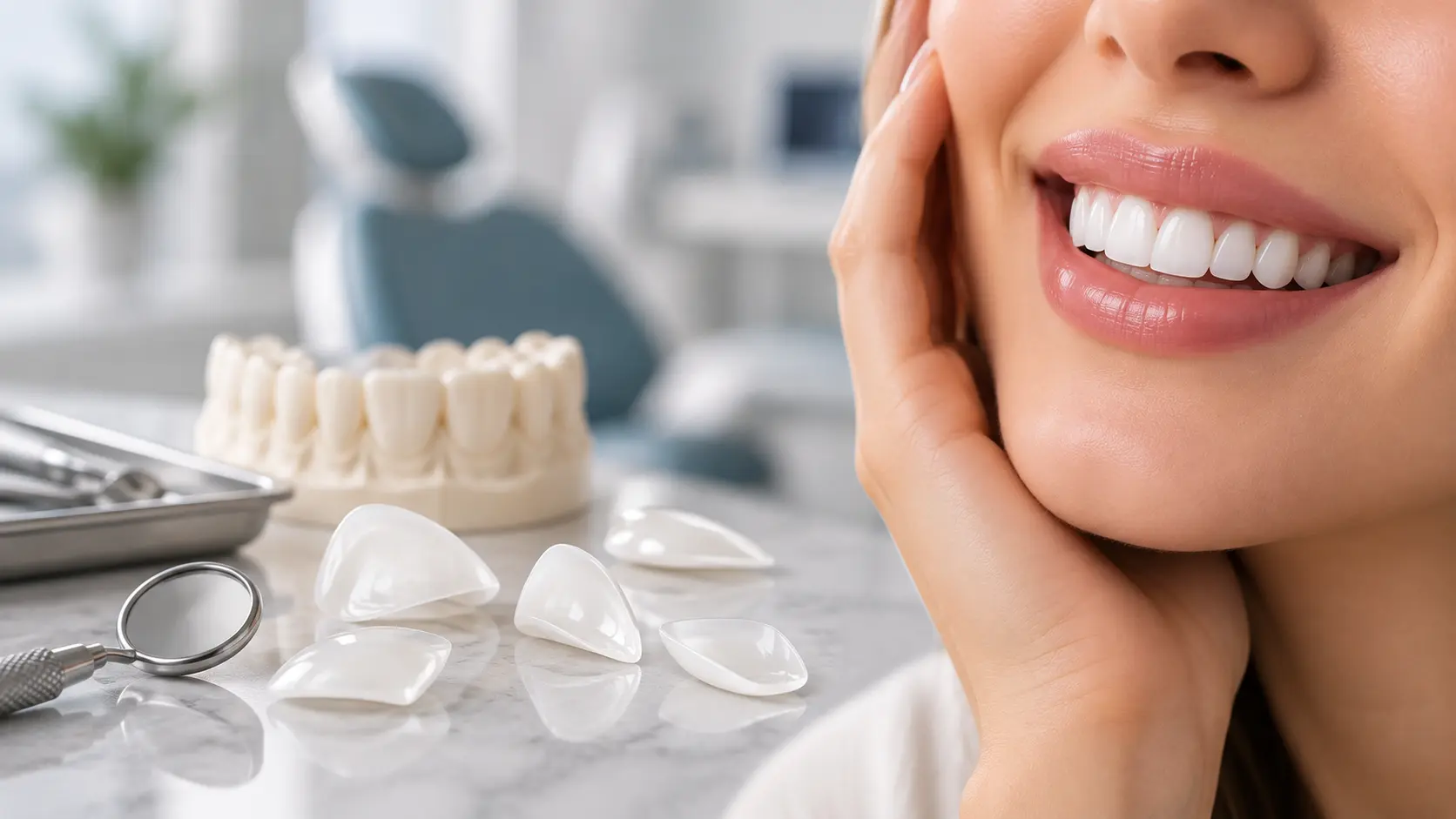
Do Veneers Damage or Weaken Your Teeth?
Properly planned veneers are not intended to damage teeth.
However, conventional veneer treatment usually involves permanently altering some of the tooth's enamel. This is an important distinction patients should understand before treatment.
Once enamel has been removed, it does not grow back.
For this reason, veneers should not be treated as a temporary cosmetic accessory that can simply be removed whenever a patient changes their mind.
The long-term health of the tooth depends on several factors: appropriate case selection, conservative preparation, accurate bonding, the quality of the restoration, oral hygiene, bite forces, and ongoing dental care.
This is also why placing veneers on healthy teeth should always involve a careful discussion of the benefits and the amount of tooth preparation required.
Can Teeth Rot Under Veneers?
Yes. A tooth covered by a veneer can still develop decay.
The veneer itself cannot develop a cavity in the way natural tooth structure can, but the tooth underneath and around its margins remains biologically active.
Decay may develop particularly around areas where the veneer meets the natural tooth if plaque accumulates or oral hygiene is poor.
This does not mean that veneers automatically cause tooth decay.
A well-fitted veneer with good oral hygiene can function for many years. But veneers do not make natural teeth immune to cavities.
Patients still need to brush, clean between their teeth, attend dental examinations, and maintain healthy gums.
Can You Get Cavities Under Veneers?
Yes. A cavity can develop around the edge of a veneer and, if left untreated, may progress into the underlying tooth structure.
Risk factors can include poor oral hygiene, frequent exposure to sugar, gum recession, problems around restoration margins, and other individual factors that increase a person's risk of tooth decay.
This is one reason regular dental examinations remain important after cosmetic dental treatment.
A dentist can examine the veneer margins, surrounding gums, bite, and underlying tooth health and investigate any symptoms before a small problem becomes more difficult to treat.
Read More: Veneers in Turkey
What Happens to Teeth Under Veneers Over Time?
Veneers are designed for long-term use, but neither veneers nor the natural teeth supporting them are completely maintenance-free.
Over the years, several things can change.
The gums may recede. The bite may change. A veneer may chip, fracture, become loose, or eventually need replacement. Natural tooth structure around the veneer can also develop decay.
Some patients may experience none of these problems for many years, while others may require treatment sooner.
Habits such as grinding or clenching the teeth can also place additional stress on veneers.
The important point is that veneer treatment does not end when the veneers are bonded. Long-term maintenance remains part of the treatment.
What Happens When Veneers Are Removed?
This depends heavily on how the teeth were originally prepared.
If enamel was removed to place conventional veneers, removing the veneers does not restore the teeth to their original condition.
The underlying teeth may be smaller or have altered surfaces because of the preparation performed during the original treatment.
In most conventional cases, removing an old veneer therefore means that the tooth will need another restoration rather than simply being left uncovered.
This is one of the most important things patients should understand before choosing veneers.
Can You Go Back to Your Natural Teeth After Veneers?
If by “go back” you mean removing conventional veneers and having exactly the same teeth you had before treatment, generally not.
Any enamel removed during preparation cannot regenerate.
The natural tooth remains underneath, but its surface has been permanently modified.
This does not mean that something is wrong with veneers. It simply means patients should understand that conventional veneer treatment is generally considered an irreversible procedure.
That is why the decision should be based on a proper clinical indication and realistic expectations rather than appearance alone.
What Happens When Veneers Need to Be Replaced?
When an old veneer needs replacement, the dentist first evaluates both the restoration and the tooth underneath it.
The old veneer is carefully removed, and the tooth is examined for issues such as decay, cracks, changes around the gum line, or problems with the existing preparation.
If the tooth remains healthy and suitable, a new veneer may be made.
However, the treatment may occasionally need to change. If significant tooth structure has been lost or another dental problem has developed, a different restoration or additional treatment may be required.
This is another reason why the quality of the original treatment and long-term maintenance matter.
Are Veneers Right for Every Patient?
No. A patient may want veneers for cosmetic reasons, but the condition of the teeth ultimately determines whether they are appropriate.
For example, teeth with large existing fillings, extensive structural damage, significant crowding, active gum disease, severe bite problems, or certain other conditions may require a different approach.
In some situations, orthodontic treatment may be more appropriate. In others, a crown or another restorative treatment may provide a more suitable solution.
And sometimes the best recommendation is simply to leave a healthy tooth alone.
Good cosmetic dentistry should not begin with:
“How many veneers do you want?”
It should begin with:
“What are you trying to change, and what is the most conservative predictable way to achieve it?”
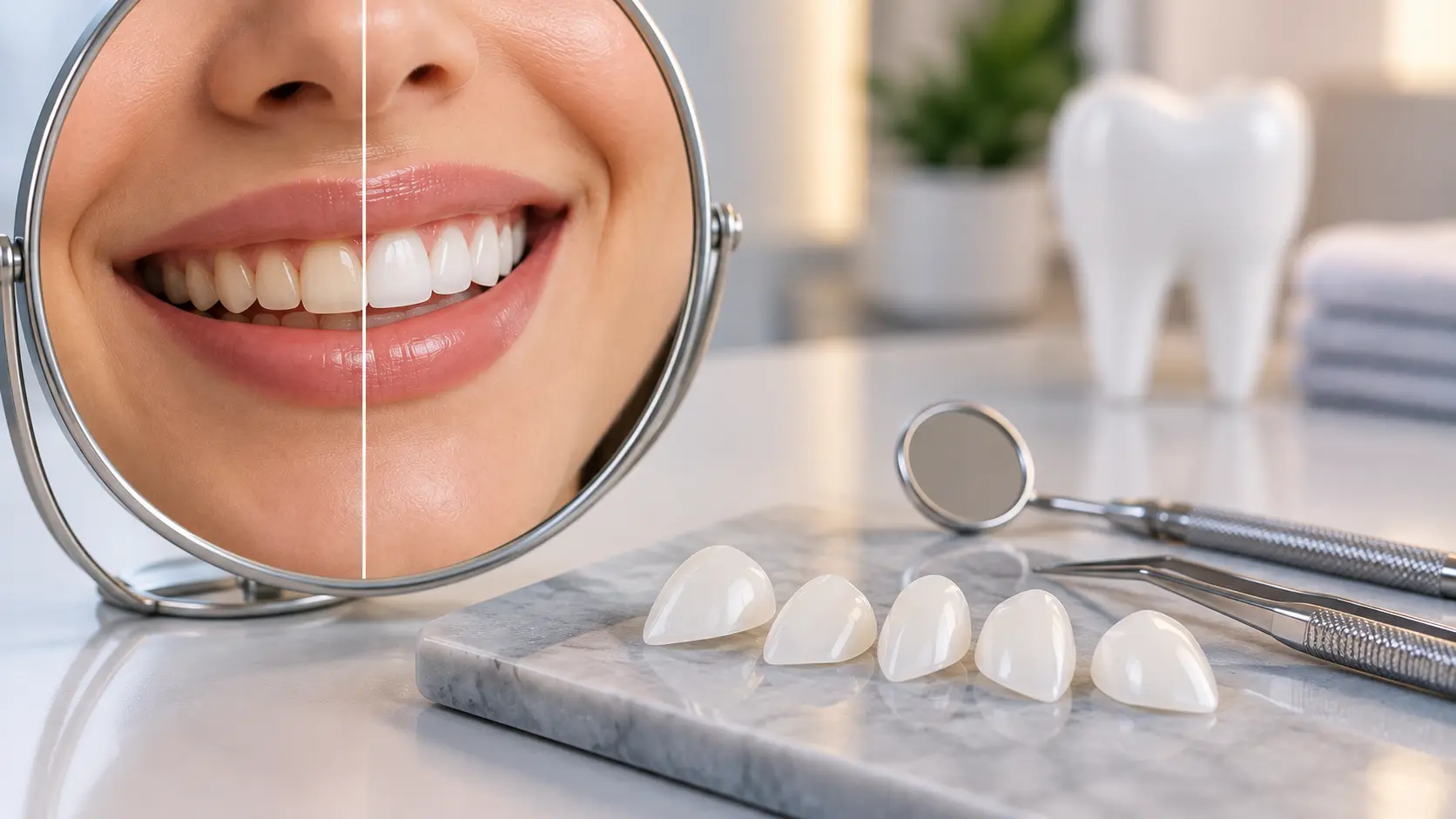
Considering Veneers in Turkey
Many international patients researching veneers in Turkey begin by comparing photographs, treatment packages, or prices.
Cost is understandably part of the decision, particularly when patients are traveling for treatment. But comparing the cost of veneers in Turkey without comparing the actual treatment plans can be misleading.
Two patients who both want a new smile may require very different procedures.
One may be an appropriate candidate for conservative porcelain veneers. Another may have teeth that require restorative treatment, orthodontics, or a different approach altogether.
Before asking how many veneers you can have or how much they will cost, it is worth asking how much natural tooth structure will need to be removed and why.
That question can tell you much more about your proposed treatment.
Read More: How to Get a Natural Hollywood Smile: Cost, Turkey Prices, and Real Results Explained
Frequently Asked Questions
Do teeth rot underneath veneers?
They can. Veneers do not make the underlying teeth immune to decay. Good oral hygiene and regular dental examinations remain necessary.
Are your real teeth still under veneers?
Yes. A veneer covers the visible surface of the natural tooth. The tooth remains underneath and supports the restoration.
Are teeth shaved down for veneers?
Conventional veneers usually require some enamel preparation, but the amount varies according to the tooth and treatment plan. Teeth should not automatically be aggressively reduced simply because veneers are being placed.
Do veneers remove all of your enamel?
No. Conventional veneer preparation generally involves removing only part of the enamel from selected areas of the tooth rather than removing all enamel.
Do veneers make your natural teeth weaker?
Veneer preparation permanently removes some natural tooth structure, so treatment should be conservative and appropriately indicated. The long-term outcome also depends on preparation, bonding, bite, oral hygiene, and maintenance.
Can veneers be removed permanently?
A veneer can physically be removed, but if the tooth was prepared beforehand, it usually cannot simply be left as it was before treatment. Another restoration will generally be required.
How long do veneers last?
There is no guaranteed lifespan. Longevity varies according to the material, treatment quality, bite, oral hygiene, habits such as grinding, and other individual factors.
Your Natural Teeth Still Matter
The most important thing to understand about veneers is that your natural teeth are still there underneath them.
Veneers can dramatically change a smile, but the goal should not be to sacrifice more healthy tooth structure than necessary to achieve that change.
Good veneer treatment begins with proper case selection, careful planning, and conservative preparation whenever possible.
So if you are considering veneers—whether close to home or researching veneers in Turkey—do not focus only on the final before-and-after photograph.
Ask what will happen to your natural teeth underneath.
Because the quality of cosmetic dentistry is not only about how your smile looks when treatment is finished. It is also about how responsibly the teeth underneath that smile have been treated.
Fill it out to get your free consultation
Innovation & Precision In Every Implant
We use only reputable, high-quality implants designed for long-term durability
BioTec Dental Implants


Hiossen Dental Implants


Straumann Dental Implants


Nobel Biocare Dental Implants


MegaGen Dental Implants