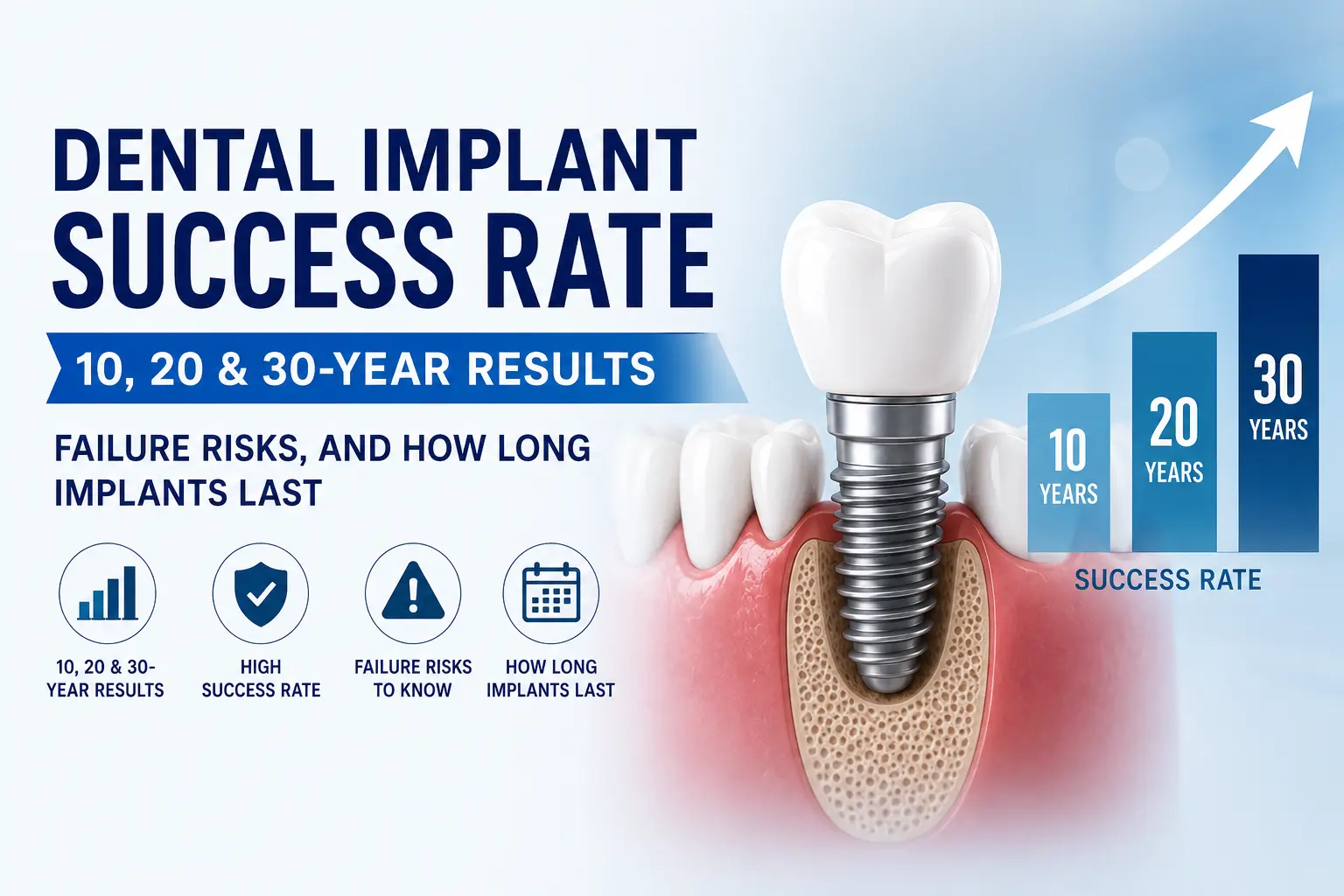
Dental Implant Success Rate: 10, 20 & 30-Year Results, Failure Risks, and How Long Implants Last
Dental Implant Success Rate: 10, 20 & 30-Year Results, Failure Risks, and How Long Implants Last
Discover the dental implant success rate after 10, 20, and 30 years, factors affecting implant longevity, failure risks in smokers, and how long implants truly last.
Table of Contents:
- Dental Implant Success Rate: What Patients Need to Know
- What Is the Dental Implant Success Rate?
- Dental Implant Success Rate After 10 Years
- Dental Implant Success Rate After 20 Years
- Dental Implant Success Rate After 30 Years
- How Long Do Dental Implants Last?
- Factors Affecting the Success of Dental Implants
- What Is the Failure Rate of Dental Implants?
- Failure Rate of Dental Implants in Smokers
- Front Tooth Dental Implant Success Rate
- What Is the Biggest Problem With Dental Implants?
Dental Implant Success Rate: What Patients Need to Know
Dental implants have transformed modern dentistry by providing a long-lasting solution for missing teeth. Unlike traditional bridges or dentures, implants integrate directly with the jawbone, creating a stable foundation that closely mimics a natural tooth root.
One of the most common questions patients ask before treatment is: What is the dental implant success rate? The good news is that dental implants are among the most predictable and successful procedures in modern dentistry. However, success is influenced by several factors, including oral health, smoking habits, bone quality, and long-term maintenance.
In this guide, we'll explore the latest evidence on dental implant success rates, how long implants last, common causes of failure, and what you can do to maximize the lifespan of your investment.
Read More: Dental implant in Turkey
What Is the Dental Implant Success Rate?
Dental implant success rates are consistently high across clinical studies. However, it's important to distinguish between implant survival and implant success.
An implant is considered to have survived if it remains in the mouth and functions properly. Success goes a step further, meaning the implant is healthy, stable, free from infection, and surrounded by healthy bone and gum tissue.
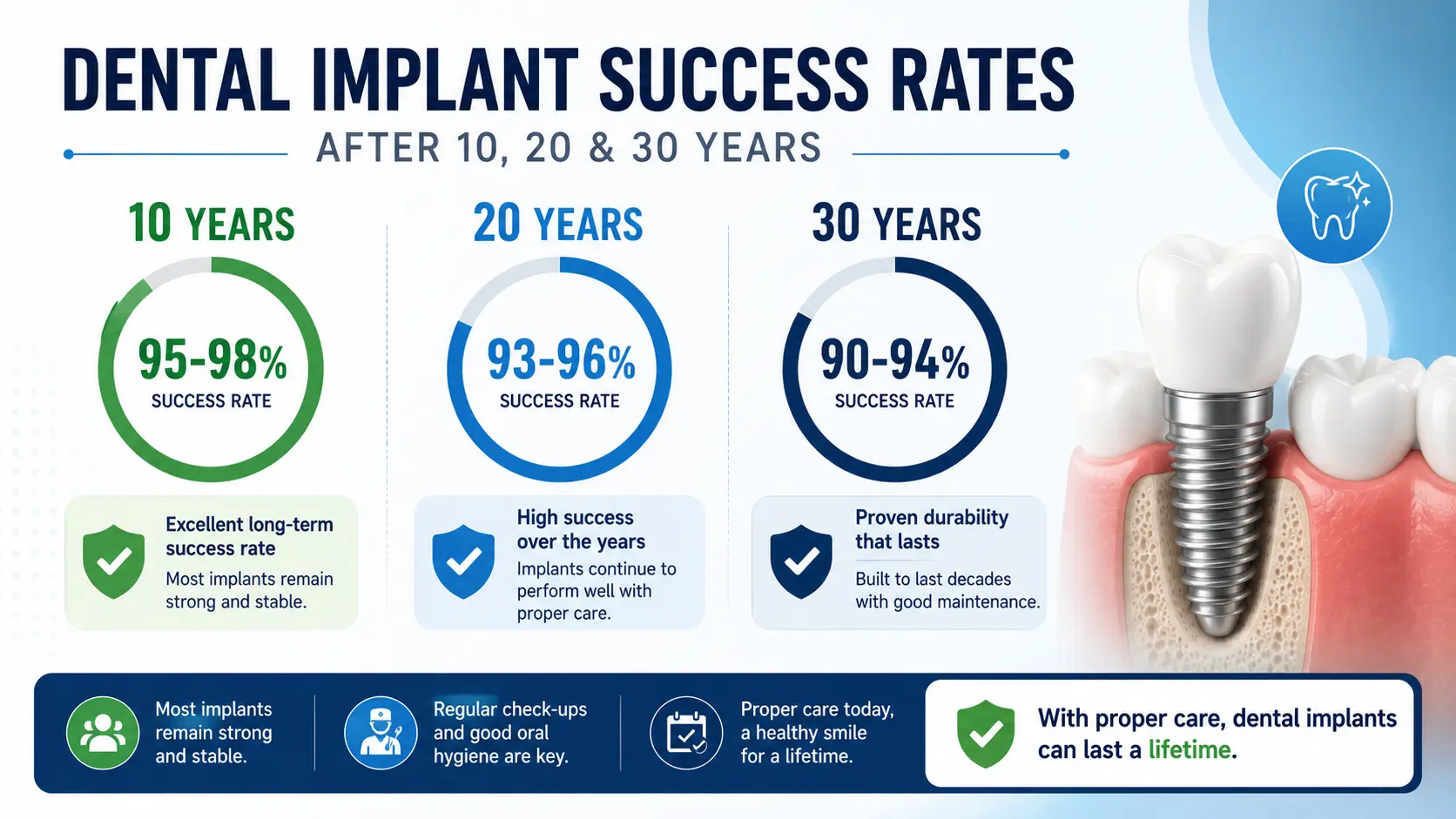
Large systematic reviews report that modern dental implants achieve survival rates above 95% over the first decade after placement. Long-term analyses have found 10-year implant survival rates ranging from approximately 93% to 96%, making implants one of the most reliable restorative treatments available.
These impressive outcomes explain why millions of implants are placed worldwide each year.
Dental Implant Success Rate After 10 Years
The strongest evidence for implant longevity comes from studies with at least a decade of follow-up.
A landmark systematic review published in the Journal of Dentistry found that the average 10-year implant survival rate was approximately 96.4%, with most patients maintaining stable implants over time. Even when researchers accounted for missing follow-up data, survival remained above 93%.
For patients, this means that after ten years, the vast majority of implants are still functioning successfully.
Several factors contribute to these excellent outcomes:
-
Proper treatment planning
-
Adequate bone volume
-
Good oral hygiene
-
Regular dental checkups
-
Avoidance of tobacco products
Dental Implant Success Rate After 20 Years
Long-term studies demonstrate that implants continue to perform remarkably well even after two decades.
A 2024 meta-analysis evaluating 20-year implant survival found that approximately 80% to 90% of implants remained functional after twenty years, depending on patient characteristics and study methodology. Researchers emphasized that implant failure over such long periods is usually multifactorial rather than caused by a single issue.
These findings confirm that dental implants are not merely a short-term solution. With proper care, many patients can expect their implants to remain functional for decades.
Read More: Immediate Dentures After Implants: A Complete Guide to Temporary Teeth and What to Expect
Dental Implant Success Rate After 30 Years
Research extending beyond 30 years is naturally more limited because modern implant dentistry is still relatively young compared to other medical disciplines.
However, available evidence suggests that well-maintained implants can continue functioning beyond 30 years. Many clinicians report patients successfully retaining implants for three decades or longer.
At this stage, success often depends less on the implant itself and more on surrounding factors such as:
-
Gum health
-
Bone stability
-
Systemic health conditions
-
Maintenance habits
-
Prosthetic component wear
In other words, the titanium implant may remain stable while crowns or prosthetic components require replacement over time.
How Long Do Dental Implants Last?
A common misconception is that dental implants have an expiration date.
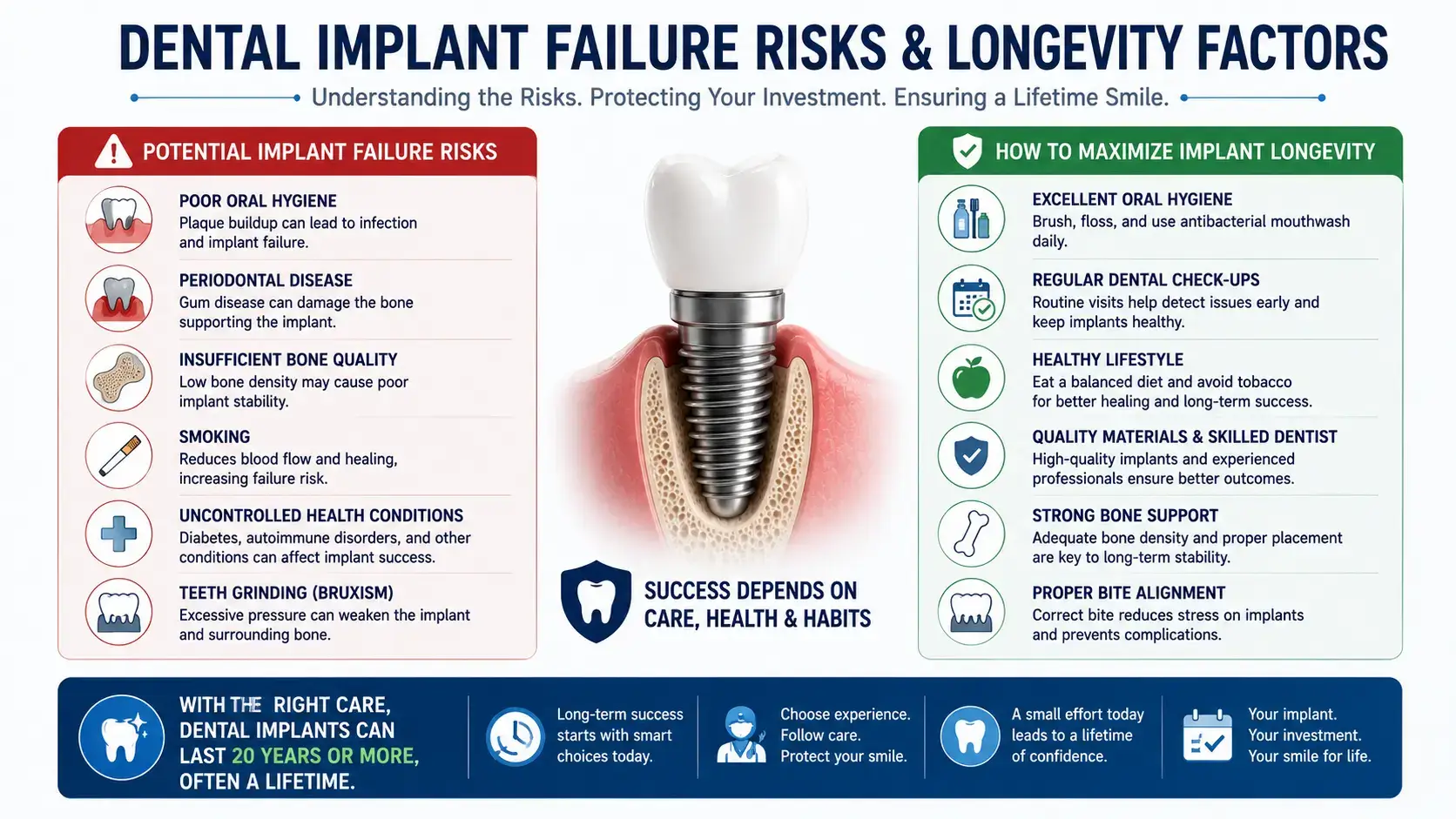
In reality, the titanium implant fixture itself can potentially last a lifetime. The crown attached to the implant may require replacement after 10 to 20 years due to normal wear, but the implant foundation often remains intact.
Most experts agree that implants should be viewed as a long-term investment rather than a temporary solution.
Patients who maintain excellent oral hygiene and attend routine dental appointments frequently enjoy decades of successful implant function.
Factors Affecting the Success of Dental Implants
While implants are highly successful, several factors can influence outcomes.
Bone Quality and Quantity
Successful osseointegration—the process where bone fuses with the implant—requires adequate bone volume and density.
Patients with severe bone loss may require grafting procedures before implant placement.
Oral Hygiene
Poor oral hygiene can lead to bacterial accumulation around implants, increasing the risk of peri-implant disease.
Daily brushing, flossing, and professional cleanings are essential.
Medical Conditions
Conditions such as uncontrolled diabetes, osteoporosis, and immune disorders can affect healing and long-term stability.
Implant Position
Implants placed in areas with strong bone support generally achieve higher success rates than those placed in compromised sites.
Dentist Experience
Treatment planning and surgical precision significantly influence implant outcomes.
Choosing an experienced implant dentist can reduce the risk of complications.
What Is the Fail Rate of Dental Implants?
Although success rates are high, implant failure can occur.
Based on current evidence, overall failure rates generally range between 2% and 7% during the first ten years after placement.
Failures typically fall into two categories:
Early Failure
Occurs before or shortly after osseointegration.
Common causes include:
-
Infection
-
Insufficient bone healing
-
Surgical complications
-
Excessive implant movement
Late Failure
Occurs months or years after successful integration.
Common causes include:
-
Peri-implantitis
-
Bone loss
-
Excessive biting forces
-
Poor maintenance
The most common long-term complication is peri-implantitis, an inflammatory disease affecting tissues around the implant.
Read More: All-on-4 Dental Implants Turkey: Everything You Need to Know About the Life-Changing Smile Solution
Failure Rate of Dental Implants in Smokers
Smoking remains one of the strongest risk factors for implant failure.
Multiple systematic reviews have shown that smokers experience significantly higher rates of implant complications and failures than non-smokers. Evidence suggests smoking may increase the likelihood of implant failure by two to three times.
Smoking negatively affects:
-
Blood circulation
-
Bone healing
-
Immune response
-
Gum health
As a result, smokers face increased risks of peri-implantitis, delayed healing, and implant loss.
Patients considering implants are strongly encouraged to stop smoking before and after treatment to improve outcomes.
Front Tooth Dental Implant Success Rate
Many patients worry about replacing a missing front tooth because aesthetics are so important in the smile zone.
Fortunately, the front tooth dental implant success rate is extremely high when treatment is properly planned.
Success depends on:
-
Adequate bone support
-
Healthy gum tissue
-
Precise implant positioning
-
High-quality restorative work
When these factors are carefully managed, front tooth implants can achieve success rates comparable to implants placed elsewhere in the mouth.
What Is the Biggest Problem With Dental Implants?
While implant surgery itself is highly predictable, the biggest long-term challenge is often peri-implantitis.
This condition involves inflammation and progressive bone loss around the implant. Left untreated, it can eventually result in implant failure.
Risk factors include:
-
Poor oral hygiene
-
Smoking
-
History of gum disease
-
Irregular dental maintenance
Fortunately, routine professional monitoring allows early detection and treatment before serious damage occurs.
Dental implants remain one of the most successful treatments in modern dentistry. Research consistently shows survival rates exceeding 95% after 10 years, with many implants continuing to function successfully after 20 years and beyond.
While factors such as smoking, poor oral hygiene, and peri-implant disease can increase failure risk, most complications are preventable through proper care and regular dental visits.
For patients seeking a durable, natural-looking tooth replacement solution, dental implants continue to set the standard for long-term success.
Sources:
- https://discovery.dundee.ac.uk/en/publications/long-term-10-year-dental-implant-survival-a-systematic-review-and
- https://link.springer.com/article/10.1007/s00784-024-05929-3
- https://www.ijoms.com/article/S0901-5027(14)00425-1/fulltext
- https://pubmed.ncbi.nlm.nih.gov/39449874/
- https://www.mdpi.com/2304-6767/12/10/311
- https://www.sciencedirect.com/science/article/pii/S0300571215000603
- https://www.sciencedirect.com/science/article/pii/S0300571219300491
Fill it out to get your free consultation
Innovation & Precision In Every Implant
We use only reputable, high-quality implants designed for long-term durability
BioTec Dental Implants


Hiossen Dental Implants


Straumann Dental Implants


Nobel Biocare Dental Implants


MegaGen Dental Implants