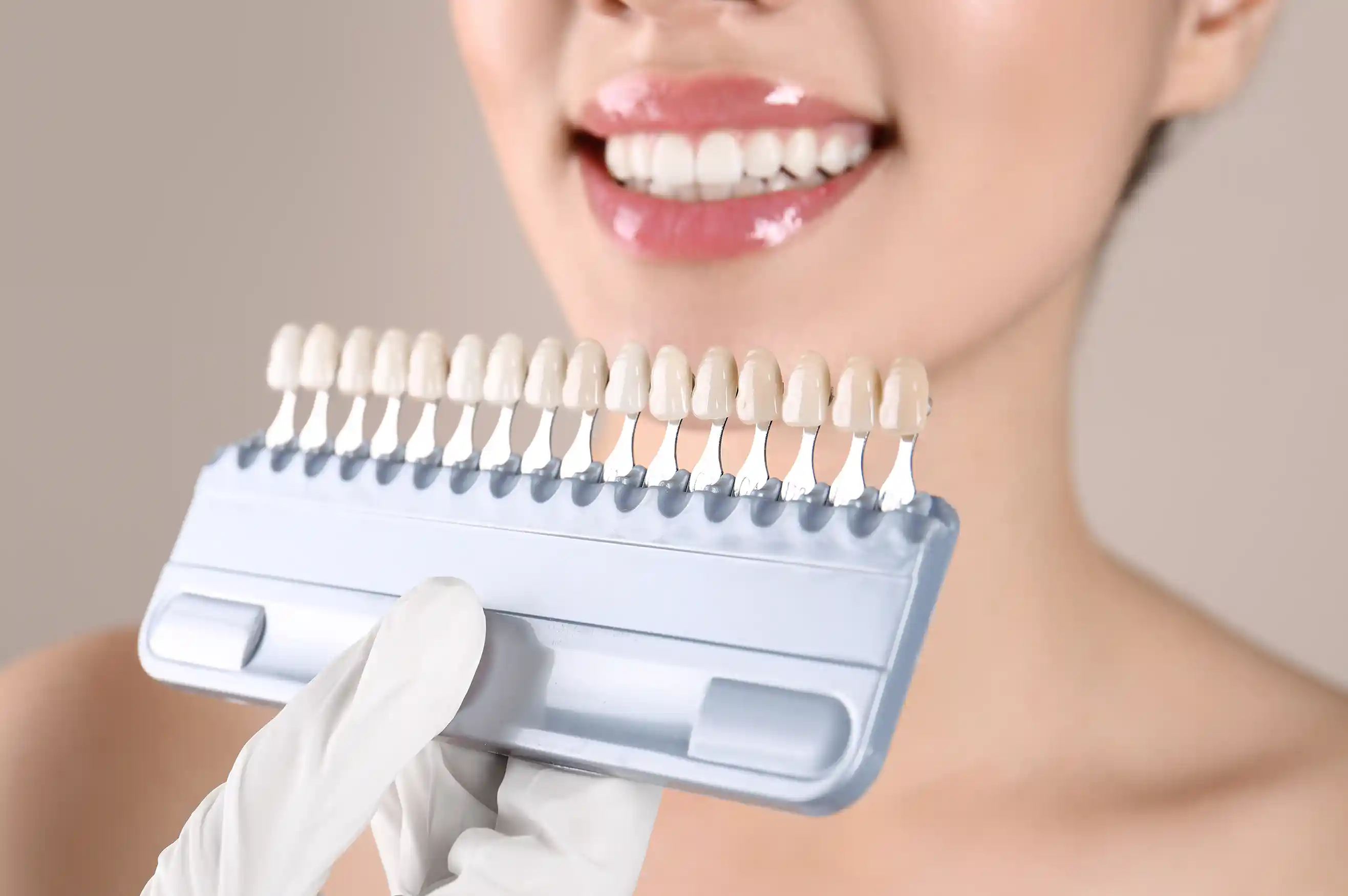
Do You Have to Shave Down Your Teeth for Veneers? What Dentists Really Do
Do You Have to Shave Down Your Teeth for Veneers? What Dentists Really Do
Do dentists shave teeth for veneers? Learn how much enamel is removed, whether it hurts, no-prep veneers options, and how long veneers last.
Table of Contents
- Do You Have to Shave Down Your Teeth for Veneers?
- Do You Shave Teeth for Veneers?
- Do Dentists Grind Your Teeth Down for Veneers?
- Veneers Shaved Teeth Before and After
- Does Shaving Teeth for Veneers Hurt?
- Can You Get Veneers Without Shaving Down Your Teeth?
- What Are Lumineers?
- How Long Do Veneers Last?
- Veneers Without Shaving Teeth Cost
- Is Shaving Teeth for Veneers Permanent?
Do You Have to Shave Down Your Teeth for Veneers?
If you’re researching dental veneers, you’ve probably seen photos online of shaved teeth before veneers. These images can look shocking and often make people wonder whether getting veneers means permanently damaging their teeth.
So the big question is: do you have to shave down your teeth for veneers?
In many cases, dentists remove a very small amount of enamel to ensure the veneers fit naturally and look realistic. However, modern cosmetic dentistry has also developed minimal-prep and no-prep veneer options that may require little or no tooth reduction.
Understanding the process can help you decide whether veneers are the right option for improving your smile.
Read More: Veneers in Turkey
Do You Shave Teeth for Veneers?
Traditional porcelain veneers usually require minor tooth preparation. This involves removing a thin layer of enamel from the front surface of the tooth.
The reason for this step is simple: veneers add thickness to the tooth. If the enamel is not slightly reduced, the veneers could make teeth look bulky or unnatural.
Typically, dentists remove around 0.3–0.7 millimeters of enamel, which is roughly the thickness of a fingernail.
This minimal preparation allows veneers to sit flush against the tooth and blend seamlessly with surrounding teeth.
Dentists try to preserve as much natural tooth structure as possible while still achieving the desired cosmetic result.
_1773836775.webp)
Do They Grind Your Teeth Down for Veneers?
One of the biggest misconceptions about veneers is that dentists grind teeth down dramatically.
In reality, veneer preparation is usually much more conservative than procedures like dental crowns.
Most of the time, dentists remove only about half a millimeter of enamel, just enough to create space for the veneer shell.
This minimal reshaping allows veneers to bond properly and maintain a natural appearance without compromising the strength of the tooth.
The dramatic “peg teeth” images often seen online are usually associated with crowns rather than veneers.
Veneers Shaved Teeth Before and After
Before veneers are placed, the teeth may look slightly smaller or flatter after enamel preparation.
This stage is temporary and simply prepares the surface for bonding.
Once the veneers are attached, the teeth appear:
-
Whiter
-
Straighter
-
More symmetrical
-
More proportionate to the smile
In other words, the prepared teeth are never visible once the veneers are bonded, and the final result is designed to look completely natural.
Read More: Sydney Sweeney Teeth Analysis: Before and After, Veneers, & Gummy Smile Explained
Does Shaving Teeth for Veneers Hurt?
A common concern patients have is whether the process is painful.
In most cases, shaving teeth for veneers does not hurt. Dentists typically use local anesthesia to numb the area during the preparation step.
Because only the enamel layer is adjusted, discomfort is minimal. Some patients may notice temporary tooth sensitivity after the procedure, especially when consuming hot or cold foods.
This sensitivity usually disappears within a few days as the teeth adjust.
Can You Get Veneers Without Shaving Down Your Teeth?
Yes — some patients can get veneers without shaving down their teeth.
These are known as no-prep veneers or minimal-prep veneers.
No-prep veneers are extremely thin shells designed to bond directly onto the tooth surface. They allow dentists to enhance the smile while preserving more natural enamel.
However, they are not suitable for everyone.
No-prep veneers work best for people who have:
-
Small teeth
-
Minor gaps between teeth
-
Slight cosmetic imperfections
-
Teeth that are naturally positioned slightly inward
If teeth are large, crowded, or severely discolored, traditional veneers may still provide better results.
Read More: Hollywood Smile Turkey Package: Prices, Benefits, and Autora Clinic Istanbul Guide
What Are Lumineers Teeth?
Lumineers are one of the most well-known brands of no-prep veneers.
These ultra-thin porcelain shells are designed to improve the appearance of teeth with little or no enamel removal.
Because they are thinner than traditional veneers, they can sometimes be placed directly over the natural tooth surface.
Advantages of Lumineers include:
-
Less invasive treatment
-
Minimal tooth preparation
-
Faster placement process
However, because they are thinner, they may not always provide the same dramatic transformation as traditional veneers.
_1773836810.webp)
Veneers Without Shaving Teeth Cost
The cost of veneers varies depending on the material used, the dentist’s expertise, and the complexity of the treatment.
Typical price ranges include:
-
Composite veneers: $400–$800 per tooth
-
Porcelain veneers: $900–$2,500 per tooth
-
No-prep veneers (such as Lumineers): $800–$3,000 per tooth
No-prep veneers are not always cheaper. Because they require high-precision customization, they may sometimes cost the same as traditional porcelain veneers.
A consultation with a cosmetic dentist is usually necessary to determine the exact cost and treatment plan.
Read More: Turkey Veneers: Cost, Types, and Why They’re So Popular for the Perfect Smile
How Long Do Veneers Last?
Dental veneers are designed to be durable and long-lasting.
On average:
-
Porcelain veneers last about 10–15 years
-
Some patients keep them for 20 years or longer with proper care
Composite veneers typically last 5–7 years before needing replacement.
To extend the lifespan of veneers, dentists recommend:
-
Brushing and flossing daily
-
Avoiding biting hard objects
-
Visiting the dentist regularly
-
Wearing a night guard if you grind your teeth
With proper maintenance, veneers can provide long-lasting aesthetic improvements.
Is Shaving Teeth for Veneers Permanent?
Yes, shaving teeth for veneers is permanent.
This is because enamel does not grow back once it has been removed. However, the veneers replace the removed enamel layer and protect the tooth structure underneath.
For this reason, dentists carefully plan veneer treatments to ensure the best long-term results.
Choosing an experienced cosmetic dentist is essential to ensure the procedure preserves as much natural tooth structure as possible.
Final Thoughts
So, do you have to shave down your teeth for veneers?
In many cases, dentists remove a very small amount of enamel so the veneers fit properly and look natural. However, newer options like no-prep veneers and Lumineers may allow some patients to improve their smile with minimal or no tooth reduction.
The right choice depends on your teeth, cosmetic goals, and your dentist’s recommendations.
A professional consultation is the best way to determine which veneer option can give you a beautiful smile while protecting your natural teeth.
Sources
Fill it out to get your free consultation
Innovation & Precision In Every Implant
We use only reputable, high-quality implants designed for long-term durability
BioTec Dental Implants


Hiossen Dental Implants


Straumann Dental Implants


Nobel Biocare Dental Implants


MegaGen Dental Implants